
Low Potassium Diet for Diabetics
A Comprehensive Guide to Better Health


Potassium is an essential mineral that supports nerve function, muscle control, and fluid balance. For most people, potassium is a friend. However, for individuals with diabetes especially those suffering from kidney complications too much potassium can be dangerous.
High potassium levels in the blood, or hyperkalemia, can lead to irregular heartbeats, muscle weakness, and even sudden cardiac arrest. This is especially concerning for diabetics, as they often suffer from diabetic nephropathy, a condition that impairs kidney function and affects potassium excretion.
This article provides an in-depth, easy-to-understand guide for diabetics who need to follow a low potassium diet including what to eat, what to avoid, and how to strike the right nutritional balance.
Why Diabetics Are at Risk for High Potassium
Let’s break down why potassium can become a problem for people with diabetes:
1. Impaired Kidney Function
• Diabetes is a leading cause of chronic kidney disease (CKD).
• Damaged kidneys struggle to remove excess potassium from the blood, resulting in dangerous build-up.
2. Medications That Affect Potassium
• Common drugs like ACE inhibitors, ARBs, and potassium-sparing diuretics, often prescribed for diabetics, raise potassium levels.
3. Insulin Deficiency
• Insulin helps drive potassium into cells. In poorly controlled diabetes, insulin deficiency can cause potassium to build up in the bloodstream.
Understanding Potassium: How Much Is Too Much?
A healthy adult typically needs around 2,500–3,000 mg of potassium daily. However, for individuals with kidney issues, doctors may recommend limiting potassium to 2,000 mg or less per day.
Warning signs of high potassium levels include:
- Nausea or weakness
- Tingling or numbness
- Irregular heartbeat
- Shortness of breath
Always consult a doctor or dietitian for personalized potassium limits.
Top Low-Potassium Foods for Diabetics
To help manage potassium intake while maintaining blood sugar control, choose the following foods:
✅ Fruits (Low in Potassium)

✅ Vegetables (Low in Potassium)
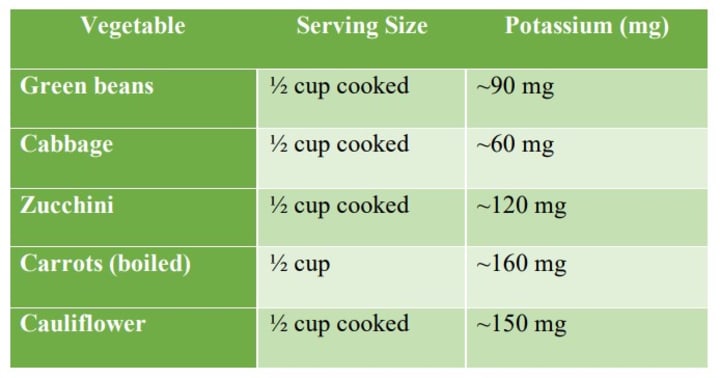
Tip: Boiling and then draining vegetables reduces potassium content by 30–50%.
✅ Proteins
- Egg whites
- Chicken breast (skinless)
- Fish like tilapia or cod
- Tofu (moderate consumption)
✅ Grains & Starches
- White rice
- White bread (whole wheat is higher in potassium)
- Pasta
- Unsweetened cereals
- Rice cakes
High-Potassium Foods to Limit or Avoid
These foods are often considered healthy but can be dangerous for diabetics who must restrict potassium:
❌ Fruits High in Potassium

❌ Vegetables High in Potassium

❌ Other Foods
- Beans and lentils
- Dairy products (milk, yogurt, cheese)
- Nuts and seeds
- Chocolate
- Salt substitutes (often contain potassium chloride)
Sample Low-Potassium, Diabetes-Friendly Meal Plan
🥣 Breakfast
- 1 slice white toast with 1 egg white
- ½ cup blueberries
- Herbal tea or decaf coffee
Estimated potassium: ~200 mg
🍛 Lunch
- Grilled chicken salad with cabbage, cucumber, and olive oil dressing
- White rice (½ cup)
- Apple slices
Estimated potassium: ~400 mg
🍲 Dinner
- Baked cod fillet
- Boiled carrots and green beans
- ½ cup white pasta
- Pineapple chunks (½ cup)
Estimated potassium: ~450 mg
☕ Snacks
- Rice cakes
- Small serving of grapes
- Unsweetened applesauce
Tips for Managing a Low-Potassium Diet with Diabetes
✅ Read Nutrition Labels Carefully
Some packaged foods may contain potassium-based preservatives. Look for words like "potassium chloride" or "dipotassium phosphate."
✅ Use the “Double-Boil” Technique
For vegetables like potatoes:
- Peel and slice thin
- Boil in water, then discard the water
- Boil again in fresh water
This process reduces potassium significantly.
✅ Watch Portion Sizes
Even low-potassium foods can add up if you eat too much.
✅ Stay Hydrated
Proper hydration supports kidney function and helps flush excess potassium.
✅ Coordinate with a Dietitian
Balancing low potassium with adequate nutrition and blood sugar control requires professional guidance.
The Link Between Low Potassium and Hypoglycemia
Interestingly, too low potassium levels (hypokalemia) can also be dangerous for diabetics:
- It may worsen insulin resistance
- Can lead to muscle cramps, irregular heartbeat
- Increases the risk of hypoglycemia unawareness, a condition where diabetics can't feel low blood sugar symptoms
This is why a “low” potassium diet should never mean “no” potassium—balance is the key.
Common Myths About Potassium and Diabetes
❌ Myth 1: All fruits are bad for diabetics.
✅ Truth: Many low-potassium fruits like apples and berries are diabetic-friendly.
❌ Myth 2: Salt substitutes are always healthy.
✅ Truth: Many salt substitutes are dangerous for kidney patients due to potassium chloride.
❌ Myth 3: Avoiding all potassium is best.
✅ Truth: The body needs some potassium—just not too much for those at risk.
When to Seek Medical Advice
Always contact your healthcare provider if you notice:
- Weakness or fatigue
- Muscle cramps
- Irregular heartbeat
- Numbness or tingling
- Unusual blood sugar swings
Your doctor may recommend a blood test to check serum potassium levels and adjust your medications or diet accordingly.
In Bottom Line
Managing diabetes is challenging enough, and when combined with kidney problems or high potassium, it can become even more complex. But knowledge is power. By understanding which foods are high or low in potassium, and how to balance nutrition with blood sugar, diabetics can lead full, healthy lives.
Remember:
A low potassium diet doesn’t mean bland or boring. With proper planning, you can enjoy delicious meals that support both your blood sugar and kidney health.
Stay informed. Stay empowered. And always take your health one smart choice at a time.
About the Creator
Core Well Fit
Empowering Your Core To Live Well and Fit 🌿
Your trusted guide to home workouts, nutrition tips, mental wellness, and smart fitness routines.
📍Targeting U.S. lifestyle | 💪 Fitness | 🥗 Diet | 🧠 Wellness
Keep reading
More stories from Core Well Fit and writers in Longevity and other communities.
Borderline Personality Disorder vs. Bipolar Disorder
Understanding the Disorders Mental health awareness has grown significantly in recent years, yet misconceptions about specific conditions persist. Two disorders frequently misunderstood or confused are Borderline Personality Disorder (BPD) and Bipolar Disorder. While both conditions can involve intense emotional experiences and mood instability, they differ in critical ways, including their causes, symptoms, treatment approaches, and long-term outlooks.
By Core Well Fit8 months ago in Longevity
Day 4 of Quitting
If this is how sobriety feels, maybe it’s better to go through life a little buzzed… this, along with other hits like, I want to kill myself, I wish I was dead, and I’m going to throw myself off a bridge have been the only thoughts on rotation these past few days. I promise myself that if, in a month, I still feel like this (‘this’ meaning despondent, full of rage, and simultaneously numb) I can go back to smoking. Until mid-February though? Nicotine is off the table.
By sleepy drafts7 days ago in Longevity
Geographic Information Systems Market Size and Forecast 2025–2033
Introduction The Geographic Information Systems (GIS) market is undergoing a profound transformation as digital infrastructure, data analytics, and location-based technologies reshape the way organizations plan, operate, and innovate. According to Renub Research, the global GIS market is projected to grow from US$ 12.90 billion in 2024 to US$ 32.04 billion by 2033, registering a compound annual growth rate (CAGR) of 10.64% between 2025 and 2033.
By Marthan Sir2 days ago in Longevity


Comments (1)
This is important info for diabetics. I know someone with diabetes who had to watch their potassium intake due to kidney issues. Understanding the risks and following a low-potassium diet is crucial.