
Listening with the Body: Presence Beyond Thought
How the wisdom of sensation teaches us to be fully alive

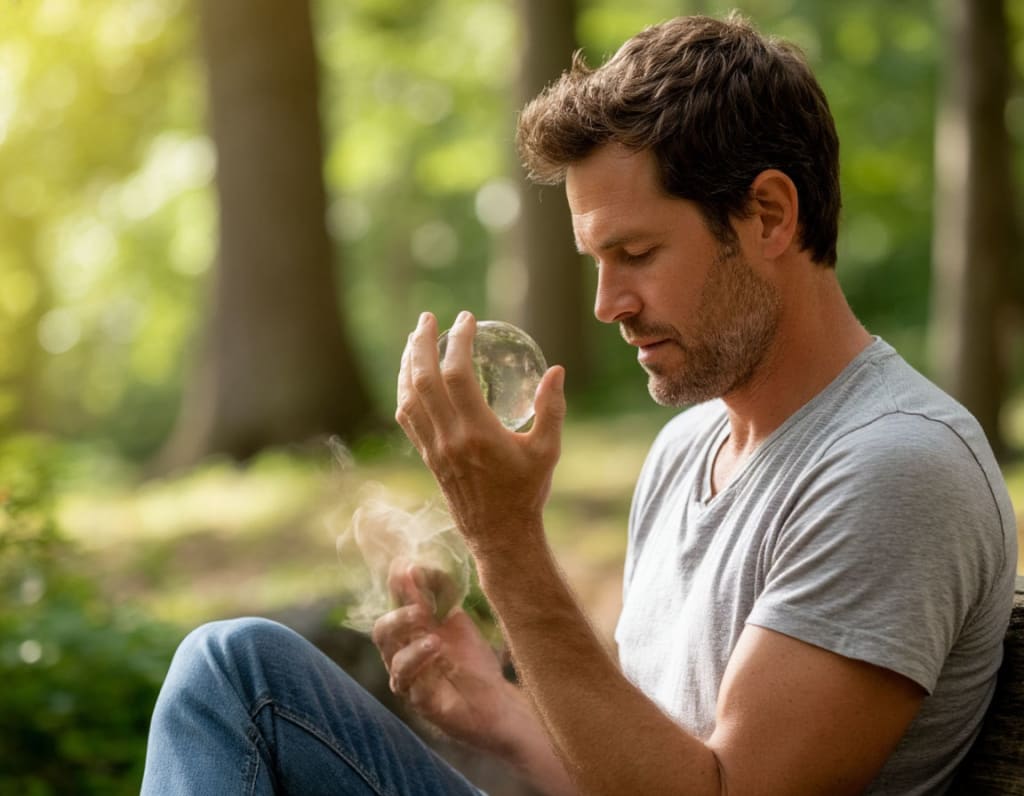
There are ways of listening that have nothing to do with the ears. We often think of listening as an act of understanding — of interpreting words, deciphering meaning, forming response. But beneath that level of mind, there’s a subtler kind of listening — one that happens through the body. The skin, the breath, the pulse — they’re all in quiet conversation with the world. When we begin to notice that dialogue, presence deepens into something more whole, more real.
I didn’t always know how to listen that way. For most of my life, I lived almost entirely in my head — analyzing, narrating, thinking my way through everything. Even during meditation, my awareness stayed trapped in the language of thought. Then one day, during a long, slow yoga practice, I realized how far I’d drifted from my own body. I was bending forward, struggling to “get it right,” when the teacher said softly, “Stop reaching. Feel instead.” Something in me paused. I let go of trying to stretch further and simply paid attention. I felt the ground beneath my palms, the gentle pull behind my knees, the rhythm of breath moving through. And for a moment, the whole body felt awake — listening, alive, aware.
That moment taught me something that no philosophy ever had: the body is not an obstacle to awareness. It’s the doorway.
When we listen with the body, presence stops being an idea and becomes an experience. You feel your feet on the ground, the breath expanding the ribs, the subtle vibration of life humming underneath everything. It’s an awareness that doesn’t need to think or name or analyze. It just knows.
There’s a line I once read on Meditation Life: “The body doesn’t speak in words, but it never lies.” That line has stayed with me. The body tells the truth long before the mind catches up — a tightening in the stomach when something feels off, a deep exhale when we finally relax, a sudden warmth in the chest when we feel seen. When we learn to listen to these quiet signals, we start living from a more honest place.
This isn’t always easy, because the mind wants control. It wants clarity, certainty, direction. The body speaks instead in sensations — shifting, ambiguous, fluid. But if we stay with it, if we listen gently instead of demanding answers, understanding arises in its own language. Sometimes the body says rest. Sometimes it says stay. Sometimes it says enough.
Listening with the body means returning to immediacy — to the simple intimacy of being alive. It means noticing how your shoulders lift when you’re anxious, how your breath pauses when you’re afraid, how your spine straightens when something feels true. Awareness becomes tactile, textured, embodied.
I’ve found this practice especially powerful in moments of conflict or uncertainty. When someone speaks, instead of preparing my reply, I try to feel what happens inside. Does my chest tighten or open? Does my breath shorten or deepen? These small sensations often reveal more than my thoughts can. They show whether I’m listening with presence or with defense.
The more I practice, the more I notice that the body is always listening — to the world, to others, to life itself. It picks up subtleties the mind misses: the tone beneath someone’s words, the emotional weather in a room, the hidden fatigue beneath my own ambition. The body is like a finely tuned instrument — but only when we stop trying to control the music.
Sometimes, during meditation, I focus not on the breath itself but on the feeling of being breathed — the gentle rising and falling that happens without my effort. That shift — from doing to receiving — changes everything. I’m no longer the observer watching the body; I’m part of it, moving in rhythm with life. The boundaries between inner and outer, self and world, begin to soften.
Listening this way also changes how I move through the day. When I eat, I taste more fully. When I walk, I feel the texture of the ground. When I rest, I rest completely. Even mundane moments — washing my hands, folding laundry, standing in line — become places where awareness lands. The body, I’ve come to realize, is always here. The mind may wander, but the body never leaves the present.
In this way, listening with the body becomes a practice of coming home. It’s a return to simplicity — to breath, to movement, to contact with the living moment. And it reminds me that presence is not a concept or a skill to perfect. It’s the natural condition of a body that’s been allowed to feel again.
So when you next find yourself lost in thought, pause. Notice your hands. Feel the air on your skin. Let awareness drop from your head into your chest, into your belly, into your feet. Listen, not for meaning, but for sensation.
You might find that the body was never waiting for you to fix it — only to hear it. And in that quiet listening, beyond words and beyond thought, you’ll discover a deeper intelligence — one that speaks in the language of pulse and breath, gravity and warmth.
It’s the sound of life itself, always whispering: You’re here. You’re whole. Just listen.
About the Creator
Keep reading
More stories from Marina Gomez and writers in Longevity and other communities.
Unfinished Moments: Finding Peace in Imperfection
There’s a peculiar ache that comes from wanting things to be finished — the project completed, the house tidy, the conversation resolved, the self somehow perfected. I’ve lived much of my life chasing that sense of completion, the comforting click of everything falling neatly into place. Yet life, it seems, rarely cooperates. Plans change, words go unsaid, days end before we’re ready. Again and again, I find myself standing in the middle of something that refuses to be complete.
By Marina Gomez4 months ago in Longevity
Unlocking the Secrets of Longevity: How to Live a Longer, Healthier Life
Longevity is a topic that has fascinated humans for centuries. Everyone wants not only to live longer but to maintain vitality, strength, and mental clarity throughout their years. Modern science, combined with the study of ancient lifestyles, provides clues about how some people consistently live well beyond 90 or even 100 years.
By Lukáš Hrdlička7 days ago in Longevity



Comments
There are no comments for this story
Be the first to respond and start the conversation.