Latest Stories
Most recently published stories in Longevity.
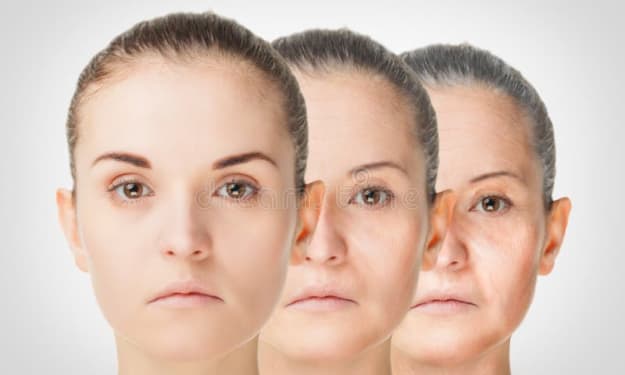
How to Overcome Aging: The Modern Science of Staying Young Longer. AI-Generated.
Introduction: The Age of Ageless Living Once upon a time, aging was seen as a slow surrender — wrinkles, fatigue, and fading dreams. But in today’s world, aging has transformed into something else entirely. Scientists, longevity experts, and wellness enthusiasts are all asking the same question: Is it possible to overcome aging?
By Sajjad Aliabout a month ago in Longevity
21 Days of Clear Thinking That Reduced My Anxiety
Anxiety doesn’t always announce itself loudly. Sometimes it whispers. For me, it showed up as overthinking. Endless mental loops. Imaginary worst-case scenarios playing on repeat. I looked fine on the outside, but inside my mind never rested. Even on calm days, my thoughts were racing ahead, searching for problems that didn’t exist yet.
By Fazal Hadiabout a month ago in Longevity
Ditch the To-Do List Drama
For years, my to-do list ruled my mood. If I crossed things off, I felt accomplished. If I didn’t, I felt like a failure—no matter how hard I tried. My days started with long lists and ended with even longer guilt. I carried unfinished tasks in my head like accusations.
By Fazal Hadiabout a month ago in Longevity
Taming The Nervous System: My Experience with Vagus Nerve Stimulation as a Novel Approach to Chronic Stress . AI-Generated.
Introduction: When Anxiety Becomes a Permanent Biological State In a world defined by its relentless velocity, anxiety has ceased to be a transient visitor—the quickened pulse before a storm or the sharp intake of breath before a fall. Instead, it has hardened into a permanent biological imprint, an indelible script written into the very marrow of the nervous system. When the mind continues to broadcast sirens into the silence of a safe room, the body becomes ensnared in a state of terminal vigil. Here, the surge of cortisol and adrenaline is no longer a strategic response to crisis but a corrosive baseline, a flood tide that refuses to ebb.
By Mohammad Hammashabout a month ago in Longevity
The 5 Best Teas to Drink for Better Blood Sugar, According to Dietitians
If you’re living with diabetes, you likely spend a lot of time planning what goes on your plate. But what about what you pour into your glass or mug? Drinks are easy to overlook. Yet, they can also have a big impact on your blood sugar. On the flip side, not drinking enough can also be a problem, as dehydration may contribute to high blood sugar.
By Good health to everyoneabout a month ago in Longevity
Ayurveda expert explains how jamun seed powder helps control blood sugar naturally
Most of us enjoy jamun and throw away the seeds without a second thought. But in traditional medicine, those discarded seeds are actually the most valuable part. For people struggling with fluctuating blood sugar levels, sugar cravings, frequent urination, or low energy, jamun seed powder has quietly been used for generations as a remedy. In Ayurveda, diabetes is referred to as Madhumeda, a condition linked to excess sugar and metabolic imbalance. Jamun is believed to help correct this at the root. When used correctly and consistently, jamun seed powder may support better sugar control, metabolism, and overall diabetic symptom management.
By Good health to everyoneabout a month ago in Longevity
Fruits that help control blood sugar in diabetes: Pears, cherries and more
Under medical advice and popular belief, fruit has often been looked at with suspicion in the case of diabetes. Its natural sweetness, sugars in sight and association with desserts have made many to think that fruit consumption is a sure way to worsen blood glucose levels. Such a view has influenced the kind of food people eat, and in some cases, even resulted in the disallowing of fruit. However, type 2 diabetes rates are still going up, and this iscalling for a relook at the foods we eat daily and their actual effects on the metabolism. Nutritional science advancements are already disproving these arguments by showing that whole fruits and refined sugars are very different. Fibre, plant compounds and food structure come from the fruit, and they all help with glucose absorption and processing. This has led to the fact that fruit is not a risk factor in the diet but rather a possible source of more stable blood sugar if chosen and consumed properly.
By Good health to everyoneabout a month ago in Longevity
If One Door Closes Keep Walking Because Something Will Work Out. AI-Generated.
Life rarely goes exactly the way we plan. We dream, we work hard, we give our best, and still, sometimes things fall apart. When one plan fails, it feels heavy. It feels unfair. It feels like all the effort was wasted. But with time and experience, I have learned something important — if one thing fails, it is not the end of the story.
By Veronica Bennettabout a month ago in Longevity
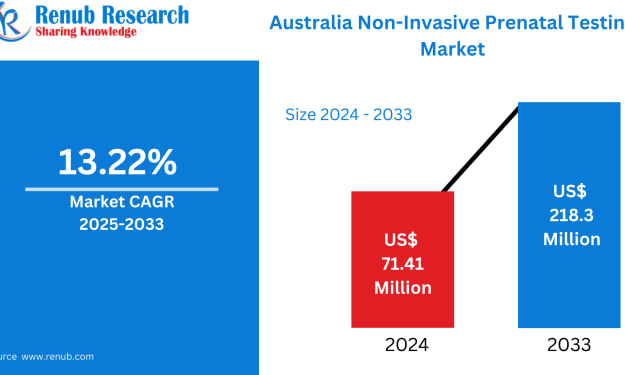
Australia Non-Invasive Prenatal Testing Market Size & Forecast 2025–2033. AI-Generated.
Australia Non-Invasive Prenatal Testing Market Overview The Australia Non-Invasive Prenatal Testing (NIPT) Market is witnessing robust expansion, driven by increasing awareness of prenatal genetic screening, technological breakthroughs, and a well-established healthcare infrastructure that supports early disease detection. According to Renub Research, the market is expected to grow from US$ 71.41 million in 2024 to US$ 218.3 million by 2033, registering a strong compound annual growth rate (CAGR) of 13.22% during 2025–2033.
By Renub Researchabout a month ago in Longevity
Saudi Arabia Non-Invasive Prenatal Testing Market Size & Forecast 2025–2033. AI-Generated.
Saudi Arabia Non-Invasive Prenatal Testing Market Outlook The Saudi Arabia Non-Invasive Prenatal Testing (NIPT) Market is experiencing strong and sustained growth, reflecting the Kingdom’s broader transformation in healthcare delivery and preventive medicine. According to Renub Research, the Saudi Arabia NIPT market is expected to reach US$ 143.09 million by 2033, rising from US$ 46.33 million in 2024, registering an impressive compound annual growth rate (CAGR) of 13.35% from 2025 to 2033.
By Renub Researchabout a month ago in Longevity