
Is it true that long-term use of detergent is prone to cancer?
Really need to use less of these 2 kinds of detergent


"No detergent, the bowl how to be clean, you listen to the wind is the rain problem has to be changed!"
After lunch, Auntie Wang had an argument with her husband over the dishwashing problem.
Auntie Wang once chatted with a neighbor about the problem of detergent, and the neighbor was shocked to hear that Auntie Wang was still using detergent. She then told Auntie Wang that detergent was a "kitchen killer" and that long-term use would not only lead to infertility but also carcinogenic effects.
After listening to the neighbor's words Wang's Auntie was shocked and went back to hurry to put away the detergent, but her husband felt that she listened to the wind as rain, and love to believe the rumors, and she started a dispute.
Auntie Wang felt very aggrieved, she was just worried about the health of her family, but it became her fault.
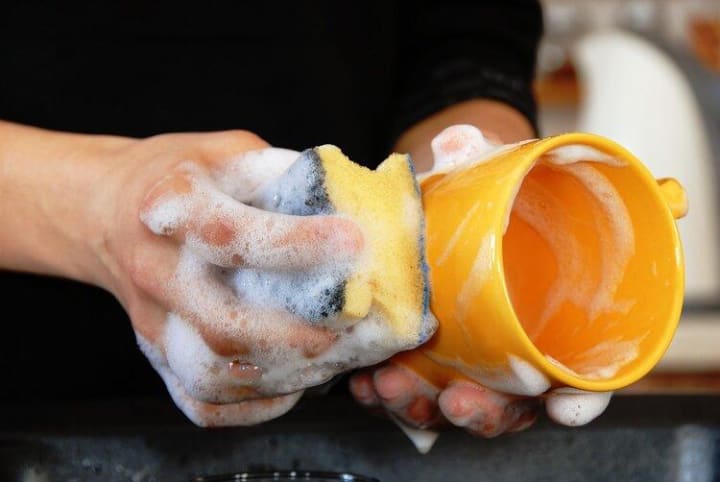
Is the use of detergent, harmful to the body?
There are rumors that detergent will not only lead to skin damage on the hands but also may lead to infertility, is this true?
Dr. Sun Yafei, a chemist at Tsinghua University, said that the claim that detergent can cause infertility is not credible. There is no evidence of a relationship between detergent and infertility, and the fear of infertility after using detergent is completely unnecessary.
The early detergents contained phosphorus, which was banned by the state because it tended to damage environmental water bodies.
The main component of the detergent sold in the market now is a surfactant, which has a hydrophilic and oleophilic effect, which can take away the oil and dirt from the dishes and play a cleaning role. However, it is the surfactant is very controversial, some people say that the substance residue on the tableware's human intake will threaten health, how is this fact?
The acute toxicity of the substance is measured by the LD50 (g/kg) in animal experiments, and it is generally considered that the acute toxicity is lower for LD50 above 1000 mg/kg.
For comparison, the LD50 of salt and alcohol is 3000mg/kg and 6670mg/kg respectively, while the LD50 of surfactants is about the same as that of salt, so numerically it is very safe and there is no need to worry too much about daily use.
As for the detergent hurting hands, is a real thing, because the detergent can remove oil and dirt, long-term direct contact with the hands will lead to the destruction of the protective lipids on the surface of the skin, easy to make the skin dry.

Second, detergent contains formaldehyde, toxic and carcinogenic, is it science or rumor?
In addition to the above rumors, there are also rumors that detergents add a variety of chemicals that can cause cancer, and this claim is credible.
The claim comes from a special national supervision inspection of the quality of dishwashing detergent products in 2014, the inspection involved 28 provinces and municipalities, 380 enterprises, and the results found that the product qualification rate of 93.6%, the main reason for failure is the formaldehyde exceeds the standard, detergent detergency, and total active substances do not meet the standard.
In other words, it is not the detergent that causes cancer, but the carcinogenic effect of formaldehyde within some unqualified products.
In recent years, the testing rate of detergent sampling is very high, close to 100%, so there is no need to worry.
Food Safety National Standard Detergent" (GB 14930.1-2015) is divided into two categories according to the different uses of detergent: Class A is detergent that can be directly cleaned depending on the food, and Class B is detergent that can contact tableware, food tools, equipment/containers, etc.
According to the relevant national regulations, the detection limit of formaldehyde in detergents of category A shall be less than 0.05%, therefore, as long as the purchase of qualified products, there is no need to worry about the risk of cancer.
Third, the real need to use less is these 2 kinds of detergent
In life, we should be alert to these two kinds of detergents, which may bring great health risks after use.
1. Bulk detergent
CCTV "Weekly Quality Report" has conducted an investigation and found that the arsenic content in some of the bulk detergents sold on the market seriously exceeded the limit, with a content of 2.9mg/kg, exceeding the limit 58 times.
Arsenic has a strong carcinogenic effect, long-term use will lead to chronic arsenic poisoning in humans, specifically skin pigmentation, keratinization, hyperplasia, etc., and in serious cases may even induce skin cancer.
2. Too strong fragrance detergent
The detergent containing fragrance is generally due to the addition of fragrance, which does not pose a threat to health within the scope of qualification.
Researchers from the University of Melbourne in Australia found that using detergents that are too fragrant can lead to an increased chance of a range of health problems such as translucency and asthma.
The second hospital in Zhejiang University had admitted a man who was himself sensitive to fragrance and smelled a pungent aroma after opening a new bottle of detergent. He then experienced chest tightness and difficulty in breathing and was sent to the hospital in shock. The good thing is that he was sent to the hospital in time, and after resuscitation quickly turned to safety.
Therefore, for some people who are sensitive to fragrance or prone to allergies, be careful with scented detergents daily.
Fourth, the safe use of detergent, there are 4 points to note
In life, want to safely use detergent, must pay attention to these four points, and follow the small wonderful ones one by one to see.
1. Buy qualified products
Be sure to go to the regular stores to buy detergent, when buying to recognize the big brands, to avoid buying small workshops produced by unqualified "three no" products.
2. Avoid detergent residue
It is recommended that when washing dishes with flowing water to clean the surface, so you can avoid dishwashing detergent residue on the tableware, you can also touch the surface with your hands, if there is a slippery feeling, that does not clean.
3. Wear latex gloves
To avoid hurting your hands with detergent, it is recommended to wear latex gloves when you use them, avoiding direct contact with your hands, which can protect them.
4. Do not add water to it
When the detergent is about to run out, do not add water to it, as this will reduce the detergent's ability to remove dirt and may breed a lot of bacteria, which may hurt health after use.
Detergent is one of our common daily detergents, in the correct use, purchasing qualified products under the premise, that will not bring excessive health risks, no need to worry.
About the Creator
Tanoria
no rose without a thorn.
Day 4 of Quitting
If this is how sobriety feels, maybe it’s better to go through life a little buzzed… this, along with other hits like, I want to kill myself, I wish I was dead, and I’m going to throw myself off a bridge have been the only thoughts on rotation these past few days. I promise myself that if, in a month, I still feel like this (‘this’ meaning despondent, full of rage, and simultaneously numb) I can go back to smoking. Until mid-February though? Nicotine is off the table.
By sleepy drafts10 days ago in Longevity
The Second Brain: How the Nervous System Affects Digestion
Listen, something I don’t think we talk about enough on this platform is digestion - and it’s not for lack of desire to talk about it! Obviously all dietitians are trained in digestive function and medical nutrition therapy for concerns regarding digestion, but not all of us develop special focus in this area (although given how much work the gut does for us, it’s hard not to have some sort of daily discussion around it). So let’s expand on this, and talk about an area I have been loving working in lately - neurogastroenterology!
By Emily the Period RDabout 23 hours ago in Longevity


Comments
There are no comments for this story
Be the first to respond and start the conversation.