
Introverts Struggle with Asking for Help
And here's why


We all have trouble asking for help at times, but for some of us, it’s harder than expected. Everyone has their own feelings on why we don’t and that’s OK, but we need to understand that it’s not a bad thing to ask for help.
Introverts tend to struggle with this for reasons. They are not the ones who struggle with these issues, but it can be more common for them.
Here are some reasons why introverts choose to suffer in silence rather than going out and getting help.
Convinced your problems aren’t that bad compared to others
If we stop and take a look at what others have to deal with, we may come to the conclusion that our issues are not as bad. This kind of thinking makes us believe that we can handle on our own when we may need help.
Comparing your problems to someone else’s is never the way to go. You never know what other people have gone through and how they handle situations compared to you.
If you have a problem dealing with confrontation that doesn’t mean that others do as well.
We have to take stock of our issues and when we believe it's become more than we can handle.
It can also reinforce something we already have within us. That we are too soft and need to get tougher.
Life is full of learning experiences like this. , we may not be learning the right lessons.
In this case, we need to learn when to ask for help instead of trying to toughen up. This can lead to further problems if you don't fix the original problem.
It's easy to convince ourselves we need to get over our problems and get over them ourselves when we hear someone else telling us to do the same.
Remember that we need to do at our own pace sometimes. What’s good for one person may not be good for you. Try not to believe that your problems are not as bad if they are affecting the way to live your life.
Don’t want to feel like a burden
It’s easy to feel like you're in the way when asking for help. Others may be running around trying to get their work done or want to get errands finished by a certain time that day.
If you have a problem you need help with, then they won’t mind if you stop them to talk about it.
It’s also possible that people with sensitive and introverted tendencies feel that they have an unfair burden on others. This is a common reason why people avoid talking about it.
Overwhelmed by energy drain it could take to ask
This is a big one, and it serves as an umbrella under which all the other factors fall. When asking for help, most people tend to feel overwhelmed. This is because asking for help is like asking for energy.
thoughts come into mind and now we have to fight them off, which takes a lot out of us.
Fear of rejection often comes up and is difficult to fight off when asking for help. If you are worried about being belittled or ridiculed, then you may be more reluctant to bring up your concerns to another person.
You might also feel guilty or ashamed because someone has treated you as weak for bringing up your problems. Don’t let one experience define how you live. You have control of your life.
When you feel you don’t have control over something, you feel awkward. Even if its someone asking you for help. These situations are normal and it’s OK to feel this way.
Try your best to help people when you can. It may help you realize something at the same time.
Believe you are supposed to be self-reliant
As an child, I have believed I needed to do everything myself. That can not be farther from the truth.
If I had asked for help more often, I would be further ahead in life than I am now. But there’s no point in looking back so let’s look .
It’s possible you feel that way because of how you were up. Some believe that asking for help shows weakness while others were that you were the man of the house and men don’t ask for help.
We tend to believe that asking for help is a sign of weakness because you cannot do something all by yourself. , if you are receiving something in exchange for nothing, it may feel like a gift.
Which can be a humiliating and condescending act.
Learning that it’s fine to ask for help is the first step. After you feel comfortable, you will begin asking for help more often and grow as a person.
How to ask for help
It’s never easy asking for help but you will thank yourself later for going through this tough time. Make sure the person you confide in is someone you trust and feel comfortable with.
This will make the conversation easier and more relaxing.
Be as specific as possible so this person understands what you are going through. If you do not communicate your issue with them , they will not understand or know how to help you.
We feel like we're putting our troubles on someone else in this moment and begin to apologize for this, but it's not necessary.
When asking for help or explaining what your problem is, you are leaving yourself in a vulnerable state. Never apologize for opening yourself up to others.
Ask for help face to face. Some start by emailing or texting someone, but this may lead the other person to believe your problem can wait till later.
It may also cause you anxiety because you are waiting to see if they are even around their phone or computer.
Having these conversations in person is more personal and will help the other person realize how important this topic is to you.
Final Thoughts
We all have our own problems we have to manage. The way you go about finding solutions to them is what defines you as a person. Some don’t find answers and live with their issues the rest of their lives.
Don’t compare your problems to others, if they are causing you to live a life you are not happy with.
Asking for help is a normal thing and should not be looked at as a weakness. people still do but that is a problem they need to .
Find someone you feel comfortable with and set up a time to meet. Make it somewhere you feel comfortable and have a serious conversation with them.
The more time you spend out of your comfort zone, the stronger you will become. This is one of those times.
About the Creator
Keep reading
More stories from Nicholas McKenna and writers in Longevity and other communities.
Adding Fruits and Vegetables to your Diet may seem Difficult but it's Not
Americans are some of the most overweight people on the planet. This doesn't surprise me when it's incredibly easy to get a burger from McDonalds and its easier than going to a supermarket, getting food, and then preparing it.
By Nicholas McKenna4 years ago in Longevity
Met Office Forecasts Dry Weather for Sindh
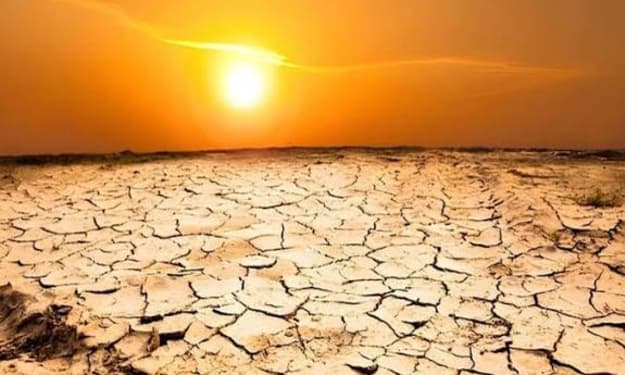
The Pakistan Meteorological Department has issued a forecast indicating that Sindh province is expected to experience a prolonged period of dry weather over the coming weeks. Meteorologists say the region will see little to no rainfall, with temperatures remaining above seasonal averages, raising concerns about agriculture, water resources, and public health. According to the Met Office, a high-pressure system over the Arabian Sea and the Indian subcontinent is likely to dominate weather patterns in Sindh for the next fortnight. This atmospheric configuration inhibits cloud formation, leading to clear skies and minimal precipitation. Forecasts predict daytime temperatures in major cities, including Karachi and Hyderabad, to hover between 28°C and 34°C, slightly above the long-term average for this period. Nighttime temperatures are expected to remain mild, ranging from 18°C to 22°C. The dry spell comes at a critical time for the agricultural sector. Sindh is a major contributor to Pakistan’s wheat, sugarcane, and rice production. Farmers are being advised to monitor soil moisture levels carefully and consider supplemental irrigation for crops at sensitive growth stages. Prolonged dry conditions can affect germination, yield, and quality, particularly for wheat crops that rely on moderate rainfall in the final stages before harvest. Water resource management is also expected to become a key challenge. Reservoirs and canals in Sindh, which depend on upstream flows from the Indus River system, are already operating at variable levels due to reduced inflows and increased water demand. Local authorities are monitoring water distribution closely, emphasizing conservation measures and urging residents to avoid excessive usage. In some districts, water rationing plans may be activated if the dry period persists. Public health officials have cautioned about potential heat-related risks. Although the current temperatures are not extreme, prolonged dry conditions can exacerbate health issues, particularly for vulnerable populations such as the elderly, children, and people with preexisting medical conditions. Heat stress, dehydration, and respiratory issues may become more common if residents do not take appropriate precautions. Health authorities recommend staying hydrated, avoiding prolonged exposure to the sun during peak hours, and ensuring access to cool environments. The Met Office also noted that dust storms and haze could occur in some areas due to the dry conditions combined with occasional strong winds. These phenomena can reduce visibility and impact road traffic, aviation, and outdoor activities. Residents are advised to take safety precautions, particularly when traveling, and to follow local advisories regarding dust and air quality. Economists have warned that the dry spell could have indirect effects on local markets. Reduced crop output may drive up food prices, especially for wheat, rice, and vegetables, affecting household budgets and contributing to inflationary pressures. Traders and suppliers are being advised to monitor market conditions and plan accordingly to avoid shortages or sudden price hikes. Despite the dry weather, meteorologists have noted that this pattern is part of a natural seasonal variation. Sindh typically experiences dry periods during the pre-monsoon and post-winter seasons, and occasional heat waves are not unusual. However, experts also emphasize that climate change may be altering rainfall patterns, leading to longer dry spells and more unpredictable weather events. Continuous monitoring and early warning systems are essential to mitigate risks to agriculture, water supplies, and public health. Authorities in Sindh have urged residents and local businesses to remain vigilant. Farmers should adopt efficient irrigation practices, municipal agencies should ensure water distribution networks function effectively, and the public should take measures to protect health and safety. Collaboration between government departments, meteorological agencies, and the community will be crucial in managing the impacts of this dry period. Looking ahead, the Met Office expects the dry spell to continue into late March, with little relief from rainfall until the onset of the pre-monsoon showers. While temperatures are likely to remain moderate, the persistence of dry weather underscores the need for careful planning and resource management in Sindh. Residents are encouraged to stay updated with official forecasts and advisories to minimize the effects of prolonged dry conditions on daily life and livelihoods.
By Fiaz Ahmed 3 days ago in Longevity
Two Grumpy Old Men Solve the Problem
Marty and Steve were two grumpy old men who lived together. They had known each other for years. Marty had been a bachelor all his life. Steve said it was because no one could stand to ever live with. Marty’s standard reply was “Well, you are, so what sort of a moron does that make you!”
By Calvin Londona day ago in Humor



Comments
There are no comments for this story
Be the first to respond and start the conversation.