
India Beauty and Personal Care Products Market Size & Forecast 2026–2034
Rising Incomes, Digital Influence, and Natural Wellness Trends Drive India’s Rapidly Expanding Beauty Industry

India Beauty and Personal Care Products Market: Overview
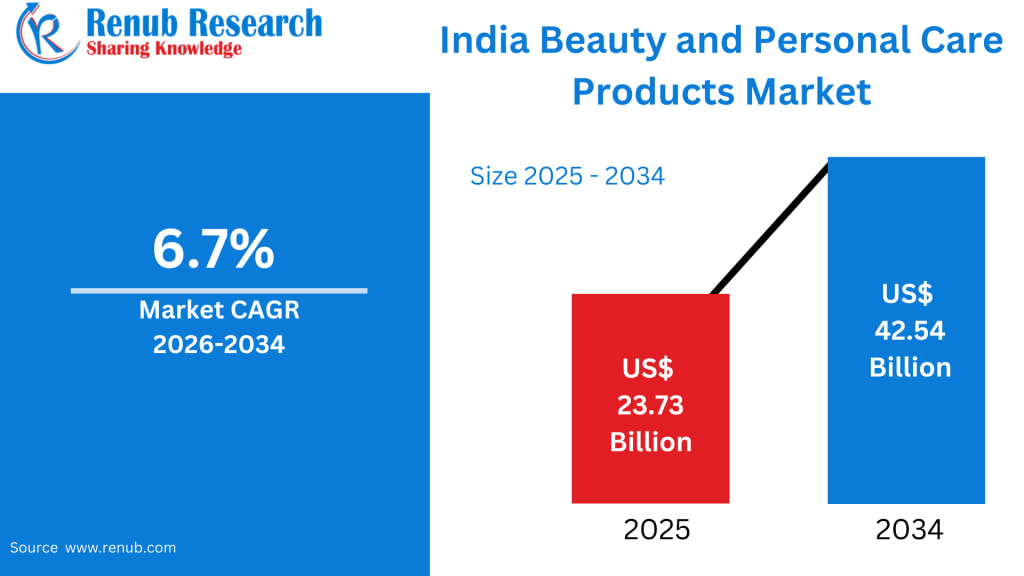
The Indian Beauty and Personal Care Products Market is expected to grow steadily over the coming decade, expanding from US$ 23.73 Billion in 2025 to US$ 42.54 Billion by 2034, registering a compound annual growth rate (CAGR) of 6.7% during 2026–2034. This strong growth outlook is supported by rising per capita income, rapid urbanization, increasing awareness of grooming and wellness, and the growing demand for herbal and natural personal care products.
Beauty and personal care products encompass a wide range of consumer items used for hygiene, grooming, and aesthetic enhancement. These include skincare, hair care, oral care, color cosmetics, fragrances, and grooming aids for both men and women. Across India, these products have become essential components of daily life, driven not only by functional needs but also by aspirations related to appearance, confidence, and lifestyle.
India’s beauty market is no longer limited to metropolitan elites. Rising disposable incomes in semi-urban and rural regions, the growth of modern retail, and widespread digital connectivity have brought beauty and personal care products to millions of first-time users. Consumers are increasingly influenced by social media, celebrity endorsements, and digital marketing, while traditional wellness concepts such as Ayurveda and herbal remedies continue to shape purchasing behavior.
Together, these forces are transforming India into one of the fastest-growing beauty and personal care markets globally.
Key Drivers of Growth in the Indian Beauty and Personal Care Market
1. Rising Disposable Income and Rapid Urbanization
Urbanization remains one of the strongest structural drivers of the Indian beauty and personal care market. With more than half of India’s population projected to live in urban areas by mid-century, cities and expanding tier-2 and tier-3 towns are becoming hubs of consumption. As people migrate toward urban centers, exposure to modern lifestyles, global fashion trends, and organized retail increases significantly.
Higher disposable incomes among middle-class households have encouraged greater spending on skincare, hair care, cosmetics, and premium grooming products. For working professionals, appearance and personal hygiene have become important elements of both social and professional identity. Importantly, this shift is no longer confined to metros such as Mumbai and Delhi; aspirational consumption is rising across smaller cities as well.
Modern retail formats, malls, and exclusive brand outlets have further accelerated demand by improving product availability and enhancing the shopping experience. As India’s middle class continues to expand, spending on beauty and personal care products is expected to remain on a strong upward trajectory.
2. Growing Demand for Natural, Herbal, and Ayurvedic Products
India’s deep cultural roots in Ayurveda and herbal wellness have strongly influenced the beauty and personal care industry. Consumers are increasingly seeking products that are perceived as safer, chemical-free, and aligned with traditional health practices. This has fueled demand for natural, organic, and plant-based skincare, hair care, and hygiene products.
Concerns about long-term side effects of synthetic ingredients have encouraged many consumers to shift toward formulations made from herbs, essential oils, and natural extracts. The preference for sustainability and eco-friendly packaging further strengthens this trend.
Several domestic brands have successfully positioned themselves around Ayurveda and natural science, combining traditional formulations with modern research. For example, in January 2025, Jivada emerged as a notable new player in the Indian self-care and personal care sector by blending Ayurvedic principles with scientific innovation. Such developments highlight the commercial potential of heritage-driven wellness products in contemporary Indian markets.
3. Digital Influence and E-commerce Expansion
The rapid growth of digital platforms has fundamentally reshaped how Indian consumers discover, evaluate, and purchase beauty products. Social media influencers, online beauty tutorials, and user reviews play a critical role in shaping purchasing decisions. Platforms such as Instagram, YouTube, and short-video apps have become powerful marketing channels for both established brands and emerging startups.
E-commerce has significantly expanded market reach, allowing consumers to access domestic and international brands regardless of location. The increasing penetration of smartphones, particularly in tier-III and tier-IV cities, has introduced millions of new consumers to online beauty shopping.
Direct-to-consumer (D2C) models are also gaining traction. In November 2025, Naturals Salon launched its own D2C skincare brand, NXTFACE, targeting younger consumer segments with digitally native marketing strategies. Such initiatives reflect the broader shift toward personalized, digitally enabled beauty retail in India.
Challenges Facing the Indian Beauty and Personal Care Products Market
1. Intense Competition and Price Sensitivity
The Indian beauty and personal care industry is characterized by intense competition among multinational corporations, strong domestic brands, and numerous regional and unorganized players. This crowded landscape places continuous pressure on pricing and margins, particularly in mass-market categories such as soaps, shampoos, and oral care.
Indian consumers remain highly price-sensitive, especially in rural and semi-urban markets. Frequent promotional offers, discounts, and pack-size innovations are often necessary to retain market share. For new entrants, high marketing expenditures are required to establish brand recognition in an already saturated environment.
Product differentiation is also becoming increasingly difficult, as many brands compete on similar claims of quality, herbal content, or dermatological safety. Sustaining long-term profitability therefore requires strong branding, innovation, and efficient distribution.
2. Regulatory Compliance and Product Safety
India’s cosmetic and personal care sector operates under strict regulatory frameworks governing labeling, formulation, and ingredient usage. Companies must comply with evolving standards related to product safety, quality control, and consumer protection.
For smaller firms, regulatory compliance can be costly and complex. The presence of counterfeit products, mislabeling, and inconsistent quality in unorganized segments can also damage consumer trust and affect the overall reputation of the industry. Ensuring transparency, standardization, and adherence to safety regulations remains a critical challenge for market participants.
Key Market Segments
Indian Organic Beauty & Personal Care Products Market
The organic beauty and personal care segment is among the fastest-growing in India. Rising awareness about the adverse effects of chemical-based formulations has encouraged consumers to adopt natural, eco-friendly alternatives. Organic skincare, haircare, oral care, and personal hygiene products made from plant-based and Ayurvedic ingredients are increasingly preferred.
This trend is supported by a broader shift toward sustainable living, cruelty-free products, and environmentally responsible packaging. For many Indian consumers, organic products are not merely lifestyle choices but extensions of long-standing wellness traditions, making this segment both culturally resonant and commercially attractive.
Indian Skin Care Products Market
Skincare represents one of the most dynamic categories within India’s beauty and personal care sector. Urban pollution, climate variability, and growing awareness of dermatological health have increased demand for moisturizers, cleansers, sunscreens, serums, and anti-aging solutions.
The rise of multi-step skincare routines, influenced by dermatologists and social media trends, has expanded product usage across age groups and genders. Personalized skincare solutions, derma-tested products, and cosmeceuticals that combine beauty with medical benefits are emerging as key growth areas.
India Mass Beauty and Personal Care Products Market
Mass products dominate in terms of volume due to their affordability and widespread availability. Soaps, shampoos, hair oils, toothpaste, and basic grooming products remain essential for daily consumption across income groups.
Strong distribution networks through traditional retail, modern trade, and rural channels ensure continued dominance of this category. While premiumization is gaining momentum in urban areas, mass products will remain a foundation of India’s beauty and personal care market due to the country’s price-conscious consumer base.
India Beauty & Personal Care Specialty Stores Market
Specialty stores are becoming increasingly important, particularly in urban centers. These retailers offer curated product selections, professional guidance, and enhanced in-store experiences. Consumers seeking premium skincare, cosmetics, fragrances, and niche brands prefer specialty outlets for authenticity and personalized service.
Organized specialty retail also strengthens brand positioning and builds consumer trust, making it a vital channel for both international and domestic premium brands.
India Female Beauty and Personal Care Products Market
The female consumer segment continues to be a major growth engine. Rising workforce participation, increasing financial independence, and changing perceptions of beauty and self-care are driving demand across skincare, cosmetics, hair care, and wellness products.
Brands are increasingly offering products tailored to different life stages, skin types, and personal preferences. The influence of social media tutorials, digital influencers, and evolving standards of individuality and self-expression further fuels consumption. Female-focused beauty products thus remain central to market expansion.
Regional Market Insights
Maharashtra Beauty and Personal Care Market
Maharashtra is one of India’s largest and most developed beauty and personal care markets. Cities such as Mumbai, Pune, and Nagpur exhibit strong demand for skincare, haircare, cosmetics, fragrances, and grooming products. High disposable incomes, advanced retail infrastructure, and widespread e-commerce adoption support premium and innovative product categories. Tech-savvy consumers and strong exposure to global trends make Maharashtra a key growth driver nationally.
Uttar Pradesh Beauty and Personal Care Market
Uttar Pradesh benefits from a vast population base and increasing urbanization. Cities including Noida, Ghaziabad, Lucknow, and Kanpur are witnessing rising consumption of skincare, haircare, oral care, and hygiene products. While mass products dominate due to affordability, branded and herbal products are gaining traction in urban and semi-urban areas. Improved retail infrastructure and digital penetration are transforming Uttar Pradesh into a high-volume, high-growth market.
Telangana Beauty and Personal Care Market
The Telangana market is expanding due to increasing awareness of grooming, hygiene, and wellness. Cities such as Hyderabad, Warangal, and Nizamabad show rising demand for skincare, haircare, and cosmetics. The region has a strong preference for herbal and Ayurvedic products, reflecting cultural affinity for natural remedies. Improved distribution and digital influence are further strengthening market growth.
Gujarat Beauty and Personal Care Market
Gujarat’s market is shaped by a value-oriented consumer base that emphasizes quality, durability, and cost-effectiveness. Ahmedabad, Surat, and Vadodara drive demand for skincare, grooming, and hygiene products, with strong traction in mass and mid-range categories. Growing awareness of herbal products and well-developed distribution networks support consistent market expansion.
Market Segmentation Overview
By Type
Conventional
Organic
By Product
Skin Care
Hair Care
Color Cosmetics
Fragrances
Others
By Pricing
Mass Products
Premium Products
By Distribution Channel
Supermarkets and Hypermarkets
Specialty Stores
E-commerce
Others
By End User
Male
Female
Top States Covered
Maharashtra, Tamil Nadu, Karnataka, Gujarat, Uttar Pradesh, West Bengal, Rajasthan, Telangana, Andhra Pradesh, Madhya Pradesh
Competitive Landscape
The Indian beauty and personal care market is highly competitive, with global conglomerates, domestic leaders, and emerging startups all vying for market share. Companies are evaluated across multiple parameters, including overviews, leadership profiles, recent developments, SWOT analysis, and revenue performance.
Major companies operating in the broader chemical and materials ecosystem supporting personal care formulations include:
BASF SE, China Petrochemical Corporation, Daelim Co. Ltd., Exxon Mobil Corporation, Formosa Plastics Corporation, HPCL-Mittal Energy Limited (HMEL), INEOS, LG Chem Ltd., LyondellBasell Industries N.V., and Sumitomo Chemical Co. Ltd.
Innovation, sustainable sourcing, digital marketing, and strong distribution networks remain critical differentiators in this competitive environment.
Final Thoughts
India’s beauty and personal care products market is entering a transformative phase. With revenues projected to grow from US$ 23.73 Billion in 2025 to US$ 42.54 Billion by 2034 at a CAGR of 6.7%, the sector reflects powerful shifts in consumer behavior, lifestyle aspirations, and wellness consciousness.
Urbanization, rising incomes, digital engagement, and the resurgence of natural and Ayurvedic traditions are reshaping product offerings and distribution strategies. While challenges such as price sensitivity, regulatory compliance, and competitive intensity persist, the market’s long-term fundamentals remain exceptionally strong.
As India continues to evolve into a more connected, health-aware, and aspirational society, beauty and personal care products will remain central to everyday life—making this industry one of the most dynamic and opportunity-rich consumer markets in the country for the decade ahead.
About the Creator
Keep reading
More stories from Aaina Oberoi and writers in Longevity and other communities.
United States Management Consulting Services Market Size & Forecast 2026–2034
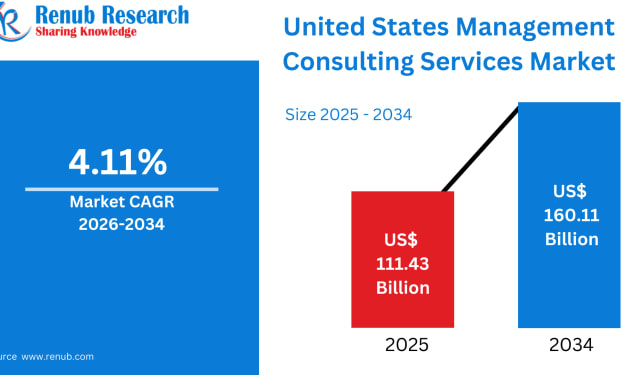
United States Management Consulting Services Market: A Strategic Engine for Modern Business The United States Management Consulting Services Market is anticipated to grow steadily, expanding from US$ 111.43 Billion in 2025 to US$ 160.11 Billion by 2034, registering a Compound Annual Growth Rate (CAGR) of 4.11% between 2026 and 2034. This sustained expansion reflects the increasing reliance of organizations on professional advisory services to navigate digital disruption, operational complexity, regulatory pressures, and intensifying competition.
By Aaina Oberoi3 days ago in Longevity
Day 4 of Quitting
If this is how sobriety feels, maybe it’s better to go through life a little buzzed… this, along with other hits like, I want to kill myself, I wish I was dead, and I’m going to throw myself off a bridge have been the only thoughts on rotation these past few days. I promise myself that if, in a month, I still feel like this (‘this’ meaning despondent, full of rage, and simultaneously numb) I can go back to smoking. Until mid-February though? Nicotine is off the table.
By sleepy drafts5 days ago in Longevity
Seven Health Tips To Promote Longevity
I love chatting with older folks who look better than younger folks and have more energy than younger folks. They're magnetic because they're doing life differently. Most people age out of healthy habits, physiques, and energy. But a small sector of folks defy the odds and maintain pristine health as they age. Here are some tips I received from some older folks who looked better than most of the people at the gym:
By Destiny S. Harris5 days ago in Longevity


Comments
There are no comments for this story
Be the first to respond and start the conversation.