
In the Desert, They Are Building an “Artificial Sun” to Power Cities
A desert project aims to harness concentrated sunlight to power entire ci

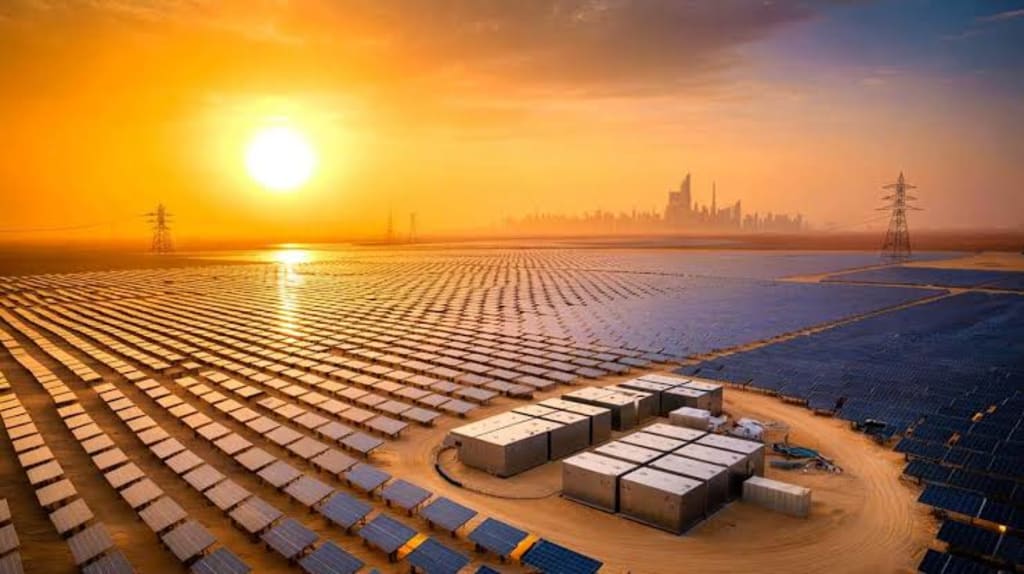
How cutting-edge solar technology could transform energy production
In a vast desert, engineers and scientists are working on a groundbreaking project: building an “artificial sun” to provide clean and nearly limitless energy for cities. This ambitious initiative aims to replicate the power of the sun on Earth, using advanced solar technology to generate electricity more efficiently than conventional solar panels.
The project represents a major leap forward in renewable energy, offering a potential solution to the growing global demand for sustainable power while reducing reliance on fossil fuels.
What Is the Artificial Sun?
The “artificial sun” is a type of concentrated solar power (CSP) system that focuses sunlight to produce extremely high temperatures. Key features include:
Heliostat mirrors: Hundreds or thousands of mirrors track the sun and reflect sunlight onto a central receiver.
Central tower: The concentrated sunlight heats a special fluid or molten salt to extremely high temperatures, sometimes exceeding 1,000 degrees Celsius.
Energy conversion: The heat is used to generate steam, which drives turbines to produce electricity.
Storage capability: Molten salt or other heat-retaining materials allow energy to be stored and released at night, overcoming one limitation of conventional solar power.
This technology mimics the sun’s natural energy but in a controlled environment, allowing scientists to produce reliable, continuous electricity.
Why the Desert?
Deserts are ideal locations for artificial sun projects due to several factors:
Abundant sunlight: Deserts receive the most direct sunlight throughout the year, maximizing energy output.
Large open spaces: CSP systems require vast areas for mirrors and solar fields.
Low population density: There is minimal risk of disturbing communities or infrastructure.
Countries like China, the United Arab Emirates, and Saudi Arabia have chosen desert regions to test and deploy large-scale solar projects, combining sunlight availability with modern technology.
Advantages of an Artificial Sun
Artificial sun projects promise several benefits over traditional energy sources:
High energy output
Concentrated sunlight generates more electricity per square meter than standard photovoltaic panels.
Sustainability
Solar energy is renewable, clean, and virtually limitless, helping reduce carbon emissions.
24/7 energy supply
Heat storage systems allow electricity to be produced even when the sun is not shining, solving a key problem of conventional solar energy.
Scalable technology
Systems can power individual cities or entire regions, depending on size and design.
By mimicking the sun, engineers hope to provide reliable, clean energy for the world’s growing population.
How It Works: Step by Step
Sunlight reflection
Thousands of mirrors track the sun and focus its rays on a central tower.
Heat absorption
The tower contains a receiver filled with molten salt or fluid that absorbs extreme heat.
Steam generation
The heated fluid produces steam that drives turbines.
Electricity production
Turbines generate electricity that is sent to cities or stored for later use.
Nighttime supply
Stored heat can produce electricity after sunset, ensuring continuous power.
This process allows for efficient and predictable electricity generation, even in remote or desert areas.
Global Implications
If artificial sun technology succeeds, it could revolutionize the global energy landscape:
Reducing carbon emissions: By replacing coal and gas plants, CSP could help countries meet climate goals.
Energy independence: Countries with abundant sunlight can generate their own power, reducing reliance on imports.
Economic growth: Large-scale solar projects can create jobs, research opportunities, and infrastructure development.
Innovation driver: Advances in mirrors, fluids, and heat storage could inspire new renewable energy technologies.
Experts predict that artificial sun systems could power entire cities, offering a sustainable alternative to fossil fuels.
Challenges Ahead
While promising, building an artificial sun comes with technical and practical challenges:
High initial costs: CSP projects require significant investment in mirrors, towers, and infrastructure.
Maintenance complexity: Mirrors and towers must withstand harsh desert conditions, including sandstorms and heat.
Energy transport: Delivering electricity from remote deserts to urban centers can be logistically challenging.
Technological limitations: Scientists are continually improving heat storage and efficiency to make the system viable.
Despite these challenges, governments and companies are committed to advancing the technology because of its long-term benefits.
Future of Artificial Sun Projects
The artificial sun represents a new frontier in renewable energy. Future developments may include:
Smarter mirror systems for higher efficiency
Advanced heat storage solutions for even longer energy supply
Integration with smart grids to distribute electricity efficiently
Collaboration between countries to share technology and reduce costs
With continued investment, artificial sun projects could become a major contributor to sustainable energy worldwide.
Conclusion
In the desert, scientists are creating an artificial sun that could transform how we power our cities. By concentrating sunlight, storing heat, and generating electricity, this technology promises a clean, reliable, and virtually limitless energy source.
While challenges remain, the potential benefits are enormous: reducing carbon emissions, powering millions of people, and driving global innovation in renewable energy. The artificial sun is a bright example of human ingenuity, showing how science can turn the power of nature into a sustainable future.
About the Creator
Fiaz Ahmed
I am Fiaz Ahmed. I am a passionate writer. I love covering trending topics and breaking news. With a sharp eye for what’s happening around the world, and crafts timely and engaging stories that keep readers informed and updated.
Keep reading
More stories from Fiaz Ahmed and writers in Longevity and other communities.
‘Our Children’s Brains Are Not for Sale’: Macron Says France to Fast-Track Social Media Ban for Under-15s
How France is taking a stand to protect children from social media risks French President Emmanuel Macron has announced plans to fast-track a ban on social media for children under 15, citing growing concerns about the effects of digital platforms on young minds. Macron’s statement, “Our children’s brains are not for sale,” underscores the urgency of protecting children from potential harm caused by excessive screen time, data exploitation, and online manipulation. This initiative reflects broader debates worldwide about children’s mental health, privacy, and the role of technology in daily life. Why the Ban? Macron’s decision comes amid mounting evidence that social media can negatively affect children’s mental and emotional development. Key concerns include: Mental health risks: Studies link excessive social media use to anxiety, depression, and low self-esteem in children. Addictive design: Platforms use algorithms that maximize engagement, often keeping children hooked for hours. Data exploitation: Children’s personal information is collected for targeted advertising, raising ethical and privacy concerns. Cyberbullying and online harassment: Younger users are particularly vulnerable to negative interactions and online threats. Macron’s plan aims to shield under-15s from these risks while promoting safer digital habits. Details of the Fast-Track Proposal While the legislation is still under development, initial reports indicate: Age restriction: Social media platforms will be legally restricted for users under 15. Parental verification: Platforms may need parental consent and verification mechanisms for teens aged 13–15. Stricter oversight: French regulators will monitor compliance and impose fines on companies that fail to protect young users. Educational programs: Schools will likely include digital literacy and safe internet use in the curriculum to help children navigate online spaces responsibly. The law is expected to move quickly through Parliament, reflecting Macron’s priority on child protection. Global Context France is not alone in addressing the impact of social media on children. Other countries have taken or are considering similar measures: United Kingdom: Parliament has debated legislation requiring age verification and safety features for social media platforms. United States: Discussions focus on protecting children from targeted ads and harmful content. European Union: Proposed regulations aim to increase platform accountability and strengthen online child protection. France’s move represents one of the most assertive actions in Europe to limit children’s exposure to social media. Support and Criticism The proposal has received mixed reactions: Supporters say: It prioritizes children’s mental health over corporate profit. Early intervention can prevent long-term psychological harm. It sets a global example for child protection in the digital era. Critics argue: Age restrictions may be difficult to enforce, especially with global platforms. Some fear it could limit freedom and access to educational resources online. Tech companies warn of logistical and technical challenges in verifying ages and implementing restrictions. Despite criticism, Macron insists that protecting children outweighs corporate convenience or profit. The Science Behind the Decision Research supports concerns about social media’s impact on young brains: Cognitive development: The prefrontal cortex, responsible for decision-making and impulse control, continues to develop into adolescence. Excessive social media can affect attention and emotional regulation. Sleep disruption: Late-night screen use can reduce sleep quality, further impacting brain function and mood. Self-image and social comparison: Exposure to curated images and peer comparisons can lower self-esteem and increase body image concerns. By restricting access, the French government aims to protect developmental stages and encourage healthier offline activities. Implementation Challenges Rolling out a social media ban for under-15s will require careful planning: Verification systems: Platforms will need robust age-checking mechanisms without infringing on privacy. Parental involvement: Parents may require guidance on monitoring digital habits. Global cooperation: International social media companies must adapt policies to comply with French law. Monitoring and enforcement: Regulators will need constant oversight to ensure compliance and address loopholes. Successful implementation will depend on collaboration between government, tech companies, parents, and schools. Potential Long-Term Impact If implemented effectively, the ban could: Reduce exposure to harmful content among younger children Encourage offline social interactions and physical activity Foster better sleep patterns, emotional regulation, and cognitive development Serve as a model for other nations considering similar protective measures The law also signals a shift in societal values, emphasizing the well-being of children over commercial interests in the digital marketplace. Conclusion France’s decision to fast-track a social media ban for under-15s highlights a growing recognition that digital spaces must be safe and age-appropriate. Macron’s statement, “Our children’s brains are not for sale,” captures the essence of a policy focused on protecting mental health, fostering healthy development, and preparing children for life in a complex digital world. As social media continues to influence daily life, the French initiative may inspire global conversations about ethics, regulation, and responsibility in the tech industry, ensuring that the next generation can thrive both online and offline.
By Fiaz Ahmed about 10 hours ago in Longevity
Day 4 of Quitting
If this is how sobriety feels, maybe it’s better to go through life a little buzzed… this, along with other hits like, I want to kill myself, I wish I was dead, and I’m going to throw myself off a bridge have been the only thoughts on rotation these past few days. I promise myself that if, in a month, I still feel like this (‘this’ meaning despondent, full of rage, and simultaneously numb) I can go back to smoking. Until mid-February though? Nicotine is off the table.
By sleepy drafts18 days ago in Longevity
Knee Replacement Market Size & Forecast 2026–2034: A Global Shift Toward Mobility, Longevity, and Advanced Orthopedic Care
Global Knee Replacement Market Outlook The global knee replacement market is projected to experience steady growth, expanding from US$ 13.82 billion in 2025 to US$ 21.48 billion by 2034, registering a Compound Annual Growth Rate (CAGR) of 5.02% during the forecast period from 2026 to 2034, according to Renub Research.
By Marthan Sira day ago in Longevity




Comments
There are no comments for this story
Be the first to respond and start the conversation.