
I Feel Like a Fraud
Dismantling Imposter Syndrome


By Marissa Katrin Maldonado, Founder, The Treatment Specialist
Image Licensed by Adobe Stock
We all know someone that has risen to the top of their field or runs a successful business. We admire them from afar. They are smart, hard-working people and we look up to them.
Now imagine that this person walks around feeling like a total fraud. Yep, where we see an accomplished individual, he or she sees themselves as a total fake, and imposter who doesn’t deserve their own success.
This is called the imposter syndrome, or having the sense of perpetrating a fraud. People with this syndrome are convinced that they did nothing to earn their status, that they just lucked out. So, they go about their days feeling like total frauds and then overcompensate for it.
Get to know the traits of imposter syndrome. See how these tendencies are holding you back in life. Learning how to spot the signs is the first step to curing yourself from imposter syndrome.
About Imposter Syndrome
First of all, it is important to understand how pervasive imposter syndrome is. According to Laura Newinski, the COO of KMPG, a professional women’s leadership organization, approximately 75% of women experience imposter syndrome at some point in their career. This alone should make us all feel a bit better, knowing how common the problem is.
So what is imposter syndrome anyway? This syndrome occurs when someone is unable to internalize their achievements, to own them as the fruits of their hard work. While the person may have carved out a name for themselves in their field, in their own mind they feel like a phony. They feel that they only arrived at this peak in their career due to dumb luck, not because they have any particular special gifts. Even worse, they feel they are always this close to being found out, of their cover being blown.
What Causes Imposter Syndrome?
At the core of imposter syndrome is a lack of self-confidence and very low self-esteem. An unhealthy drive for perfection is often the culprit, which is fueled by an inherently low self-image. The idea is that the harder you work, the more hours and effort you put in, the better your chances are of pulling off the fraud and not being discovered.
There are some factors that have been identified that could have caused the imposter syndrome. One is the childhood home environment. Some families place intense pressure on their children to excel while also being critical of a child’s shortcomings. This causes the kids to work very hard to please their parents. Always sensing that they aren’t good enough to win their parent’s praise, these high achievers may develop the sense that they are inferior because they are not perfect.
Personality can also play into it. Some people are more self-conscious, certain that everyone is out to judge them or to reveal their flaws. These types also tend to be emotionally reactive type personalities, and sensitive to criticism. They develop a sense that they are not good enough and are highly self-conscious when attention is focused on them. Even when they win an award or some accolade, they don’t believe they deserve it.
The 5 Types of Imposter Syndrome
People who struggle with imposter syndrome tend to be very sensitive to criticism and therefore go to great lengths to avoid being criticized, which just drives the perfectionism. At the same time, these individuals are uncomfortable with praise, feeling on some level that it is undeserved.
According to Valerie Young, Ph.D., an expert on imposter syndrome, there are five different ways that the syndrome can manifest:
- The Perfectionist. This form of imposter syndrome causes the people to put intense pressure on themself in an attempt to be perfect. They tend to focus only on their flaws or shortcomings while not acknowledging their strengths. They are never fully satisfied with their work and highly self-critical.
- The Superwoman or Superman. These people will work themselves to all hours in an attempt to feel they are validated. This is caused by a deep sense that they are inadequate, and to keep up they must work twice as hard as others. These are basically workaholics that are driven by insecurity to overcompensate for perceived shortcomings.
- The Soloist. This type of imposter syndrome leans toward a type of martyr syndrome. They avoid asking others for help because they fear it will reveal their inadequacies or weaknesses. Thus, the Soloist will refuse any offers of help, preferring to work themselves to the bone instead.
- The Natural Genius. These folks pile high expectations on themselves and are highly upset if they cannot meet their unreasonable goals. They become especially frustrated and crestfallen when they aren’t able to master a task perfectly on the first try.
- The Expert. This type of imposter will strive to become highly educated and informed in order to avoid being thought of as unknowledgeable or inexperienced. Constantly seeking information can become a hindrance that slows down their productivity.
How to Overcome Imposter Syndrome
Before chastising yourself for having imposter syndrome, it is wise to keep perspective. Most people are insecure and struggle with feeling not good enough. But when the syndrome impedes your career goals and thwarts your progress it is time to learn some coping skills. Consider these tips for pushing back against imposter syndrome:
- Write down a list of your accomplishments and positive traits, or update your resume. Taking a moment to review what you have accomplished can help renew your self-confidence. Every now and then, just read the list to remind yourself.
- Most people are understanding so it is okay to admit that you may not have the answer to a question. It is totally fine to tell someone that you will get back to them with the information they are requesting. No one expects you to be a walking encyclopedia or a genius.
- Stop comparing yourself to others. Each of us has our own unique strengths and weaknesses, so realize that even the smartest person in the room struggles with something. Focus instead on your own strengths.
- Stop being self-obsessed. The world does not hang on your every word, and people are not out to judge you. If you can practice being less self-conscious you will feel freer to being you.
About the Author
Marissa Katrin Maldonado has been working in the behavioral healthcare industry for over 12 years. She is the founder of The Treatment Specialist, a national online resource for helpful articles about mental health conditions for adults, teens, and families. Dedicated to guiding individuals to the help they seek, Marissa believes that with the right support and guidance, those struggling will have the opportunity to turn their lives around and enjoy a healthy and happy life. She is a proud mother and wife and enjoys long distance running, traveling, and music.
About the Creator
Marissa Katrin Maldonado
The Treatment Specialist provides informational articles for anyone seeking Inpatient Detox Near Me, wondering what Depression Treatment Centers That Take Insurance, or looking for a Should I Go to the Hospital for Depression Quiz.
Keep reading
More stories from writers in Longevity and other communities.
Day 4 of Quitting
If this is how sobriety feels, maybe it’s better to go through life a little buzzed… this, along with other hits like, I want to kill myself, I wish I was dead, and I’m going to throw myself off a bridge have been the only thoughts on rotation these past few days. I promise myself that if, in a month, I still feel like this (‘this’ meaning despondent, full of rage, and simultaneously numb) I can go back to smoking. Until mid-February though? Nicotine is off the table.
By sleepy drafts8 days ago in Longevity
Saudi Arabia Date Syrup Market Size and Forecast 2025–2033
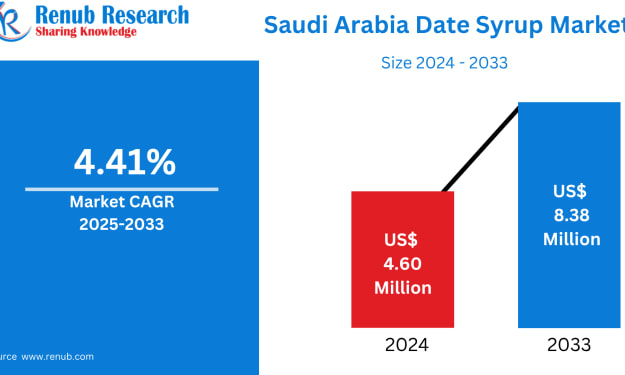
Saudi Arabia Date Syrup Market: A Sweet Tradition Entering a Modern Growth Phase The Saudi Arabia Date Syrup Market is expected to reach US$ 8.38 million by 2033, up from US$ 4.6 million in 2024, expanding at a CAGR of 6.88% from 2025 to 2033. Supported by the Kingdom’s rich date cultivation heritage and growing preference for organic, traditional, and functional food products, the market is being driven by rising health awareness, increasing demand for natural sweeteners, and wider adoption across culinary and foodservice applications.
By Marthan Sir6 days ago in Longevity



Comments
There are no comments for this story
Be the first to respond and start the conversation.