
How To: Teach Oral Health to Your Kids
Ways to Make Learning about Their Smile Fun and Effective
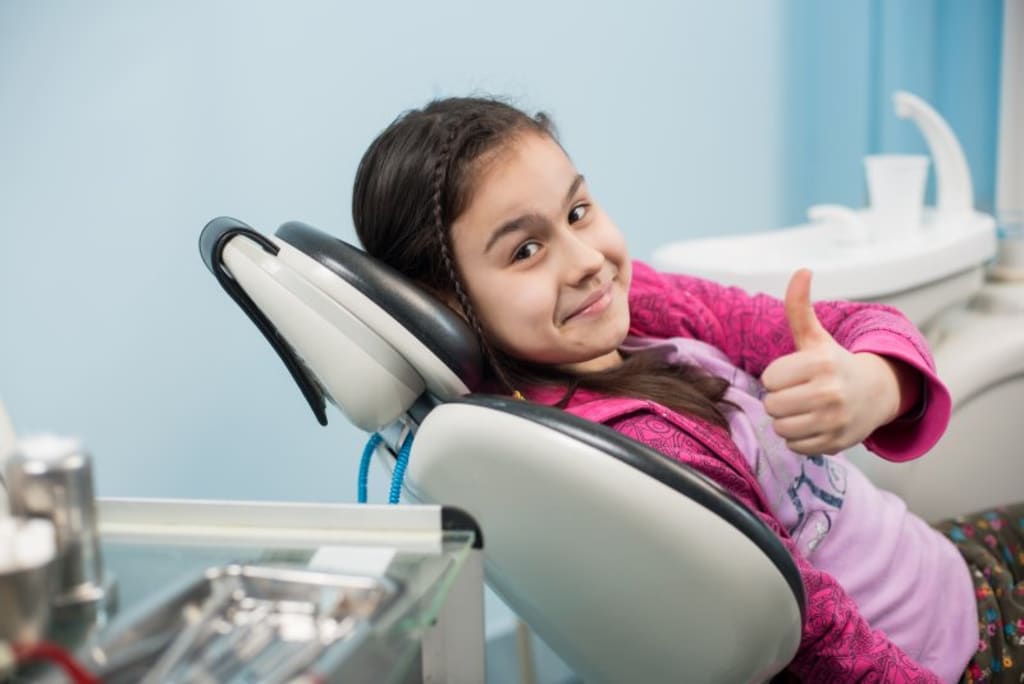
Do you know how many Americans have had a cavity by their 21st birthday? 90%. If that wasn’t shocking enough, the Centers for Disease Control and Prevention estimates that 21% of children between the ages of two and five and 51% of children between the ages of six and eleven already have tooth decay. So, it’s easy to see why teaching your kids about oral health is so important! For a few tips on how to get the message to stick, keep reading.
Tip #1: Start Young
One of the best tips is to make oral hygiene a part of your child’s life from the time they are an infant. Before they even have teeth, you can use a clean, damp washcloth to wipe down their gums. Once their teeth begin to break through the gumline, you can use a small toothbrush to gently clean them. Starting young will ensure that dental care is something they grow up with.
Tip #2: Lead by Example
The “do as I say, not as I do” rule doesn’t apply to oral hygiene. To encourage your child to care for your smile, it’s of the utmost importance that you lead by example. You can do so by brushing your teeth alongside them each morning and evening!
Tip #3: Make It Fun
There is a popular misconception that oral hygiene is boring. It doesn’t have to be! To pique your child’s interest, do what you can to make dental care fun. Try letting them pick their own toothbrush, playing fun songs while brushing, and rewarding their progress along the way.
Tip #4: Read Books About the Topic
Thankfully, there are countless children’s books on everything from oral health and cavities to going to the dentist. In fact, there is a good chance that there is a book that depicts your child’s favorite character too! So, try purchasing a few to incorporate into their nighttime routine.
Tip #5: Create Visual Lessons
Sometimes children learn best when there is a visual element to the concept you’re trying to teach. A fun oral health-related lesson is to cut little teeth from a white styrofoam egg carton. Then, use a dry-erase marker to color the “teeth” that were exposed to smile-friendly foods, like fruits and vegetables. Next, use a black permanent marker to color the ones that were exposed to sugary foods and drinks, like soda and candy. The last step is to have your child use a toothbrush to try and brush the teeth – they’ll quickly see that the unhealthy products are much harder to get off!
Tip #6: Schedule an Appointment with Their Dentist
Like many other dentists, I tell my patients when your child’s first tooth emerges (or around their 1st birthday), you should schedule an appointment. There are a few reasons for this. First, it will ensure that their teeth, gums, and the development of their jaw are consistently being monitored. If any issues arise, like tooth decay, your child's dental team can intervene in the early stages and administer the appropriate treatment. Of course, these periodic visits serve another important purpose: they help teach your child about oral health! At each checkup and cleaning, their dentist will explain what they are doing, why they are doing it, and answer any questions they have along the way.
Naturally, you want to protect your kid and their smile from tooth decay. That way, they have a beautiful smile and healthy bite throughout their childhood! The good news is that the above tips can go a long way. Plus, if you have any additional questions or need some support, you can always ask your child’s dentist.
About the Creator
Keep reading
More stories from writers in Longevity and other communities.
Day 30 of Quitting
Well, I’m back in Canada and this saga continues, but I’d be lying if I said it’s been easy. Two afternoons ago, my boyfriend and I landed in Toronto after 21 hours of flying and three days of travel. We had just gotten off a 15-hour flight from Hong Kong to Canada where neither of us slept. The temperature had gone from plus-30 to negative-25 (celsius), no coffee was hitting as beautifully strong as Australian coffee had (iykyk), and a long to-do list was waiting for us on the other side of a 5-hour car ride back to the remote village we live in, up in northern Ontario.
By sleepy drafts7 days ago in Longevity
Why Handwriting Could Be Good For You
Introduction Text from the Instagram post below: 1. Dr. Tanaka tracked seniors over 80 in Kyoto and found one constant: they wrote by hand for 15 minutes a day. Typing uses one neural pathway, but physical writing hits 17 different zones. You’re robbing your focus when you pick a keyboard over a pen. 2. MRI scans show that writing by hand forces your brain to manage spatial logic and memory at the same time. This effort keeps you off autopilot. Typing is just muscle memory, while writing is active thinking. It’s the clear difference between simple data storage and actual cognitive engagement. 3. In one trial, those journaling by hand had 41% better recall and 34% faster processing. “The pen builds the hardware,” Tanaka noted. The industry hid this for years to protect revenue, since you can’t patent a pen. They chose profit over your memory. Write three original sentences every morning to keep your mind sharp.
By Mike Singleton 💜 Mikeydred 5 days ago in Longevity
Feelings Never Die
It is Valentine's Day again, and it bought back memories that were over fifty years old. It bought me back to 1971, and I woke up and I knew my baby was due today. I was big and pregnant, and I felt like I was about to burst wide open. Imagine my surprise when the doctor told my I had a due date of February 14. I couldn't believe it, and since my baby was due today, I felt I could indulge myself a bit. I had gained a lot of weight, and chocolate was on the no-no list, but I had came to the end of this pregnancy, and I hoped it would be okay, after all I would deliver this baby today. So I walked across the street to the grocery story, and bought myself, a peppermint patty, covered in chocolate, my favorite. Me and my Valentine's baby would enjoy it together.
By Susan Payton4 days ago in Fiction
Why Black History Matters in America?
The United States of America is celebrating their 250th anniversary in 2026. I'm proud to be an American and as someone who was born here, I wouldn't imagine myself living anywhere else. This is a country where opportunities are possible. Where anyone can be successful in anything they desire to do. Equality, community, and togetherness are the backbones of what America is and should be about. However, we have an administration who wants to erase and disregard those who have made positive, meaningful impacts in our country, specifically Black figures, such as Martin Luther King, Jr., Rosa Parks, and Maya Angelou. President Trump and his administration have been constantly complaining and fighting against what they call the "Woke agenda". They use this excuse as a distraction from other issues they refuse to address, such as the high cost of living, climate change, and inflation. That equality is dividing America, when in reality, it's bringing us together. Being woke is not tied to a specific political party. No matter where you stand on the political spectrum, you can still care about other people and their plights. Compassion and empathy for others isn't tied to a political party, either. We were taught as children to treat others the way we want to be treated and not judge others because they're different from us. Caring about others isn't a personal attack on your beliefs. It doesn't make you any less of a person. People who are easily offended over African American figures, past or present, or anything related to it, are grasping at straws. Current and future generations need to know who people like Harriet Tubman and Shirley Chisholm were, especially in the classroom. Black History is part of American History. It should be recognized, not hidden or forgotten. Besides, you can't shield children from everything, just because your feelings are easily hurt.
By Mark Wesley Pritchard 7 days ago in The Swamp



Comments
There are no comments for this story
Be the first to respond and start the conversation.