

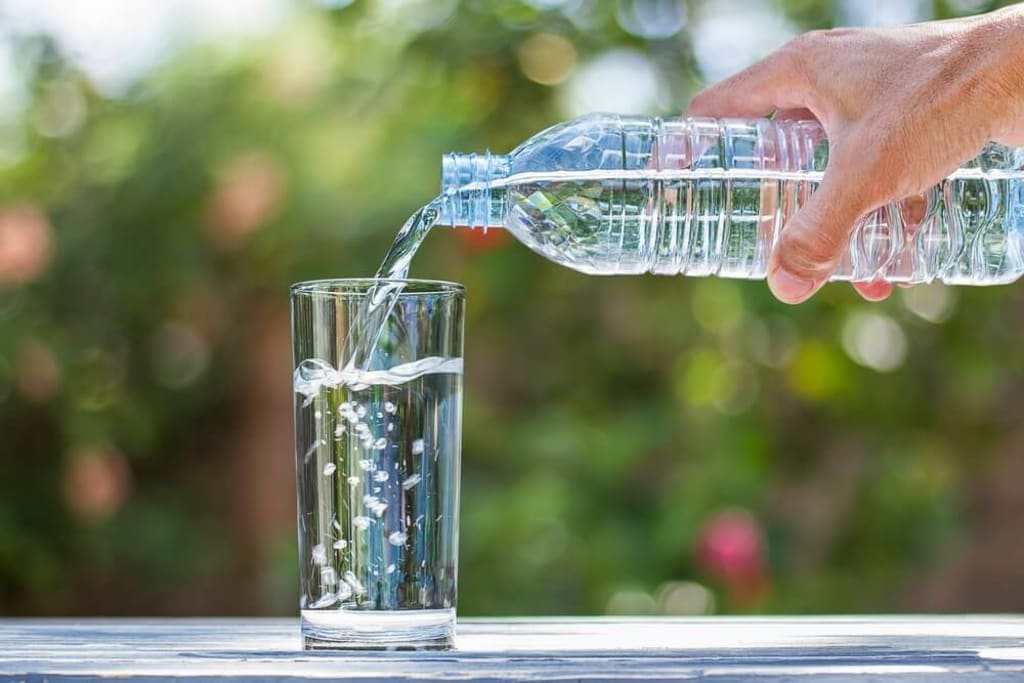
What is dehydration
Dehydration occurs when your body loses more fluids than it takes in. When you’re dehydrated, your body can’t function as intended. While you might associate dehydration with extreme temperatures, there are quite a few things that can contribute to it.
It’s in every living cell, tissue and organ, and it’s second only to oxygen as the thing we need most to survive pure, clean water. We can’t live without it, and we can’t live well without enough of it. We are constantly in need of water as we lose water with every breath and every activity of the body.
We are especially at risk for dehydration when we exercise or we are ill his is when dehydration, even mild dehydration, can take its toll, causing you to feel tired and drained of energy. Anyone may become dehydrated, but young children, older adults and people with chronic illnesses are most at risk.
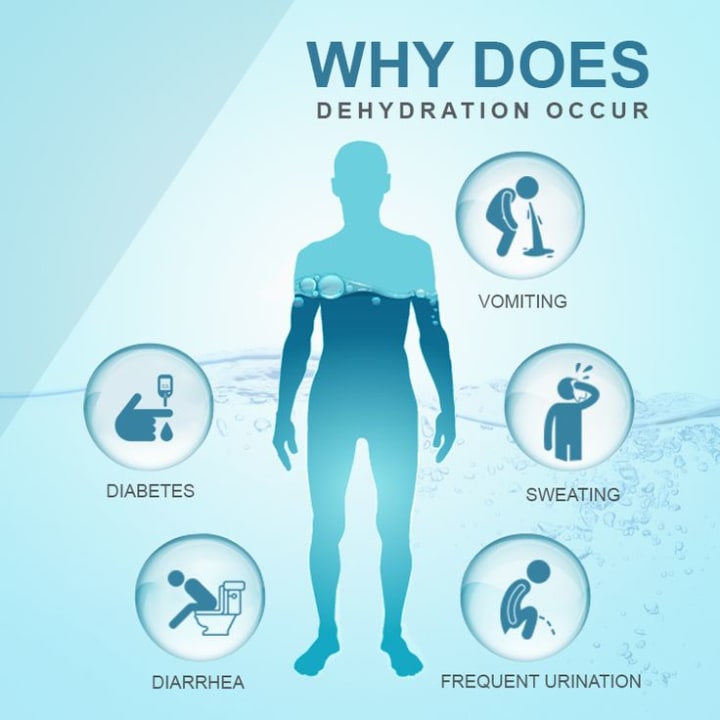
What Causes Dehydration
• Diarrhea
• Vomiting
• Sweating a lot, such as during vigorous activity
• Having a fever
• Not drinking enough fluids
Most common signs of dehydration
Intense thirst, not urinating as much, your skin being warm to the touch and not producing sweat as symptoms of dehydration.
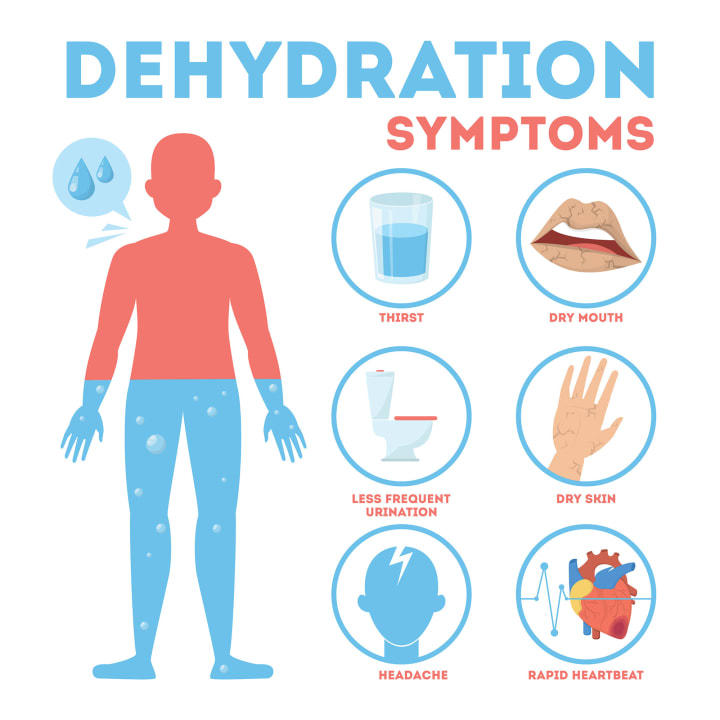
Here are some other signs of dehydration to look out for:
• Being cranky or anxious.
• Headache, delirium, confusion.
• Fatigue.
• Dizziness.
• Dry mouth and/or a dry cough.
• High heart rate with low blood pressure.
• Not being hungry but possibly craving sugar.
• Flushed skin.
• Swelling in the feet.
• Muscle cramping.
• Heat intolerance, or chills.
• Constipation.
• Urine that is darker in color.
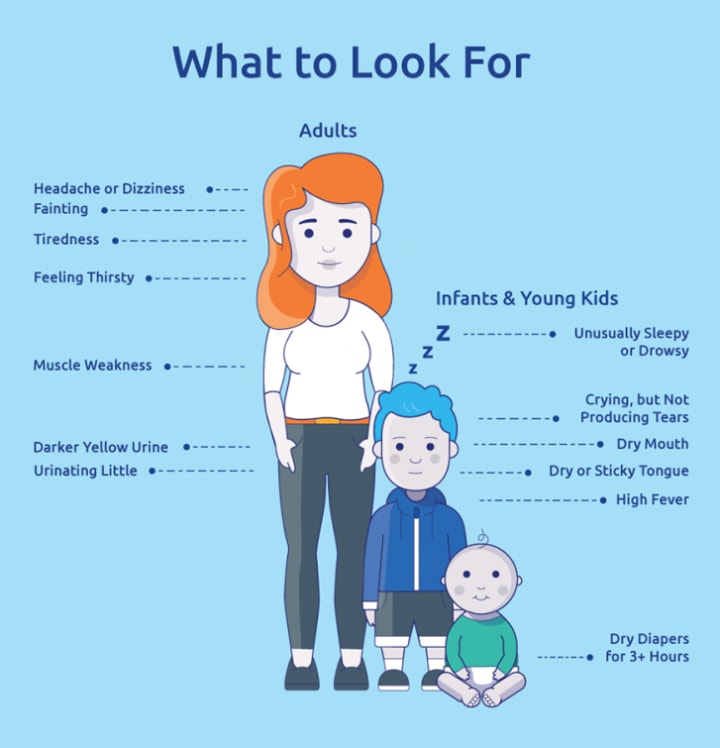
It's best to consult a health care practitioner if you have these symptoms:
• A fever of 103 Fahrenheit or higher.
• Seizures.
• Slurred speech, dizziness, altered mental capacity, fainting, and hallucinations.
• Rapid pulse.
• Loss of consciousness.
• Rapid pulse.
Here are some preventative tips to help avoid dehydration:
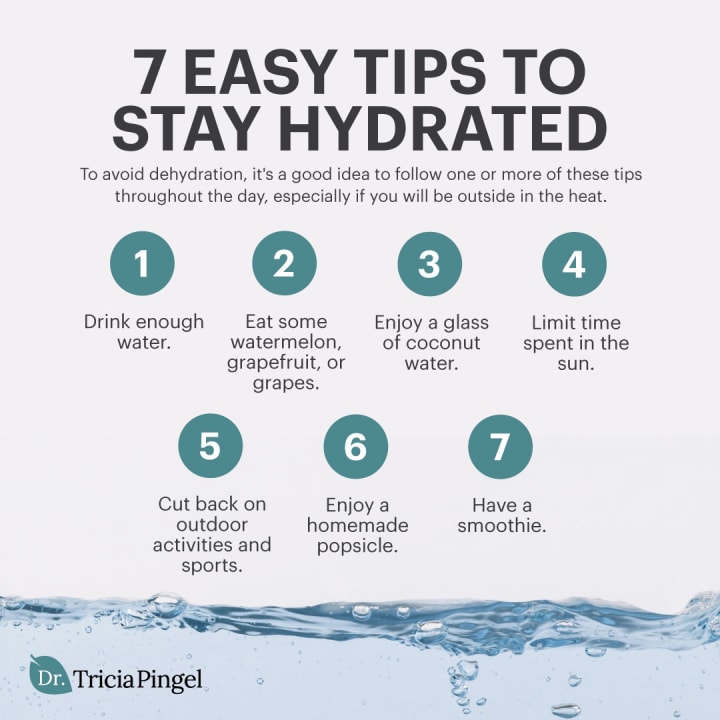
Drink sufficient water
No matter how much you avoid it, you're bound to lose some amount of fluid through sweating during summer. So drinking adequate water is the first thing you need to keep in mind in order to stay away from dehydration. Some experts suggest drinking 6-8 glasses of water every day. But remember fluid requirement varies from person to person depending on factors like height, weight, physical activity and the type of region you live in.

Avoid Alcohol and Caffeine
Alcohol and caffeinated beverages can both make dehydration worse. Alcohol, for example, is a diuretic, which means it cause your body to remove fluids from the blood. If you are drinking alcohol, make sure to pair it with plenty of water to help prevent dehydration.
Eat water-rich fruits and vegetables
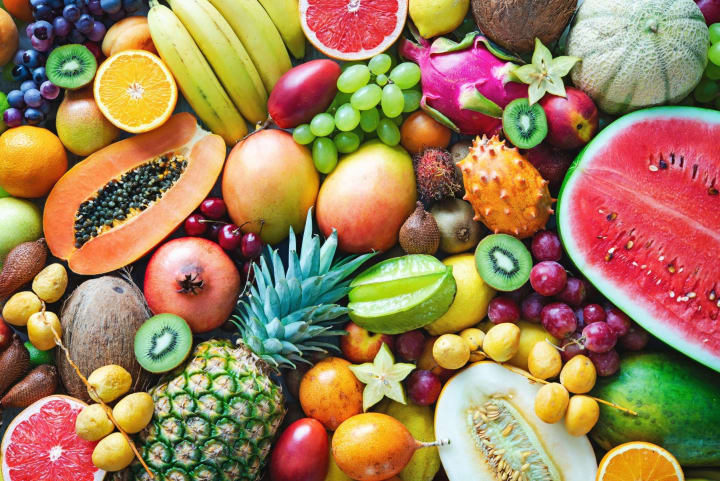
Certain fruits and vegetables contain plenty of water in addition to healthful nutrients. Watermelon, strawberries, cantaloupe, peaches and pineapples are fruits with high-water content. Water-rich vegetables include cucumbers, leafy greens, radishes, celery, zucchini and tomatoes.
Always have a shady retreat
Whether you are outdoors swimming or working in the yard, always have a shady retreat. You want shade to head to so you can cool off and bring your body temperature back down. Try to spend 10-15 minutes in the shade for every hour you spend outdoors.
Check Your Pee
It might seem a little unnatural to keep an eye on your stream, but doing so can help you head off dehydration. If your urine is clear, pale, or straw-colored, you're properly hydrated. But if it's darker, that's an excellent sign that you need to keep drinking.
Perform Yoga
Yoga is a renowned practice to stay fit and healthy. Performing yoga in summers will help you to get relax and calm down your nerves that allows excessive sweating during extreme heat.

• Choose your beverages wisely. Avoid or limit fruit juices, sodas, alcohol and high-sugar sports drinks.
• Plan outdoor activities for cooler parts of the day.
• Eat foods that are high in water content, such as fruits and vegetables.
• Make water your go-to beverage of choice.
Hope these simple yet effective tips to prevent dehydration helps you to keep yourself fresh and hydrate…
About the Creator
How To Live A Happy Life
In my research on happiness, there are some significant sources that matter most. Feeling a sense of purpose in your contribution; sustaining meaningful connections with others; having opportunities to stretch, learn, and grow; and gratitude are all correlated with happiness. Ninety-five per cent of what we call happiness can be achieved by just sitting for some time every day and foc¬using on the present. Make it a daily practice, som-ething you can't do without, like eating food drinking water. It is crucial to happiness.
By mohit raj4 years ago in Motivation
Day 4 of Quitting
If this is how sobriety feels, maybe it’s better to go through life a little buzzed… this, along with other hits like, I want to kill myself, I wish I was dead, and I’m going to throw myself off a bridge have been the only thoughts on rotation these past few days. I promise myself that if, in a month, I still feel like this (‘this’ meaning despondent, full of rage, and simultaneously numb) I can go back to smoking. Until mid-February though? Nicotine is off the table.
By sleepy drafts11 days ago in Longevity
United States Action Figures Market Size and Forecast 2025–2033
Introduction The global healthcare industry is witnessing a pivotal transformation in the treatment of rare and complex neurological disorders, and amyotrophic lateral sclerosis (ALS) stands at the forefront of this shift. Once viewed as a disease with limited therapeutic options, ALS is now attracting unprecedented research attention, investment, and innovation. According to Renub Research, the Amyotrophic Lateral Sclerosis Treatment Market is expected to reach US$ 1,093.14 million by 2033, growing from US$ 657.56 million in 2024, at a CAGR of 5.81% from 2025 to 2033.
By Aaina Oberoi4 days ago in Longevity


Comments
There are no comments for this story
Be the first to respond and start the conversation.