
How to Choose Ergonomically Designed Products
budget and quality

Maintaining proper posture is essential for spinal health, and ergonomic tools can play a significant role in achieving this. Here’s how to select the right ergonomic products to support your neck, thoracic (upper back), and lumbar (lower back) regions:
Neck Support:
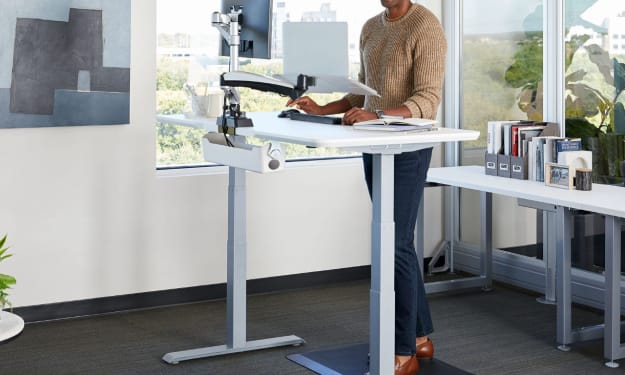
• Monitor Positioning: Elevate your screen so that your eyes are level with the top third of the display. This adjustment encourages you to keep your head upright, reducing neck strain.
• Adjustable Stands: Utilize adjustable stands or risers to position your monitor at the appropriate height. This flexibility allows you to customize the setup to your specific needs.
• Neck Pillows: Consider using ergonomic neck pillows that support the natural curve of your cervical spine, especially during rest periods. These pillows can alleviate pressure and promote better alignment.
Thoracic (Upper Back) Support:
• Chair Selection: Choose a chair with adjustable features, including height, backrest angle, and armrests, to accommodate your body’s natural curves. A well-designed chair can significantly reduce upper back discomfort.
• Lumbar Support: Ensure the chair provides adequate lumbar support to maintain the natural inward curve of your lower back. Proper lumbar support is crucial for overall spinal health.
• Posture Correctors: Devices like thoracic back braces can help promote proper posture by supporting the upper back and shoulders. These tools can be particularly beneficial during prolonged sitting.
Lumbar (Lower Back) Support:
• Ergonomic Chairs: Invest in chairs designed to support the lumbar spine’s natural curve, reducing the risk of lower back pain. Features to look for include adjustable lumbar support and a contoured backrest.
• Lumbar Cushions: Use lumbar cushions or supports that fill the gap between your lower back and the chair, promoting proper spinal alignment. These cushions can be added to existing chairs for enhanced support.
• Adjustable Features: Opt for chairs with adjustable lumbar support to customize the fit to your body’s needs. Personalized adjustments ensure optimal comfort and support.
Additional Tips:
• Regular Movement: Incorporate regular breaks to stand, stretch, and walk around to alleviate pressure on the spine. Movement is essential for maintaining spinal health during long periods of sitting.
• Ergonomic Accessories: Consider ergonomic keyboards and mice to reduce strain on the upper limbs and shoulders. These accessories can enhance comfort and productivity.
• Workstation Setup: Arrange your workstation so that your feet rest flat on the floor, thighs are parallel to the ground, and wrists are straight while typing. An ergonomically optimized workstation promotes better posture and reduces strain.
The spinal cord, a vital component of the central nervous system, runs through the spinal canal formed by the vertebrae. It serves as a conduit for nerve signals between the brain and the rest of the body. Nerves branch out from the spinal cord through openings between the vertebrae, facilitating communication with various body parts
Ligaments and muscles surrounding the spine provide stability and enable movement. The anterior and posterior longitudinal ligaments run along the front and back of the vertebral bodies, respectively, while the interspinous ligaments connect adjacent spinous processes. These structures work together to maintain the spine’s integrity and support daily activities.
Intervertebral discs, situated between the vertebrae, act as shock absorbers, cushioning the bones and allowing for flexibility and movement. These discs are composed of a gel-like center called the nucleus pulposus, surrounded by a tough outer layer known as the annulus fibrosus.
Understanding the anatomy of the spine is crucial for maintaining spinal health and preventing injuries. Proper posture, regular exercise, and ergonomic practices can help preserve the spine’s function and overall well-being.
By thoughtfully selecting and utilizing ergonomic tools, you can significantly enhance your posture and overall spinal health. Investing in quality ergonomic products tailored to your specific needs can lead to long-term benefits and comfort.
About the Creator
Keep reading
More stories from Josalynn xue and writers in Longevity and other communities.
Four Steps to Improve Prolonged Sitting
Who Should Avoid Prolonged Sitting? The answer is simple: everyone who is capable of standing. It’s only in the past 5 to 10 years that the medical community has truly recognized the dangers of prolonged sitting and the benefits of breaking this habit. As a doctor, I often overlooked how this seemingly trivial activity could have such a significant impact on health. One memorable case comes to mind.
By Josalynn xueabout a year ago in Longevity
You’re Probably Shortening Your Life Without Realizing It (Here’s the Simple Fix Nobody Talks About)
Most people don’t think they’re making choices that shorten their life. They assume that serious health problems come from obvious risks—smoking, extreme stress, or poor genetics. But the reality is far more subtle. The biggest impact on longevity often comes from small, repeated habits that feel harmless in the moment.
By Lukáš Hrdlička5 days ago in Longevity
Healthy Eating in Hostel Without a Kitchen
No stove. No fridge space. No time. Low budget. Welcome to hostel life. Most students think healthy eating is impossible without a kitchen. So they survive on instant noodles, cafeteria fried rice, and random snacks.
By Being Inquisitive6 days ago in Longevity
I was in a Toxic Relationship, with my Workplace
“You got that?” My ex yelled. His hands were balled into fists at his side. At six foot three, he towered over me. A normal person would have been afraid, but I looked up a video of George Lopez repeatedly saying, “I got this,” and showed it to him. I had grown used to this treatment, so much so that I didn’t blink when he ripped the phone from my hand and threw it across the room.
By Jade M.4 days ago in Confessions



Comments
There are no comments for this story
Be the first to respond and start the conversation.