
How stress impact our lives ?

WHAT IS STRESS ?
“It’s not stress that kills us but it’s our reaction to it “ a well said quote as since ancient times stress has been an integral part of our lives even it’s the natural process that our body has to go through either to protect us from danger or to get our work done before deadlines! After all, it's stress that took humanity to the different phases of evolution .
Nowadays though we have equipped ourselves with modern gadgets but we have lost our natural equipment to manage our natural watchdogs -one of them is Stress .
Being a very common & interesting topic let’s look at the Stress from scientific point of view and know about its types , distress causes , management & much more .
Stress is the in-built response of our body to react & respond to the changing environmental conditions .The body reacts to these changes with physical, mental, and emotional responses.
Stress can be positive ("eustress") -- such as getting a job promotion or being given greater responsibilities -- keeping us alert and ready to avoid danger. Stress becomes negative ("distress") when a person faces continuous challenges without relief or relaxation between challenges. As a result, the person becomes overworked and stress-related tension builds.
Body’s response to stress -
A study conducted by McEwen et al in Redefining neuroendocrinology: epigenetics of brain-body communication over the life course in 2018 - has unveiled how our body responds to the stress via 2 inbuilt pathways, two systems are activated when we experience stress. The first and easiest to activate is the sympathetic–adrenal–medullary (SAM) system. The second is the hypothalamic–pituitary–adrenal (HPA) axis.
For homeostasis- whereby the human body tightly regulates its internal physiological states (e.g., body temperature, oxygen supply etc.) to keep us alive ,In order to maintain homeostasis, our body releases hormones (e.g., cortisol, adrenaline, and noradrenaline) and switches on the autonomic nervous system (ANS) and the central nervous system to allow us to adapt and respond to day-to-day activities (some of which may be stressful).
The release of these so-called physiological mediators (cortisol, adrenaline, and noradrenaline) and changes in immune and metabolic parameters (known as allostasis are protective and adaptive as long as they switch on and switch off in a balanced way when an environmental challenge or stressor is no longer present but inefficient turning off & on of these stress mediators leads to what is known as Allostatic overload.
IMPACT OF STRESS ON PHYSICAL & MENTAL HEALTH -
Mood swing issues including anger, depression , irritability .
Lack of energy concentration problems , sleeping issues , headaches .
Mental issues including anxiety disorders & panic attacks
Increased blood pressure & heart rate
Higher cholesterol & risk of heart attack
In the immune system , there is reduced ability to fight & recovery from illness.
Stomach cramps , reflux & nausea
Loss of Ilbido , lower sperm production for men & increased period pain for women
Aches & pains in joint & muscles
Lowers bone density .
A study about stress impact - According to the 2021 edition of the American Psychological Association’s annual Stress in America survey. It indicated that 59% of U.S. adults experienced stress-induced behavioural changes within a 30-day period. These changes included avoidance of social situations, neglecting responsibilities, and stress eating.
In 2021 , a study conducted by - The Occupational Safety and Health Administration (OSHA) declared stress a hazard of the workplace. Stress costs American industry more than $300 billion annually. & the lifetime prevalence of an emotional disorder is more than 50%, often due to chronic, untreated stress reactions.
STRESS MANAGEMENT
After getting a sizeable knowledge about the stress mismanagement & its causes now let’s discuss various ways by which we can manage our stress and get it turn into EUSTRESS-
HERE is the key Do - MASTER STRESS !
M- Maintain healthy eating
A- avoid social isolation
S-Stay informed , not obsessed
T- Talk to others
E- engage in mindfulness
R - relax ,play ,exercise
S- start journaling
T -Take deep breaths
R- rest and sleep well
E- engage to gratitude
S - step outside into nature
S - seek support from friends, family and professionals
So , if next time remember stress is not bad but it's mismanagement is bad even stress is necessary to let us complete our work before deadlines and protect us in danger .
About the Creator
SHIVANJALI PRIYA
Content writer & blogger writes with deep thoughts creative & curative style . Passionate for learning , reading & writing the innovative , artful and mind-boggling content .
Takes up challenges as stepping stones for my success.
Keep reading
More stories from SHIVANJALI PRIYA and writers in Longevity and other communities.
Economic Impact: How Russia's Actions Have Impacted Ukraine and the Global Economy
The economic impact of Russia's actions on Ukraine and the global economy is a topic that requires careful consideration. The events surrounding this conflict have had far-reaching consequences, not only for the countries involved but also for the stability of the global financial system.
By SHIVANJALI PRIYA 3 years ago in Education
Day 4 of Quitting
If this is how sobriety feels, maybe it’s better to go through life a little buzzed… this, along with other hits like, I want to kill myself, I wish I was dead, and I’m going to throw myself off a bridge have been the only thoughts on rotation these past few days. I promise myself that if, in a month, I still feel like this (‘this’ meaning despondent, full of rage, and simultaneously numb) I can go back to smoking. Until mid-February though? Nicotine is off the table.
By sleepy drafts27 days ago in Longevity
Met Office Issues Yellow Weather Warning for Ice
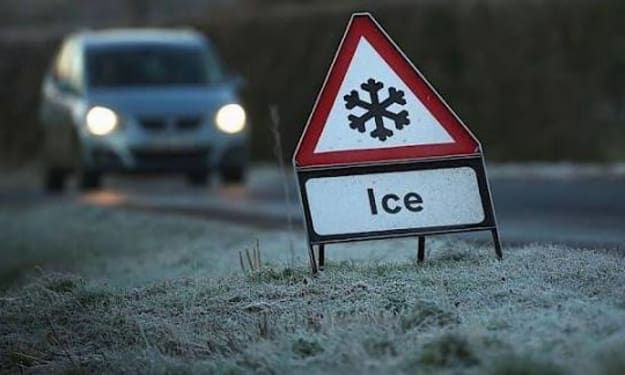
Slippery roads, travel delays, and safety concerns as temperatures drop The Met Office has issued a yellow weather warning for ice, alerting the public to potentially dangerous conditions across affected areas. As temperatures fall overnight, untreated roads, pavements, and rural routes are expected to become icy, increasing the risk of accidents and travel disruption. While a yellow warning is the lowest level of weather alert, it should not be ignored. Ice can form quickly and unexpectedly, making everyday journeys hazardous and placing pressure on emergency services. What a Yellow Warning for Ice Means A yellow weather warning is issued when conditions may cause minor disruption and increased risk to safety. In this case, the Met Office warns that freezing temperatures could lead to ice forming on roads and walkways, particularly overnight and during early morning hours. Drivers, pedestrians, and cyclists are advised to remain cautious, as even small patches of ice can cause vehicles to skid or people to slip. Rural areas and higher ground are especially vulnerable due to lower temperatures and fewer treated surfaces. How Ice Forms So Quickly Ice often forms when temperatures drop close to or below freezing, especially after rain or melting snow. Moisture left on roads and pavements can freeze rapidly, creating black ice, which is nearly invisible and extremely dangerous. Black ice is particularly common: In shaded areas On bridges and overpasses On untreated country roads Because it is hard to see, black ice is responsible for many winter accidents. Impact on Travel and Transport Icy conditions can cause significant disruption to travel, even when snowfall is minimal. Road traffic accidents often increase during icy spells, leading to delays and congestion. Public transport services may also be affected. Buses can struggle on steep or untreated roads, while rail services may operate at reduced speeds to maintain safety. Airports may face minor delays due to icy runways or aircraft de-icing procedures, especially during early morning departures. Authorities urge travelers to: Check travel updates before leaving Allow extra time for journeys Avoid unnecessary travel during icy conditions Risks for Pedestrians and Cyclists Ice is not only a threat to drivers. Pedestrians and cyclists face a high risk of injury, particularly on untreated pavements and paths. Slips and falls can lead to broken bones, head injuries, and hospital admissions. Older adults are especially vulnerable, as falls can have long-lasting health effects. Local councils often prioritize gritting main roads, which means pavements and side streets may remain icy for longer. Wearing suitable footwear and walking carefully can reduce risk, but caution remains essential. Pressure on Emergency and Health Services During icy weather, emergency services experience a rise in callouts. Ambulance crews respond to accidents, falls, and cold-related illnesses, while hospitals may see increased admissions. Fire and rescue teams are also affected, responding to road incidents and assisting vulnerable people. These pressures highlight why even moderate weather warnings deserve attention. Healthcare professionals encourage people to check on elderly neighbors and relatives, ensuring they are warm, safe, and have access to essential supplies. How to Stay Safe During Icy Conditions The Met Office and local authorities recommend several practical steps to stay safe: Drive slowly and smoothly, avoiding sudden braking Keep a safe distance from other vehicles Wear shoes with good grip when walking outdoors Use handrails where available Stay informed by checking local weather updates Preparing in advance can help reduce risk and prevent accidents during icy spells. Schools, Workplaces, and Daily Life Ice can also disrupt schools and workplaces, particularly if travel becomes unsafe. Some schools may open late or close temporarily, while employers may allow remote working where possible. For people whose jobs require travel or outdoor work, icy conditions increase the risk of injury. Employers are encouraged to assess risks and take steps to protect staff. Daily routines such as shopping, medical appointments, and social activities may also be affected, especially for those with limited mobility. Why Winter Warnings Matter Weather warnings are designed to give people time to prepare, not to cause alarm. Even a yellow warning can help reduce accidents by encouraging caution and awareness. Meteorologists note that winter weather in the UK can be unpredictable. Rapid changes in temperature mean ice can form even when conditions appear calm. Climate experts also point out that while average temperatures may rise over time, extreme and sudden cold spells are still possible, making preparation essential. Community Awareness and Responsibility Local communities play an important role during icy weather. Neighbors clearing pathways, sharing information, and checking on vulnerable residents can make a real difference. Many councils encourage residents to clear snow and ice from pavements outside their homes where it is safe to do so. These small actions help reduce injuries and keep communities moving. Conclusion The Met Office’s yellow weather warning for ice serves as an important reminder that winter conditions can be dangerous, even without heavy snow. Slippery roads, icy pavements, and reduced visibility all increase the risk of accidents and disruption. By staying informed, taking sensible precautions, and looking out for others, communities can reduce the impact of icy weather. While winter hazards cannot be avoided entirely, awareness and preparation remain the best tools for staying safe when temperatures fall.
By Fiaz Ahmed 6 days ago in Longevity



Comments
There are no comments for this story
Be the first to respond and start the conversation.