
How Robots and AI Are Helping Doctors Catch Lung Cancer Earlier Than Ever
AI and robots are transforming lung cancer detection, helping doctors diagnose earlier, improve survival rates, and reshape the future of healthcare.

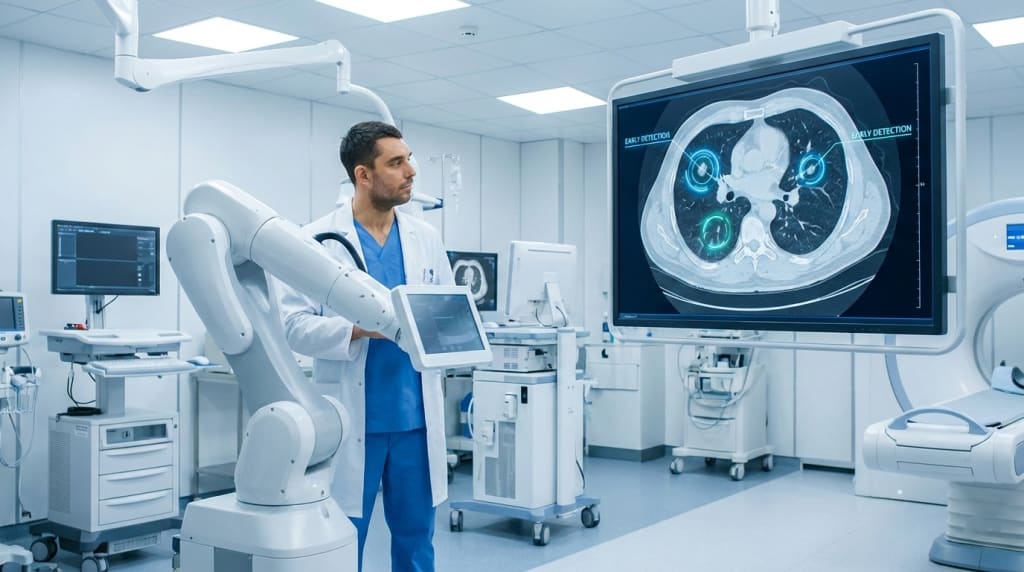
Lung cancer has long been one of the most challenging diseases for doctors to diagnose early. For decades, symptoms often appeared only after the disease had progressed, which limited treatment options and reduced survival rates. However, that narrative is rapidly changing. Thanks to advances in robotics and artificial intelligence (AI), clinicians are now identifying lung cancer at stages that were once considered nearly impossible to detect.
Today, robots and AI systems are not replacing doctors; instead, they are empowering them. By combining machine precision with human expertise, healthcare professionals can analyze images, biological data, and patient histories faster and more accurately than ever before. As a result, early detection is becoming the norm rather than the exception, offering patients renewed hope and better outcomes.
Why Early Detection Has Always Been So Difficult
To understand the impact of AI and robotics, it is important to first understand why lung cancer is so hard to catch early. The lungs are complex organs with subtle changes that can easily hide within standard imaging scans. Moreover, early-stage lung cancer often produces no noticeable symptoms, which means many patients do not seek medical attention until the disease has advanced.
In addition, traditional diagnostic tools relied heavily on human interpretation. Radiologists had to manually examine countless X-rays and CT scans, often under intense time pressure. While highly skilled, even experienced professionals can miss tiny nodules or early warning signs. Consequently, delays in diagnosis became a systemic challenge rather than an individual failure.
Artificial Intelligence as a Second Set of Eyes
Artificial intelligence has emerged as a powerful ally in medical imaging. By using deep learning algorithms, AI systems can be trained on millions of lung images to recognize patterns associated with early-stage cancer. Unlike humans, these systems do not get tired or distracted. Instead, they analyze each image with consistent accuracy.
Furthermore, AI does not merely replicate what doctors do; it enhances it. For example, AI tools can highlight suspicious areas on scans, allowing radiologists to focus their attention where it matters most. As a result, small nodules that might once have been overlooked are now flagged for further investigation, significantly improving early detection rates.
Robotics Transforming Lung Biopsies and Diagnostics
While AI excels at analysis, robotics brings precision to physical procedures. Robotic-assisted bronchoscopy, for instance, allows doctors to navigate deep into the lungs with unprecedented accuracy. Using robotic arms guided by real-time imaging and AI-driven maps, clinicians can reach tiny lesions that were previously inaccessible.
This increased precision reduces the need for invasive surgeries and lowers the risk of complications. At the same time, it improves diagnostic confidence because tissue samples are taken directly from suspicious areas. Consequently, patients experience faster diagnoses, less discomfort, and quicker paths to treatment.
Machine Learning and Predictive Risk Assessment
Beyond imaging and biopsies, machine learning is also transforming how doctors assess a patient’s risk of developing lung cancer. By analyzing vast datasets that include genetics, lifestyle factors, environmental exposure, and medical history, AI systems can predict which individuals are at higher risk.
Because of this predictive power, screening programs are becoming more targeted and effective. Instead of applying a one-size-fits-all approach, healthcare providers can prioritize high-risk patients for advanced screening. As a result, resources are used more efficiently, and cancers are caught earlier, when they are most treatable.
Integrating AI into Everyday Clinical Workflows
One of the most significant advantages of AI is how seamlessly it integrates into existing healthcare systems. Rather than disrupting workflows, modern AI tools are designed to support clinicians behind the scenes. For example, AI can automatically analyze scans overnight, ensuring results are ready for doctors the next morning.
Moreover, this integration reduces administrative burdens. By automating routine tasks such as data entry and preliminary analysis, AI frees up doctors to spend more time with patients. Consequently, the quality of care improves, and patients feel more informed and supported throughout their diagnostic journey.
Ethical Considerations and Building Trust in Technology
Despite its promise, the use of AI and robotics in healthcare raises important ethical questions. Patients may worry about data privacy, algorithmic bias, or the idea of machines influencing life-changing decisions. Therefore, transparency and regulation are essential components of responsible innovation.
Encouragingly, many healthcare institutions are addressing these concerns head-on. By keeping doctors firmly in control of final decisions and using AI as a supportive tool, trust is gradually being built. In addition, ongoing audits and diverse training datasets help ensure that AI systems perform fairly across different populations.
The Broader Impact on Healthcare and Patient Behavior
The success of AI in lung cancer detection is influencing healthcare more broadly. Patients are becoming more proactive about screenings, especially as technology makes procedures safer and less invasive. At the same time, digital health trends are reshaping how people engage with medical services, from telemedicine to online health resources.
Interestingly, this shift mirrors consumer behavior in other areas of health. Just as people research treatments or even buy weight loss injections online UK, they are also seeking information about advanced diagnostic options. This growing awareness encourages earlier screenings and fosters a more collaborative relationship between patients and healthcare providers.
Real-World Success Stories and Clinical Results
Across the globe, hospitals are already reporting impressive results from AI-assisted lung cancer programs. In several studies, AI systems have detected cancers months earlier than traditional methods. These early diagnoses have translated into higher survival rates and less aggressive treatments.
Equally important are the stories from patients themselves. Many describe feeling reassured knowing that both expert clinicians and advanced technology reviewed their scans. This combination of human care and machine intelligence is redefining what patients expect from modern medicine.
The Future of AI and Robotics in Lung Cancer Care
Looking ahead, the role of AI and robotics in lung cancer detection will only expand. Researchers are already developing systems that combine imaging, blood tests, and genetic analysis into a single diagnostic platform. This holistic approach could identify cancer even before tumors are visible on scans.
Ultimately, the goal is not just earlier detection, but prevention. By continuously learning from new data, AI systems will become even more accurate and personalized. As a result, the once-daunting challenge of lung cancer may become far more manageable, saving countless lives in the process.
Conclusion
Robots and AI are ushering in a transformative era for lung cancer detection. Through enhanced imaging, precise robotics, and predictive analytics, doctors are catching the disease earlier than ever before. This progress is not about replacing human expertise, but about amplifying it.
As technology continues to evolve, patients stand to benefit the most. Earlier diagnoses mean better treatment options, improved survival rates, and renewed hope. In this smarter, more connected healthcare landscape, lung cancer no longer has to be a silent killer.
About the Creator
Alex
I've built my career around people-focused roles in the software industry, where clear communication, hands-on support, and quality assurance are always top priorities.
Day 4 of Quitting
If this is how sobriety feels, maybe it’s better to go through life a little buzzed… this, along with other hits like, I want to kill myself, I wish I was dead, and I’m going to throw myself off a bridge have been the only thoughts on rotation these past few days. I promise myself that if, in a month, I still feel like this (‘this’ meaning despondent, full of rage, and simultaneously numb) I can go back to smoking. Until mid-February though? Nicotine is off the table.
By sleepy drafts22 days ago in Longevity
France Ships 500-Ton Nuclear “Colossus” to Britain for Hinkley Point C’s New Generation III Reactor
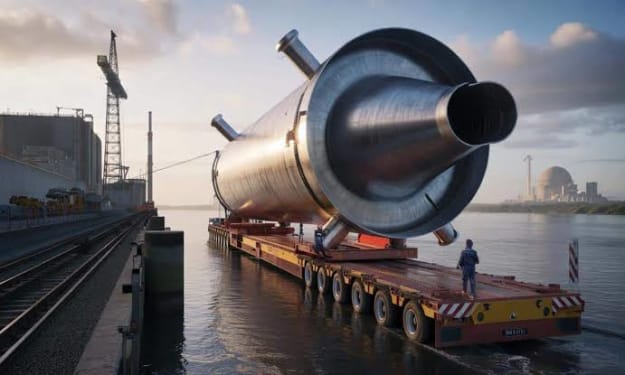
A massive engineering feat underscores Europe’s commitment to next-generation nuclear energy In a remarkable display of international engineering and collaboration, France has shipped a 500-ton nuclear reactor component, described as a “colossus,” to Britain’s Hinkley Point C power plant. This shipment represents a critical milestone in the construction of the UK’s first Generation III nuclear reactor, aimed at providing safer, more efficient, and low-carbon electricity for decades to come. The delivery has drawn attention from engineers, environmental experts, and energy analysts, not only for its size and weight but also for its strategic importance in Europe’s energy transition. What Is Hinkley Point C? Hinkley Point C, located in Somerset, England, is one of the largest nuclear power projects in Europe. Its Generation III reactors promise advanced safety features, higher efficiency, and a lifespan of 60 years or more. Key facts about the project: Two reactors are being constructed, each capable of producing 1,600 megawatts of electricity The plant is expected to supply about 7% of the UK’s electricity needs once operational Construction involves international collaboration, including France’s Framatome and other engineering companies The project represents both a technical and political partnership, highlighting cooperation between European nations in energy development. The “Colossus” Reactor Component The 500-ton shipment, often referred to as a “colossus,” is a critical part of the nuclear reactor’s pressure vessel, which will house the reactor core. Why it is significant: Weight and size: At 500 tons, transporting it requires precise planning, specialized vessels, and advanced logistics. Safety: Reactor components must meet stringent quality and safety standards, ensuring they withstand high temperatures, radiation, and pressure over decades. Engineering marvel: The manufacturing process in France involved high-precision forging, machining, and testing, demonstrating the capabilities of Europe’s nuclear industry. Transporting such a massive component across the English Channel is no small feat. It involves careful navigation, weather monitoring, and security measures to ensure the reactor component arrives intact and on schedule. Importance of Generation III Reactors Generation III reactors, like the one at Hinkley Point C, represent the next stage of nuclear energy. They are designed to be: Safer: Enhanced safety systems can prevent or mitigate accidents More efficient: They extract more energy from nuclear fuel Environmentally friendly: Reduced radioactive waste and lower greenhouse gas emissions Experts argue that Generation III reactors will play a critical role in Europe’s efforts to reduce carbon emissions, especially as countries strive to meet climate goals and transition away from fossil fuels. European Collaboration in Nuclear Energy The Hinkley Point C project exemplifies the benefits of international cooperation in energy infrastructure. French companies have long been leaders in nuclear technology, while the UK relies on their expertise to construct advanced reactors. Benefits of collaboration include: Sharing of technical expertise and research Access to high-quality components manufactured under strict standards Strengthening diplomatic and economic ties between countries The shipment of the “colossus” is a tangible symbol of this partnership, highlighting how large-scale engineering projects often transcend national boundaries. Logistics and Challenges Transporting a 500-ton component is far from simple. The operation involves: Specialized shipping vessels capable of handling extreme weight Route planning to avoid shallow waters, storms, and heavy maritime traffic Security measures to protect a high-value and sensitive piece of nuclear equipment Once it arrives at Hinkley Point C, cranes and precision equipment will carefully place the reactor component into the plant’s construction site. Engineers must ensure perfect alignment and stability, as even minor errors can compromise reactor performance. Economic and Strategic Significance The project is a major economic investment, employing thousands of workers in the UK and France. Beyond the construction jobs, Hinkley Point C will contribute to the UK’s long-term energy security and help stabilize electricity costs. Strategically, the project underscores Europe’s commitment to advanced, low-carbon nuclear power, a key element in meeting climate targets while ensuring reliable electricity for homes and industries. Environmental and Public Considerations While nuclear energy offers many benefits, it is not without concerns. Public debates continue regarding: Safety of nuclear reactors Management of radioactive waste Potential environmental impact during construction Hinkley Point C aims to address these issues through modern engineering, robust safety systems, and regulatory oversight, making it one of the most advanced nuclear projects in Europe. Conclusion The shipment of the 500-ton “colossus” from France to Hinkley Point C marks a major milestone in Europe’s nuclear energy journey. It highlights the technical skill, international collaboration, and strategic importance of nuclear power in a low-carbon future. As the UK moves closer to completing its first Generation III reactors, this monumental component serves as a reminder that modern energy infrastructure is not just about electricity—it is about engineering, diplomacy, and sustainable progress. For Europe and the UK, Hinkley Point C is more than a power plant; it is a symbol of ambition, precision, and the continuing role of nuclear energy in shaping a cleaner, more reliable energy landscape.
By Fiaz Ahmed 4 days ago in Longevity



Comments
There are no comments for this story
Be the first to respond and start the conversation.