
How Old Are You Really? The New Science of Biological Age
Forget birthdays — your body has its own clock. Scientists can now measure how fast you’re really aging, and how you can turn that clock back

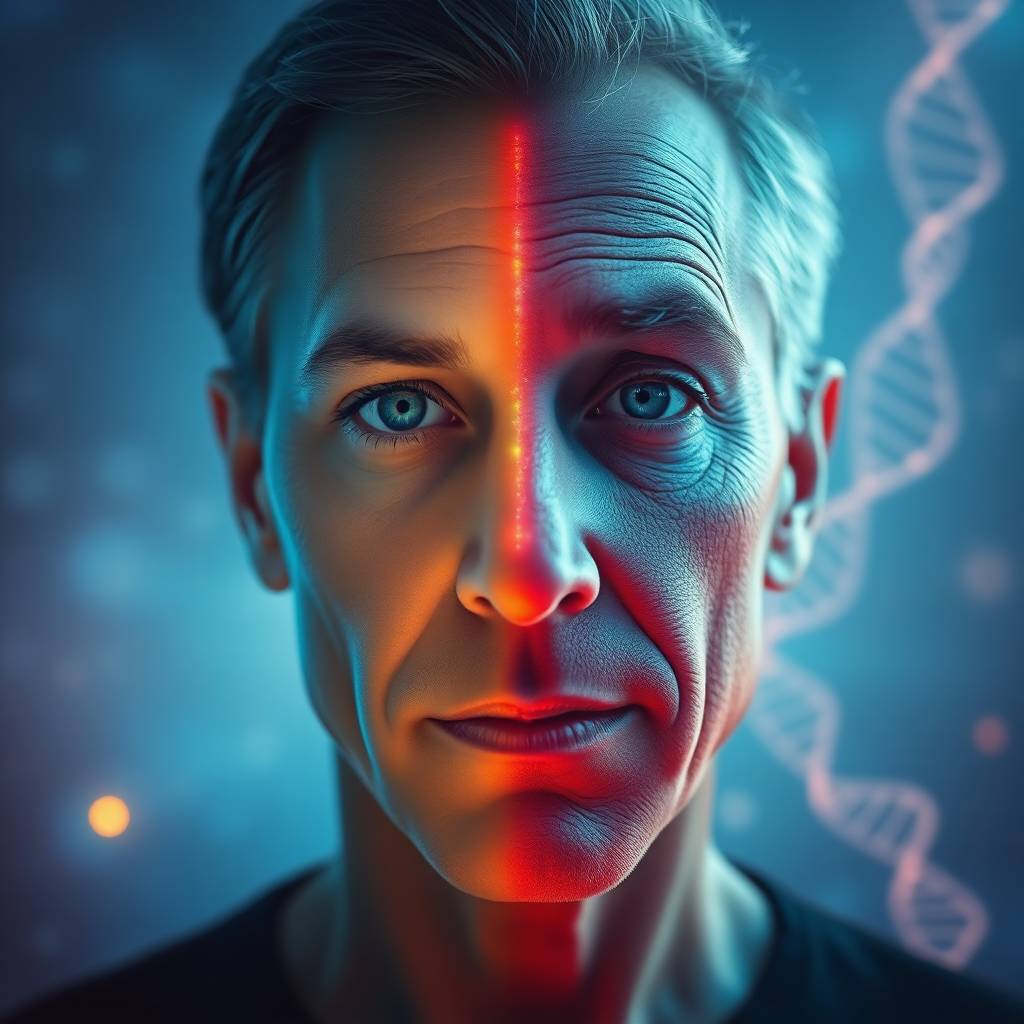
I. Forget Your Birth Certificate — Meet Your Real Age
When someone asks your age, you probably think of the number on your ID.
But what if your real age has nothing to do with candles on a cake?
That’s the promise — and provocation — behind the science of biological age, a new way of measuring how fast your body is actually aging on the inside.
Your chronological age is how many years you’ve lived.
Your biological age is how healthy your cells, organs, and DNA are right now.
And here’s the twist:
You might be 40 years old chronologically but only 32 biologically — or vice versa.
For the first time in history, we can measure this gap. And it’s changing how we think about health, disease, and even life expectancy itself.
II. What Exactly Is Biological Age?
Biological age is a reflection of your body’s functional state, not just the number of birthdays you’ve celebrated.
Scientists measure it using biomarkers — biological signals that indicate how well your systems are performing.
These include:
Epigenetic markers: chemical changes to your DNA that act like “wear and tear” records.
Telomere length: protective caps on your chromosomes that shorten as you age.
Inflammation and oxidative stress: indicators of cellular damage.
Blood biomarkers: such as glucose levels, cholesterol, and hormone balance.
Put together, these data points tell a deeper story: how old your body “feels” on the inside.
And that story isn’t set in stone — it’s dynamic, reversible, and deeply personal.
III. The Rise of the Aging Clock Revolution
A few years ago, biological age testing was confined to university labs. Now it’s becoming a mainstream wellness tool.
Companies like InsideTracker, Elysium Health, and Thorne are offering tests that use blood, saliva, or DNA to estimate your biological age.
Perhaps the most famous is the Horvath Clock, developed by Dr. Steve Horvath at UCLA. His algorithm can predict biological age based on specific patterns of DNA methylation — chemical tags that accumulate as we grow older.
Think of it as a “timestamp” your body writes on your DNA.
The results can be startling: a 50-year-old might learn that their body resembles that of a 40-year-old athlete — or that stress, poor diet, and sleep deprivation have aged them a decade beyond their years.
IV. Why Biological Age Matters More Than Chronological Age
Doctors and longevity scientists are shifting focus from lifespan (how long you live) to healthspan — how long you stay healthy and functional.
Biological age is the most powerful predictor of that healthspan.
It correlates with your risk of heart disease, diabetes, dementia, and even cancer.
In a 2023 Nature Aging study, people who successfully reduced their biological age by just 3 years had a 20–30% lower risk of chronic illness.
The takeaway?
If you slow down your biological clock, you don’t just live longer — you live better.
V. Can You Actually Reverse Your Biological Age?
Here’s the exciting part: yes, early research says you can.
In 2020, a small but groundbreaking study from UCLA and Stanford found that participants were able to reverse their biological age by 2.5 years after just eight weeks — using only lifestyle interventions.
What they did wasn’t high-tech or extreme:
Ate a whole-food, plant-rich diet.
Slept 7–9 hours a night.
Practiced daily stress management (breathing, meditation).
Took probiotics and methylation-support nutrients (like folate and B12).
Exercised moderately.
No gene editing. No futuristic nanobots. Just better living.
Your DNA may not change, but how it’s expressed does — and that’s what makes biological age flexible.
VI. The “Epigenetic” Secret — Turning Genes On and Off
Think of your DNA as a piano.
Your genes are the keys.
Your lifestyle is the pianist.
Epigenetics is the science of how your behaviors — diet, exercise, stress, sleep — influence which keys are played.
For example:
Chronic stress can “turn on” genes related to inflammation and aging.
Meditation, on the other hand, can “turn off” those same genes.
A diet rich in antioxidants, omega-3s, and polyphenols helps repair DNA damage.
Every choice sends a molecular message.
And those messages add up — fast.
VII. How to Check (and Improve) Your Biological Age
If you’re curious to know your real age, there are several options:
Epigenetic Test Kits (At-Home):
Elysium Index or TruMe use saliva to analyze DNA methylation.
Thorne Biological Age Test uses blood biomarkers.
Bloodwork-Based Calculators:
Upload your lab results to sites like Aging.AI for free estimates.
Wearable Tech (Coming Soon):
Future smartwatches may integrate biological age tracking using continuous biomarker analysis.
But knowing your biological age is only step one.
The next step is creating a lifestyle that makes your body younger.
Here’s how to start:
Move daily: even brisk walking improves mitochondrial health.
Eat clean: focus on whole, unprocessed foods and antioxidants.
Sleep deeply: your body’s repair shop runs overnight.
Reduce stress: chronic cortisol is biological gasoline on the aging fire.
Cultivate purpose: psychological well-being slows cellular aging.
VIII. The Future of Aging Science
Biological age is just the beginning.
Researchers are now building “multi-omics” clocks that combine data from genomics, metabolomics, proteomics, and microbiome analysis to predict how your body will age in the next decade.
AI is being trained to read this data and give personalized longevity roadmaps — not just telling you what’s wrong, but how to fix it.
The goal?
A future where your annual check-up includes not just your cholesterol level, but your biological age trajectory — and how to reverse it.
IX. The Takeaway: Age Is No Longer Fixed
For most of human history, aging was seen as inevitable decline.
But we now know it’s far more malleable.
Biological age doesn’t just measure how long you’ve lived — it measures how well you’ve lived.
The key isn’t immortality; it’s agency — the ability to take charge of your own cellular destiny.
So, next time someone asks your age, you might just smile and say:
“It depends which one you mean.
About the Creator
Keep reading
More stories from arsalan ahmad and writers in Longevity and other communities.
Small Habits, Big Years: The Lifestyle Secrets of Living Longer
I. Rethinking Longevity: It’s Not About Living Forever — It’s About Living Well Everyone dreams of a long, healthy life. But “longevity” isn’t about counting candles on a cake — it’s about feeling good while you’re here.
By arsalan ahmad5 months ago in Longevity
What Are the Long-Term Effects of ADHD Medications?
Medications used to treat ADHD are among the most commonly prescribed psychiatric medications in the world. Drugs like Adderall, Ritalin, Vyvanse, and Concerta are taken by millions of children and adults to improve focus, impulse control, and executive functioning.
By Navigating the Worldabout 15 hours ago in Longevity
Beyond Exhaustion: What Happens to Your Body and Brain After 72 Hours Without Sleep?
We've all experienced the grogginess of a poor night's sleep or the heavy eyelids that follow an all-nighter. But what happens when you push the human body to its absolute limits? Staying awake for 72 hours—three full days and nights—is a severe shock to your system. It shifts from a simple matter of feeling tired to a profound physical and psychological crisis. Here is a chronological breakdown of what happens to your mind and body when you stop sleeping.
By Mohammad Hamid6 days ago in Longevity



Comments
There are no comments for this story
Be the first to respond and start the conversation.