
How being workaholic affects relationship?
Workaholics usually exhibit unpredictable mood swings and are emotionally unavailable to their families.

Are you a workaholic? Do you put your job before everything else? Workaholism is defined in various categories. However, in general, it is defined by working long hours (beyond what is necessary for the job or for financial support), being preoccupied with work all the time, and not enjoying one’s job for reasons unrelated to the demands of the job itself. If so, then there’s a chance that your relationship with your significant other may be suffering from the same issues.
Workaholics put their job beyond their hobbies, personal time, or fitness. Even though a workaholic may think it’s essential to exercise or have passions, it’s unlikely that they’ll find time for them. The causes of being a workaholic are low self-esteem and intimacy problems.
Workaholics usually exhibit unpredictable mood swings and are emotionally unavailable to their families. They frequently lack delegation skills and are perfectionists who are never happy with their own or others’ work.
Perfectionists and compulsive
People who are addicted to work are more likely to be perfectionists and compulsive.
They tend to push themselves beyond their limits, putting the needs of their job first over everything else.
The workaholic will do whatever it takes in order to get the job done right—even if that means not sleeping or eating properly (or both).
Additionally, workaholics frequently score highly on personality qualities including neuroticism, perfectionism, and conscientiousness. They also frequently struggle to delegate job obligations to others.
Neglecting friends and family in the process
Workaholics often put their work before everything else, including friends and family. They neglect them in favor of their job, which may lead to feelings of guilt or resentment toward the person who’s so important to them. While it may seem like the relationship is fine if this person only has time for you when you need something from them. Workaholics can get caught up in their busy schedules and forget about other people altogether.
They might even feel like they have no time for themselves, which can lead to feelings of stress and depression.
Hard to relax
Being a perfectionist means you’ll find it hard to relax since you’re never satisfied with anything less than your best – even if that doesn’t actually exist.
Perfectionists are always striving for perfection, and they expect everyone else to do the same. This can make them feel like their partners are not living up to their own high standards of what’s “good enough." They may also be disappointed by their partners’ lack of effort or commitment when they have made an effort themselves.
No delegation
Your anxieties can make it difficult for you to delegate tasks at work, which will make your job more stressful than it needs to be.
When you’re a perfectionist, your anxiety will tell you that if anything goes wrong with the job, then all of your hard work is gone in an instant. If someone else has taken over the responsibility of a task and they don’t do their best, then this could be seen as a failure on their behalf too. This can create an atmosphere where no one wants any part of the job because they feel like they’ll end up losing out in some way if something goes wrong.
It might seem like these feelings are irrational. When you worry about things going badly and fail at your goals, you actually learn something about yourselves. There are things about me or my life that I don’t like or am afraid of (in this case my boss) so therefore each time may cause another setback which would further contribute towards my own personal growth by helping me get past these fears.”
Complete projects in record time
The need to complete your projects in record time, leaving little or no time for relaxation and social interaction.
You may find yourself working more than usual on weekends when you’re supposed to be at home enjoying your family.
You might have trouble taking vacations because you don’t want to stop working.
You may even find yourself working on projects at home or constantly checking your email in the middle of the night. There might be trouble sleeping because you’re so worried about what’s going on at work and what needs to be done next. It’s time to act in this situation.
Zero pragmatic approaches to work and life
Workaholics are not alone in their struggles. In fact, many people struggle with work addiction and need to learn how to relax.
It’s important for workaholics of all kinds, especially those who are married or in a relationship—to understand that there is no such thing as “normal” when it comes to your relationship with work. Just say okay to yourself if you feel like your job takes up too much time and energy or if you have trouble finding time for yourself. It’s also okay if after hours at the office or at home, you just want some peace and quiet instead of another task on your list that needs completing right away before going home again tomorrow morning!
Conclusion
We hope this article has given you a better understanding of work addiction and how it affects relationships. If you’re someone who is addicted to work, you might be stuck in an endless cycle of working and worrying about what others think – which will only increase your stress levels even further. But if you’re willing to break free from the grip of addiction and get back on track towards a healthy lifestyle balance between life and work (so long as both elements aren’t too much for one person), then there’s no reason why any relationship shouldn’t thrive!
However, isn’t it true that a workaholic can achieve in their job? The facts indicate that this is a myth. We looked at whether workaholics performed better at their jobs than non-workaholics in our meta-analysis, but there was no correlation between the two.
About the Creator
Keep reading
More stories from Julie Jerlin J and writers in Longevity and other communities.
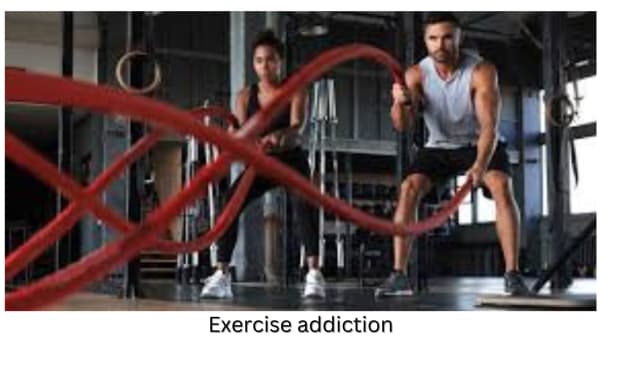
Exercise addiction – How to know if you are at risk
Exercise feels good. When you exercise, your body releases endorphins, which are natural brain chemicals that trigger a positive feeling in the body, similar to morphine. Endorphins move with the receptors in your brain that reduce your perception of pain. It additionally triggers a positive feeling within the body, just like morphine. However, it’s important to be aware of the risks of exercise addiction.
By Julie Jerlin J3 years ago in Longevity
You’re Probably Shortening Your Life Without Realizing It (Here’s the Simple Fix Nobody Talks About)
Most people don’t think they’re making choices that shorten their life. They assume that serious health problems come from obvious risks—smoking, extreme stress, or poor genetics. But the reality is far more subtle. The biggest impact on longevity often comes from small, repeated habits that feel harmless in the moment.
By Lukáš Hrdlička7 days ago in Longevity
I was in a Toxic Relationship, with my Workplace
“You got that?” My ex yelled. His hands were balled into fists at his side. At six foot three, he towered over me. A normal person would have been afraid, but I looked up a video of George Lopez repeatedly saying, “I got this,” and showed it to him. I had grown used to this treatment, so much so that I didn’t blink when he ripped the phone from my hand and threw it across the room.
By Jade M.6 days ago in Confessions



Comments
There are no comments for this story
Be the first to respond and start the conversation.