
Greenland Claims: How Close Have NATO Members Come to Fighting Each Other?
An Unthinkable Scenario Raises Real Questions
Recent claims and rhetoric surrounding Greenland have reignited an uncomfortable question for the Western alliance: how close have NATO members come to open confrontation with one another? While NATO is built on collective defense and mutual trust, history shows that unity has at times been tested—sometimes severely.
The renewed focus on Greenland, a strategically vital Arctic territory, has exposed underlying tensions within the alliance and reminded observers that even allies can clash when national interests collide.
Why Greenland Matters So Much
Greenland’s importance extends far beyond its icy landscape. Located between North America and Europe, it occupies a critical position in Arctic security, missile defense, and emerging shipping routes.
As climate change opens new passages and access to untapped resources, Greenland has become a focal point of geopolitical competition. For NATO members, the island represents both a defensive asset and a potential flashpoint.
While Greenland is part of the Kingdom of Denmark, its strategic value draws interest from multiple allies—raising questions about sovereignty, influence, and military presence.
The Roots of Tension Within NATO
NATO’s founding principle is collective defense against external threats. However, internal disagreements have never been entirely absent. Disputes over territory, military operations, and political priorities have occasionally brought allies to the brink of confrontation.
The Greenland debate echoes earlier moments when alliance members found themselves at odds—sometimes in ways that tested NATO’s very cohesion.
Greece and Turkey: A Persistent Rivalry
Perhaps the most well-known example is the long-standing tension between Greece and Turkey, both NATO members. Disputes over airspace, maritime boundaries, and Cyprus have repeatedly brought the two countries close to military conflict.
In several instances, fighter jets were scrambled and naval forces mobilized, raising fears of a clash between allies. NATO intervention and diplomatic pressure have often been required to de-escalate crises.
These incidents demonstrate that shared alliance membership does not eliminate national rivalries.
The Iceland Cod Wars: A NATO Dispute at Sea
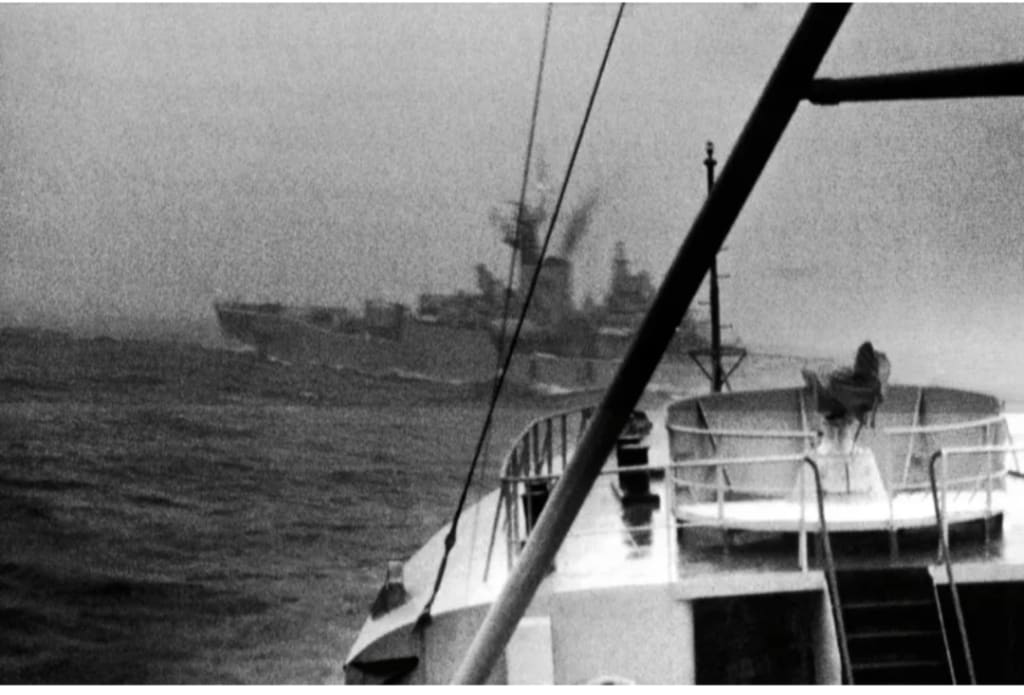
During the Cold War, the Cod Wars between Iceland and the United Kingdom revealed another surprising intra-NATO conflict. Iceland, a founding NATO member, clashed with the UK over fishing rights in the North Atlantic.
Naval vessels collided, fishing nets were cut, and diplomatic relations were strained. Though no shots were fired, the confrontations underscored how economic and territorial disputes can escalate—even among allies.
France and the Alliance Structure
France’s uneasy relationship with NATO has also tested unity. In 1966, France withdrew from NATO’s integrated military command, citing concerns over sovereignty and American dominance.
While not a direct conflict, the move created friction and raised questions about alliance cohesion. France eventually rejoined the command structure decades later, but the episode highlights how political disagreements can strain NATO from within.
Greenland and Modern Alliance Tensions
The current Greenland discourse is less about imminent conflict and more about influence and strategic positioning. However, aggressive rhetoric—particularly around acquisition or control—has unsettled European allies.
Denmark has reaffirmed its sovereignty over Greenland, while Greenlandic leaders emphasize self-determination. Any suggestion that force or coercion could be involved, even hypothetically, challenges NATO’s foundational principles.
Such rhetoric risks undermining trust within the alliance at a time when unity is seen as essential.
Mechanisms That Prevent NATO-on-NATO Conflict
Despite these tensions, NATO has repeatedly demonstrated its ability to manage internal disputes. Diplomatic channels, military deconfliction mechanisms, and political consultations are designed to prevent escalation.
Article 1 of the NATO treaty emphasizes peaceful resolution of disputes among members. In practice, this commitment has often helped defuse crises before they spiral out of control.
The Greenland situation, while sensitive, remains firmly within diplomatic boundaries.
Why the Alliance Holds—So Far
What has prevented NATO members from fighting each other is not just treaty language, but shared interests. External threats, economic interdependence, and political alignment create strong incentives to avoid internal conflict.
The reputational cost of intra-alliance warfare would be enormous, undermining credibility and weakening collective defense.
Even during moments of high tension, NATO members have ultimately prioritized unity.
The Arctic as a Future Testing Ground
As the Arctic grows in strategic importance, tensions over territory, resources, and military access may increase. Greenland sits at the center of this evolving landscape.
NATO will need to balance national ambitions with collective security, ensuring that competition does not erode trust.
Clear communication and respect for sovereignty will be essential to avoid misunderstandings.
Lessons From the Past
History shows that NATO members have come close to confrontation—but have always stepped back from the brink. These near-misses offer valuable lessons about the importance of dialogue, restraint, and institutional frameworks.
The Greenland debate is a reminder that alliances require constant maintenance, not blind faith.
Conclusion: Unity Tested, But Intact
While the idea of NATO members fighting each other remains deeply unsettling, history suggests that the alliance has the tools to prevent such outcomes. The Greenland claims highlight tensions but also demonstrate the strength of diplomatic norms within NATO.
As geopolitical competition intensifies, the alliance’s ability to manage internal disagreements will be as important as its capacity to deter external threats.
For now, NATO’s record shows that while unity may be tested, it has not yet been broken.
About the Creator
Keep reading
More stories from Aarif Lashari and writers in Longevity and other communities.
Trump’s Warning Looms Over Iran Protests Response
As protests spread across Iran, the response from authorities is unfolding under the shadow of renewed warnings from former US President Donald Trump, whose rhetoric has once again entered the global spotlight. While Iran’s leadership insists that demonstrations are driven by foreign manipulation, Trump’s statements have complicated an already volatile situation, influencing both internal decision-making and international perceptions.
By Aarif Lashari9 days ago in The Swamp
Day 4 of Quitting
If this is how sobriety feels, maybe it’s better to go through life a little buzzed… this, along with other hits like, I want to kill myself, I wish I was dead, and I’m going to throw myself off a bridge have been the only thoughts on rotation these past few days. I promise myself that if, in a month, I still feel like this (‘this’ meaning despondent, full of rage, and simultaneously numb) I can go back to smoking. Until mid-February though? Nicotine is off the table.
By sleepy drafts11 days ago in Longevity
Foods to Avoid After Whitening Teeth
A professional teeth whitening treatment can dramatically boost your confidence, whether you’re heading to a business meeting downtown, enjoying a night out in the Blue Dome District, or getting ready for a family event in Broken Arrow. Right after whitening, however, your teeth are more porous and vulnerable to staining. What you eat and drink during the first few days plays a huge role in how long your results last.
By Good health to everyone3 days ago in Longevity


Comments
There are no comments for this story
Be the first to respond and start the conversation.