
Global 4K Medical Imaging Market Size and Forecast 2025–2033
How Ultra-High-Definition Imaging Is Transforming the Future of Diagnostics and Surgery


Introduction: The Rise of 4K Medical Imaging in Modern Healthcare
The global 4K medical imaging market is entering a phase of rapid transformation, driven by groundbreaking advancements in healthcare infrastructure, surgical innovation, and diagnostic precision. According to Renub Research, the market is expected to grow from US$ 1.07 billion in 2024 to US$ 2.62 billion by 2033, expanding at a robust CAGR of 10.44% from 2025 to 2033. This growth reflects the increasing global demand for sharper, more detailed images—critical in an era where early detection and minimally invasive surgeries are reshaping medical standards.
4K imaging, delivering a resolution of 3840 × 2160 pixels, provides four times the detail of traditional HD systems. The result? Superior tissue visualization, enhanced depth perception, and significant improvements in diagnostic accuracy and surgical safety. From radiology and endoscopy to robotic and minimally invasive interventions, 4K is quickly becoming the gold standard in global healthcare settings.
As hospitals modernize, surgeons demand higher precision, and patients seek better outcomes, 4K imaging technologies are positioning themselves as indispensable tools. The market’s acceleration is driven by aging populations, rising chronic diseases, growing surgical volumes, and significant government investments in health systems across developed and emerging countries.
What Is 4K Medical Imaging? Why It Matters
4K medical imaging refers to ultra-high-definition (UHD) imaging systems used in diagnostics and surgical environments. With unparalleled clarity, these systems allow clinicians to visualize structures such as blood vessels, lesions, and micro-anatomical details that might otherwise be missed.
Why 4K Is Revolutionizing Medical Imaging:
Sharper detail for accurate diagnosis
Improved surgical visibility during minimally invasive procedures
Better identification of abnormalities
Enhanced patient safety
Reduced incidence of surgical error
Improved training and medical education through better-quality video capture
From hospitals and operating rooms to diagnostic centers, 4K imaging enhances decision-making and supports more predictable clinical outcomes.
1. Rising Need for Enhanced Visualization in Healthcare
As diagnostics evolve and surgical methods shift toward precision-based interventions, clinicians are demanding better imaging tools. The ability to detect abnormalities with a high degree of clarity is now essential—not optional.
One of the most significant milestones came in September 2024, when Stryker launched its 1788 advanced imaging platform in India. This device integrates:
4K high-resolution imaging
Fluorescence-guided surgical capabilities
High dynamic range
OLED display and wide color gamut
With enhanced visibility of perfusion and anatomy, Stryker’s platform underscores the growing need for better accuracy, particularly in oncology, laparoscopic surgery, and reconstructive procedures.
2. Advances in Video Recording and Data Management Systems
The era of digital operating rooms demands more than just high-resolution cameras. Modern hospitals require:
Efficient video recording
Secure data storage
Fast and structured retrieval systems
Cloud integration
Multi-input recording for complex surgeries
In July 2024, MediCapture introduced the MVR 4K, an ultra-compact 4Kp60 surgical recording system providing:
Dual 4K input
Advanced data management
1TB onboard storage
This technology improves workflow efficiency, surgical documentation, and patient safety—critical components for modern hospitals.
3. Growing Adoption in Precision and Minimally Invasive Surgery
As healthcare shifts toward minimally invasive procedures, accuracy becomes paramount. Surgeons rely on hyper-realistic visualization to navigate anatomical structures with confidence.
In September 2024, Olympus expanded its 4K technology portfolio by launching the CH-S700-08-LB camera head, designed for urological and gynecological surgeries. The device enables:
4K white light
4K Narrow Band Imaging (NBI)
Blue light imaging
This is particularly influential in early detection and treatment of bladder cancer—where visibility directly correlates with clinical outcomes.
Market Challenges
Despite strong demand, challenges persist—especially in cost-sensitive regions.
1. High Maintenance Cost
4K imaging systems require:
Regular calibration
High-end processors
Firmware and software upgrades
Skilled technicians
Smaller hospitals in developing regions struggle to manage these recurring expenses, slowing adoption.
2. Integration Issues With Legacy Systems
Many healthcare facilities still operate using older imaging platforms. Integrating 4K systems requires:
Expensive infrastructure upgrades
New cables, connectors, and processing units
EHR system compatibility
For resource-constrained facilities, this often leads to delayed deployment.
Regional Market Overview
North America
North America leads the global market, powered by:
Early adoption of cutting-edge technology
Strong healthcare reimbursement systems
High surgical volumes
Well-established diagnostic imaging infrastructure
United States
The U.S. dominates due to high investment in digital operating rooms and precision surgery. A notable example came in August 2023, when Viseon Inc. commercialized the 4K MaxView System, designed specifically for minimally invasive spine surgery.
The system enhances surgical visualization and provides unprecedented clarity for spinal procedures—an area with growing patient demand.
Europe
Europe follows closely, with countries like Germany, France, and the U.K. investing heavily in next-generation imaging systems.
Germany
Germany remains the technological powerhouse of Europe. Its strengths include:
A robust medical device manufacturing ecosystem
Increased adoption of 4K systems in radiology and endoscopy
Growing elderly population requiring chronic disease management
High demand for minimally invasive surgery
Germany will continue playing a key role in shaping Europe’s 4K imaging landscape.
Asia-Pacific
The Asia-Pacific region is the fastest-growing market, fueled by:
Expanding healthcare infrastructure
Growing private hospital sector
Higher medical tourism
Surge in chronic disease prevalence
India
India is emerging as a high-potential market, driven by:
Greater hospital modernization
Rising demand for precision diagnostics
Growing middle-class patient population
Rapid expansion of private multispecialty hospitals
India’s adoption curve is accelerating, especially in radiology and oncology departments.
Middle East & Africa
As GCC nations modernize hospitals under national transformation programs, demand for 4K technology is rising steadily.
Saudi Arabia
Under Vision 2030, Saudi Arabia is rapidly investing in healthcare innovation.
Benefits include:
Growing adoption of precision medicine
Modernization of surgical and diagnostic facilities
Expansion of private-sector healthcare providers
Saudi Arabia is expected to become a key Middle Eastern market for 4K imaging technologies.
4K Medical Imaging Market Segmentation
By Type
Magnetic Resonance Imaging
Computed Tomography
X-ray
Ultrasound
Others
By End User
Hospitals
Diagnostic Imaging Centers
Specialty Clinics
Others
Regional Coverage
North America: United States, Canada
Europe: France, Germany, Italy, Spain, U.K., Belgium, Netherlands, Turkey
Asia Pacific: China, Japan, India, South Korea, Thailand, Malaysia, Indonesia, Australia, New Zealand
Latin America: Brazil, Mexico, Argentina
Middle East & Africa: Saudi Arabia, UAE, South Africa
Key Players in the Global 4K Medical Imaging Market
(all covered across Overview, Key Persons, Product Portfolio, Strategies, Revenue Analysis)
Stryker Corporation
Zimmer Biomet Holdings, Inc.
Smith & Nephew Plc
Conmed Corporation
Medtronic plc
Sony Group Corporation
Fujifilm Holdings Corporation
Hitachi Ltd.
Final Thoughts: The Future of 4K Medical Imaging
The global 4K medical imaging market is on the brink of transformative growth. As healthcare transitions into an era dominated by precision diagnostics, AI-assisted imaging, and minimally invasive surgeries, 4K imaging stands at the center of innovation. Its ability to deliver unparalleled clarity not only enhances diagnostic accuracy but also elevates surgical precision and patient safety.
With strong investments, rising healthcare expectations, and increasing chronic disease burden, the shift toward ultra-high-definition imaging is inevitable. By 2033, 4K systems will likely become standard in operating rooms, diagnostic labs, and specialty clinics worldwide—reshaping the quality of healthcare delivery.
About the Creator
Janine Root
Janine Root is a skilled content writer with a passion for creating engaging, informative, and SEO-optimized content. She excels in crafting compelling narratives that resonate with audiences and drive results.
Keep reading
More stories from Janine Root and writers in Longevity and other communities.
Global Prostate Cancer Diagnostics Market Trends & Summary
The global prostate cancer diagnostics market is entering a high-growth era, driven by rising cancer awareness, a rapidly expanding elderly population, sophisticated imaging technologies, and increased government emphasis on early detection. According to Renub Research, the prostate cancer diagnostics industry is expected to reach US$ 13.36 billion by 2033, soaring from US$ 4.68 billion in 2024, and reflecting a remarkable CAGR of 12.35% from 2025 to 2033.
By Janine Root 2 months ago in Longevity
Day 4 of Quitting
If this is how sobriety feels, maybe it’s better to go through life a little buzzed… this, along with other hits like, I want to kill myself, I wish I was dead, and I’m going to throw myself off a bridge have been the only thoughts on rotation these past few days. I promise myself that if, in a month, I still feel like this (‘this’ meaning despondent, full of rage, and simultaneously numb) I can go back to smoking. Until mid-February though? Nicotine is off the table.
By sleepy drafts10 days ago in Longevity
Collectibles Market Size and Forecast 2025–2033
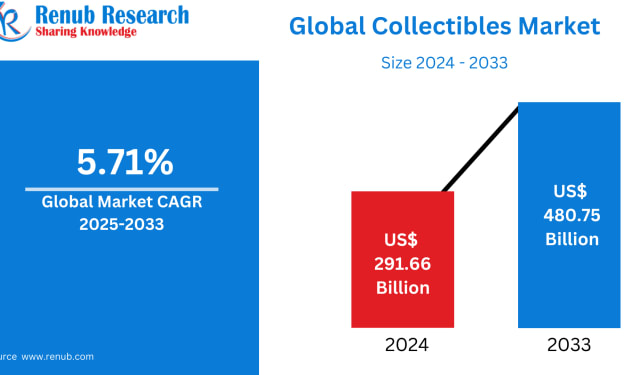
Collectibles Market Outlook 2025–2033 The global Collectibles Market is expected to reach US$ 480.75 billion by 2033, expanding from US$ 291.66 billion in 2024, at a CAGR of 5.71% from 2025 to 2033. This steady rise reflects a powerful convergence of emotional value, investment potential, and technological innovation. From fine art and rare coins to trading cards, pop culture memorabilia, and digital collectibles, the industry continues to broaden its appeal across age groups, geographies, and income levels.
By Renub Research4 days ago in Longevity



Comments
There are no comments for this story
Be the first to respond and start the conversation.