
From Diagnosis to Gene Editing in Just Six Months: A Revolutionary Leap in Personalized Medicine
One infant’s life-saving treatment could reshape the future of rare disease therapies.

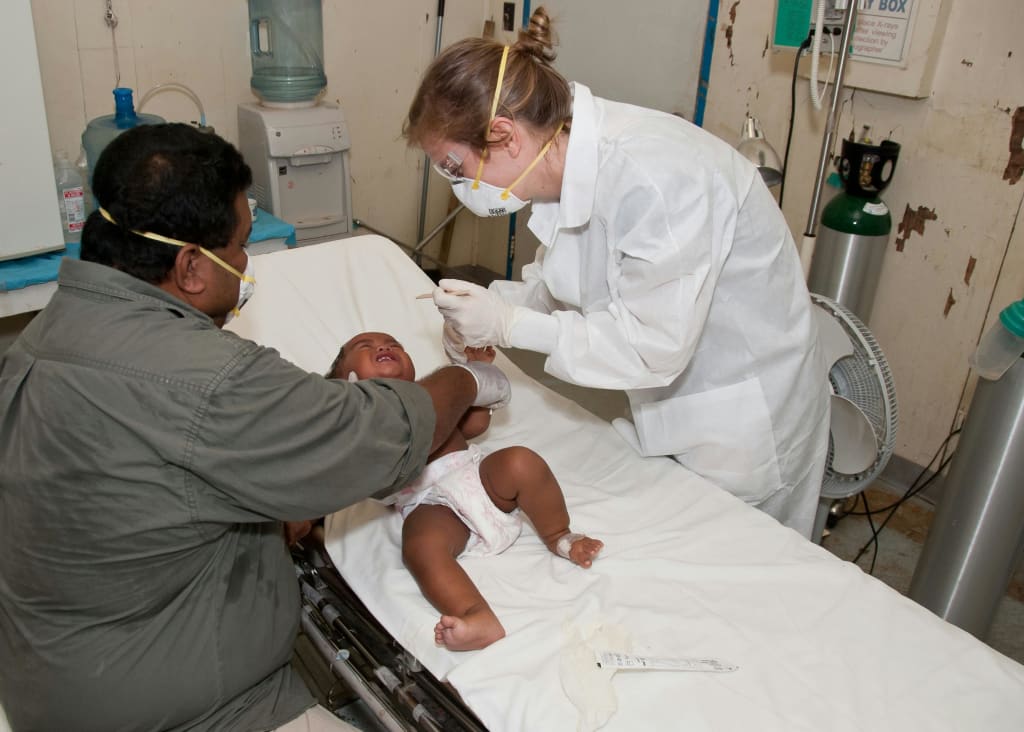
In a landmark medical breakthrough, researchers in Philadelphia have successfully treated a six-month-old infant named KJ using a custom-designed CRISPR gene-editing therapy. The treatment was tailored specifically to correct a rare, life-threatening genetic mutation affecting his liver function—an achievement that not only saved KJ’s life but also established a new gold standard for how rapidly personalized therapies can be developed and delivered.
The Genetic Threat
KJ was born with a single-point mutation that disrupted a liver enzyme responsible for breaking down ammonia, a toxic byproduct of metabolism. Without this crucial enzyme, ammonia can accumulate dangerously in the body, potentially causing irreversible damage or death within months. For KJ, the odds of surviving infancy without intervention were no better than 50-50.
The genetic mutation was so rare that no existing therapy could address it directly. But thanks to swift genetic screening and a multidisciplinary response, KJ became the first patient to receive a truly individualized gene-editing therapy, developed and approved in record time.
Speed That Redefined Possibility
While CRISPR and lipid nanoparticle delivery systems are well-established tools in modern medicine, what’s unprecedented in KJ’s case is the accelerated pace of the entire therapeutic process. Here’s how the timeline unfolded:
Week 1: KJ’s mutation was identified just days after birth.
Week 2–4: Scientists replicated KJ’s DNA in lab-grown cells and began training the CRISPR base-editing tools to target the specific thymine (T) that should have been a cytosine (C).
Month 3: Researchers developed genetically engineered mice with the same mutation, allowing them to test how the therapy would work in a living organism.
Month 4: Regulatory conversations began. Meetings with the FDA and Children’s Hospital of Philadelphia’s Institutional Review Board were fast-tracked under special “alternative procedures” to keep the timeline moving.
Month 5: In preclinical mouse models, the therapy corrected 42% of liver cells and showed promising results. Toxicology studies in mice began.
Month 6: Safety testing in monkeys confirmed no toxicity from the therapy, which was delivered via mRNA encapsulated in lipid nanoparticles—the same platform used in mRNA COVID-19 vaccines.
Month 7: After confirming minimal off-target effects, a clinical-grade batch was prepared. The FDA approved the Investigational New Drug (IND) application within a week. KJ was started on immunosuppressants and received his first dose shortly after turning six months old.
The Human Impact
The results were nearly immediate. Post-treatment, KJ began tolerating more protein in his diet—a crucial step, as high-protein intake previously spiked his ammonia levels. Although he’s still on nitrogen scavenging medication, his dosage has been reduced, and his nutritional status has significantly improved. His weight, once in the 9th percentile, has jumped to the 35th–40th percentile—a testament to how much his body has begun to thrive.
At just under 10 months old, KJ is now preparing to go home for the first time since birth. While long-term monitoring will be necessary, and a liver transplant may still be on the horizon, his clinical improvement has given his family and care team renewed hope—and validation that the methodology works.
A Scalable Solution to Rare Diseases
Historically, developing a gene therapy from scratch could take years, even decades. KJ’s case compressed that timeline into just six months, setting a new precedent for what's possible when science, regulation, and urgency align.
The therapy was unveiled this week at the American Society of Gene & Cell Therapy Annual Meeting and published in the New England Journal of Medicine. In an accompanying editorial, Dr. Peter Marks, former top FDA official, described the achievement as a “platform technology”—one that could be adapted quickly to treat other rare, one-of-a-kind genetic disorders, often referred to as “N-of-1” conditions.
“The use of mRNA encapsulated in lipid nanoparticles to develop gene-editing products for N-of-1 disorders is one of the most compelling opportunities for scalable, transformational therapies,” Dr. Marks wrote.
He emphasized that this case exemplifies the potential of combining leading-edge science with agile regulatory strategies to deliver life-saving treatments faster than ever before.
More Than Just One Patient
For the researchers and clinicians involved, KJ’s story is more than a technical victory—it’s a proof of concept.
“This moment reflects years of progress in gene editing, collaboration, and an unwavering focus on patient-centered innovation,” said Dr. Rebecca Ahrens-Nicklas, KJ’s physician and a gene therapy expert at CHOP and the University of Pennsylvania. “KJ is just one patient, but we hope he's the first of many to benefit from a model that can be scaled and customized for others.”
Indeed, KJ’s treatment signals a pivotal shift in the way medicine can address ultra-rare genetic conditions. Instead of forcing patients to fit into existing treatment frameworks, science is now beginning to build the therapy around the patient—one mutation at a time.
A New Era Begins
KJ’s case may one day be seen as a turning point—a moment when personalized medicine moved from promise to practice. His survival and recovery are not only deeply personal victories for his family, but also a blueprint for the future of medicine: faster, smarter, and tailored to the individual.
As the biotech and medical communities look ahead, KJ’s journey reminds us that even in the most complex genetic puzzles, there is hope—and now, a way forward.
About the Creator
Zamiur Rahman
Hi, People! Welcome to my profile.
Keep reading
More stories from writers in Longevity and other communities.
Day 4 of Quitting
If this is how sobriety feels, maybe it’s better to go through life a little buzzed… this, along with other hits like, I want to kill myself, I wish I was dead, and I’m going to throw myself off a bridge have been the only thoughts on rotation these past few days. I promise myself that if, in a month, I still feel like this (‘this’ meaning despondent, full of rage, and simultaneously numb) I can go back to smoking. Until mid-February though? Nicotine is off the table.
By sleepy drafts15 days ago in Longevity




Comments
There are no comments for this story
Be the first to respond and start the conversation.