
FridaBaby Faces Backlash Over Alleged Sexualized Marketing of Infant Products
When Humor Crosses the Line: How FridaBaby’s Marketing Sparked Outrage Among Parents and Social Media Users


The baby-care brand FridaBaby, known for products such as the NoseFrida nasal aspirator and infant thermometers, is facing a surge of online backlash following the resurfacing of old marketing materials featuring suggestive and sexualized language. Social media users have widely circulated screenshots of posts and product packaging, criticizing the brand for content deemed inappropriate for items designed for infants.
The controversy began when several posts from the company’s social media accounts, dating from 2020 to 2021, resurfaced and went viral on platforms such as X (formerly Twitter), TikTok, and Reddit. One of the most widely shared examples involved a promotion for a rectal baby thermometer that included the caption, “This is the closest your husband’s gonna get to a threesome.” Other alleged examples include product packaging with phrases like “I get turned on quickly” and “How about a quickie.” These captions, intended as humor for parents, drew immediate criticism from online communities who found them deeply inappropriate.
Users have flooded social media with reactions ranging from shock to outrage. Many parents have expressed concern that such messaging crosses a line, arguing that sexual innuendo has no place in the marketing of infant products. Calls for boycotts have emerged, with some urging others to remove FridaBaby items from baby registries and to avoid the brand entirely. Viral posts have described the marketing as “sick,” “twisted,” and “disgusting,” fueling broader conversations about corporate responsibility in advertising.
Some observers, however, have defended the company, suggesting that the content was aimed at parents with dark humor rather than children, though critics counter that the presence of sexualized language in any context surrounding baby products is inappropriate. The debate highlights a growing tension between edgy marketing and consumer expectations for family-focused brands.
In addition to the social media fallout, observers have noted changes on FridaBaby’s official website. The “Meet the Team” page, which previously listed employees such as the director of packaging and vice president of marketing, has reportedly been removed or disabled. Furthermore, some social media users allege that negative comments on the company’s Instagram account have been hidden or deleted, though FridaBaby has not issued a public statement addressing these actions.
The controversy has also caught the attention of influencers and public figures. Lila Rose, a prominent pro-life activist, reposted criticisms of the brand, accusing FridaBaby of sexualizing babies through its marketing campaigns. These amplified voices have contributed to the viral spread of the debate and intensified public scrutiny.
FridaBaby, founded in 2014, has earned a reputation for providing innovative infant care products and for its distinctive marketing approach. While the brand has historically positioned itself with humor and playful messaging targeted at parents, the recent resurfacing of suggestive captions has prompted a reevaluation of the boundaries of such campaigns. Many consumers now question whether attempts at edgy humor should be applied in contexts involving infant care.
As of now, FridaBaby has not released an official statement regarding the backlash. Experts in marketing and brand management note that responding quickly and transparently is often key in mitigating reputational damage in cases where public sentiment turns negative. With the controversy continuing to circulate online, the brand faces mounting pressure to address consumer concerns while managing the fallout from its previously published content.
The incident underscores a broader discussion about the ethics of marketing in the parenting industry. Social media’s rapid amplification of past posts means that brands are increasingly held accountable not only for current campaigns but also for historical content that may resurface. For FridaBaby, the challenge lies in balancing its brand identity with public expectations for sensitivity and appropriateness in messaging directed at or surrounding children.
For consumers, the episode serves as a reminder to carefully evaluate the brands they support and the messages those companies communicate. Parents, in particular, are paying closer attention to how humor and marketing intersect with products designed for infants, emphasizing the importance of aligning branding strategies with societal norms and expectations.
The FridaBaby controversy is likely to continue sparking conversations about where to draw the line in marketing baby products. As digital media ensures that past campaigns can quickly become front-page news, brands must weigh the potential consequences of their creative decisions carefully. Whether the backlash will result in long-term reputational damage remains to be seen, but the episode has undeniably highlighted the fine balance required in combining humor and sensitivity in parenting-focused advertising.
About the Creator
Keep reading
More stories from Story Prism and writers in Longevity and other communities.
James Van Der Beek’s Colon Cancer: A Warning for Young Adults
The sudden news of James Van Der Beek’s death at 48 shocked fans worldwide, not just because of the loss of a beloved actor, but also because it highlights a growing public health concern: colorectal cancer in younger adults. Best known for his roles in Dawson’s Creek and Varsity Blues, Van Der Beek’s journey with stage-3 colorectal cancer underscores the importance of recognizing subtle symptoms, seeking early medical evaluation, and understanding that cancer is not limited to older adults.
By Story Prismabout 8 hours ago in Longevity
Quiz of the Week: How Tall Are These Puffins?
Each week, readers are invited to test their knowledge of the natural world, current affairs, and curious facts through a popular “Quiz of the Week.” This time, the spotlight falls on one of the North Atlantic’s most beloved seabirds: the puffin. Known for their bright orange beaks, comical walk, and striking black-and-white plumage, puffins often appear larger or smaller in photographs depending on perspective. The quiz’s central question — how tall are these puffins? — challenges assumptions shaped by camera angles, landscapes, and visual illusions. Puffins are commonly called the “clowns of the sea,” but few people know their true dimensions. When standing upright, an Atlantic puffin typically measures between 25 and 30 centimeters (about 10 to 12 inches) tall. That places them roughly the height of a standard school ruler. However, photos taken with wide-angle lenses or against dramatic cliffs can make puffins appear far bigger — or surprisingly tiny — than they really are. The Science of Size Perception The quiz explores how human perception can be misled when viewing wildlife images without a frame of reference. A puffin perched on a cliff ledge may look imposing when photographed close up, but when compared with surrounding rocks or vegetation, its modest height becomes clear. Conversely, when puffins are photographed next to larger seabirds like gulls or gannets, they can appear smaller than expected. This phenomenon is part of a broader psychological effect known as size constancy illusion, where the brain attempts to judge an object’s size without enough environmental clues. Wildlife photographers often use this effect deliberately to create dramatic compositions, sometimes leading viewers to misjudge scale. The quiz presents a series of images of puffins in different settings — standing on grass, perched on rocks, and flying near the sea — asking participants to estimate their height. Many answers submitted by readers tend to overshoot the true figure, with guesses ranging from 40 to 60 centimeters. Puffins in the Wild Puffins inhabit coastal regions of the North Atlantic, nesting on cliffs and grassy slopes in Iceland, Norway, Scotland, Ireland, and parts of Canada. Despite their small stature, puffins are remarkable flyers and swimmers. Their wings beat rapidly — up to 400 times per minute — enabling them to “fly” underwater while hunting fish such as sand eels and herring. Their compact size is an evolutionary advantage. Being small allows puffins to maneuver easily both in the air and underwater, while their dense feathers provide insulation against cold ocean temperatures. During breeding season, their beaks turn bright orange and yellow, a visual signal used in courtship and recognition. Why Puffins Fool the Eye One reason puffins appear larger than they are is their upright posture. Unlike many seabirds that crouch or hunch forward, puffins stand tall, with their chest pushed outward and head held high. This posture gives them a confident, almost penguin-like silhouette. Another factor is their oversized beak, which can account for a significant portion of their visible profile. In photographs, the beak draws attention and exaggerates their apparent scale. When viewers focus on the beak rather than the body, the brain subconsciously inflates the bird’s overall size. The quiz highlights how lighting and background also influence perception. A puffin against a clear blue sky looks larger than one surrounded by dense vegetation or other animals. Shadows and contrast can further distort how big or small the bird seems. Education Through Play The “Quiz of the Week” format is designed not just for entertainment but also for learning. By using puffins as the subject, the quiz draws attention to wildlife awareness and ecological literacy. Readers come away not only with a corrected sense of scale but also with a deeper appreciation of how animals are adapted to their environments. Educators have praised this approach for encouraging observation skills. Instead of simply providing facts, the quiz asks participants to reason visually, estimate measurements, and compare images critically. In an age dominated by digital images and social media, these skills are increasingly important. Puffins and Conservation Beyond the quiz, puffins face serious challenges in the real world. Climate change has affected fish stocks, making it harder for puffins to find food during breeding season. Rising sea temperatures and overfishing have contributed to declining populations in some regions, particularly in the UK and Iceland. Conservation groups stress that understanding and appreciating puffins — including their true size and physical traits — can help foster public support for protective measures. The quiz serves as a light-hearted entry point into a much heavier topic: the fragile balance of marine ecosystems. A Small Bird with Big Appeal Ultimately, the quiz’s answer surprises many participants: puffins are smaller than expected, yet their charm is enormous. Standing just a foot tall, they manage to capture global attention through personality, color, and behavior. The popularity of the quiz reflects a wider fascination with nature and visual puzzles. By asking a simple question — how tall are these puffins? — it opens the door to scientific insight, conservation awareness, and a reminder that appearances can be deceiving. In the end, the lesson is clear: puffins may be small in stature, but they loom large in the imagination. And sometimes, the best way to learn about the natural world is through a question that makes us look twice.
By Fiaz Ahmed 7 days ago in Longevity
Luxury Travel Takes Off as Plane Makers Chase Asia’s Super-Rich
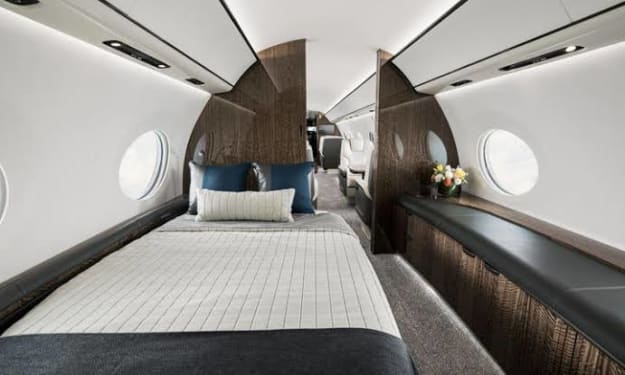
Luxury air travel is soaring across Asia as aircraft manufacturers and private jet companies compete to capture the attention of the region’s rapidly growing population of ultra-wealthy travelers. With business fortunes rising and leisure travel rebounding strongly after the pandemic, Asia has become the world’s most promising market for private aviation and high-end commercial aircraft cabins. Industry executives say demand for private jets, customized aircraft interiors, and premium long-haul travel experiences has surged in countries such as China, India, Singapore, Indonesia, and Thailand. Wealthy individuals increasingly want faster, more flexible ways to travel, avoiding crowded airports and commercial flight schedules. “Asia is now the center of growth for luxury aviation,” said one senior executive at a European aircraft manufacturer. “We are seeing first-time buyers alongside experienced customers upgrading to larger, longer-range aircraft.” A Growing Market of High-Net-Worth Travelers According to aviation industry data, Asia-Pacific now accounts for one of the fastest-growing private jet fleets in the world. The number of high-net-worth individuals in the region has expanded sharply over the past decade, driven by technology, finance, real estate, and manufacturing fortunes. Private jet ownership, once rare in Asia, is becoming more common among billionaires and multinational executives who value privacy, time efficiency, and control over their travel environment. Charter services have also grown rapidly, allowing wealthy travelers to rent luxury aircraft without purchasing them outright. Luxury airlines have taken note as well. Several carriers have invested heavily in first-class suites and business-class cabins designed to resemble hotel rooms in the sky. Features such as private bedrooms, showers, gourmet dining, and personal butler-style service are becoming major selling points. Plane Makers Redesign for Comfort and Status Aircraft manufacturers including Airbus, Boeing, and leading business jet producers are tailoring designs specifically for Asian customers. These include wide-body jets converted into flying palaces with meeting rooms, entertainment lounges, and master bedrooms. Customization has become a key part of the sales pitch. Buyers can choose everything from marble bathrooms to gold-accented interiors, as well as advanced communication systems for in-flight business operations. “Customers don’t just want transportation,” said a luxury aircraft interior designer based in Singapore. “They want a symbol of success and a private space that reflects their lifestyle.” In response, plane makers have opened design centers in Asia to work directly with clients. These studios allow customers to preview cabin layouts and select materials and technologies before committing to purchases that can exceed $100 million per aircraft. Business Travel Meets Leisure A major driver of the trend is the blending of business and leisure travel, often called “bleisure.” Executives want aircraft that can serve as both office and retreat, allowing them to hold meetings in the air and then relax with family on the same trip. Destinations such as the Maldives, Bali, Japan, and Europe’s luxury resorts have seen an influx of travelers arriving on private or semi-private flights. The flexibility allows travelers to avoid busy hubs and fly directly to smaller airports closer to their final destinations. Luxury travel agencies report a sharp rise in bookings for bespoke itineraries that combine private flights, exclusive hotels, and curated experiences such as private island stays or access to cultural landmarks after hours. Environmental and Social Questions The boom in luxury aviation also raises environmental concerns. Private jets produce significantly higher carbon emissions per passenger than commercial flights. As climate awareness grows, critics argue that expanding private aviation sends the wrong message in a region already struggling with pollution and rising temperatures. Some aircraft makers are promoting newer, more fuel-efficient engines and the use of sustainable aviation fuel (SAF). Several luxury operators have begun offering carbon offset programs, though environmental groups say these measures do not fully address the issue. “There is a clear contradiction between climate goals and the expansion of private aviation,” said an environmental policy expert. “The industry must demonstrate real commitment to sustainability.” Competition Intensifies With Asia now seen as the next frontier, competition among manufacturers and charter operators is intensifying. Companies are hosting exclusive showcase events in cities such as Shanghai, Hong Kong, and Dubai to attract elite customers. These events feature luxury interiors, virtual tours, and private demonstrations of aircraft capabilities. Financial institutions have also entered the market, offering specialized leasing and financing packages for high-end aircraft buyers. This has lowered barriers to entry for wealthy entrepreneurs who prefer not to pay the full cost upfront. Meanwhile, regional governments are expanding private aviation infrastructure by upgrading airports and building dedicated terminals for business jets. Singapore, for example, has invested heavily in private aviation facilities to strengthen its role as a regional hub. A Symbol of Post-Pandemic Wealth Analysts say the rise of luxury aviation reflects broader economic shifts in Asia. While many ordinary travelers remain sensitive to airfare prices, the ultra-rich are spending more freely than ever on premium experiences. “Luxury travel has become a statement of recovery and power,” said a travel economist. “It shows who benefited most from the post-pandemic economy.” Looking Ahead Industry forecasts suggest Asia’s luxury aviation market will continue growing over the next decade, driven by rising wealth, expanding tourism, and a desire for exclusive travel experiences. For plane makers, the challenge will be balancing luxury with sustainability while adapting to cultural preferences across diverse Asian markets. As the world’s super-rich take to the skies in ever more elaborate aircraft, luxury travel is no longer just about reaching a destination. In Asia, the journey itself has become the ultimate display of status, comfort, and global ambition.
By Fiaz Ahmed 5 days ago in Longevity
The Pride Flag and the Diversion
For nearly a decade, the LGBTQIA Pride Flag rippled in the wind at Christopher Park, a kaleidoscope of color staked into the soil of America’s first national monument to LGBTQIA+ liberation. That flag came down this week. Federal officials, citing new guidance from the Trump Administration, silently lowered the rainbow flag from its pole across the street from the Stonewall Inn. The birthplace of the modern gay rights movement now flies only the United States flag.
By Tim Carmichael3 days ago in Pride



Comments
There are no comments for this story
Be the first to respond and start the conversation.