
Four Reasons Why Proper Form is So Important
Fix Your Form

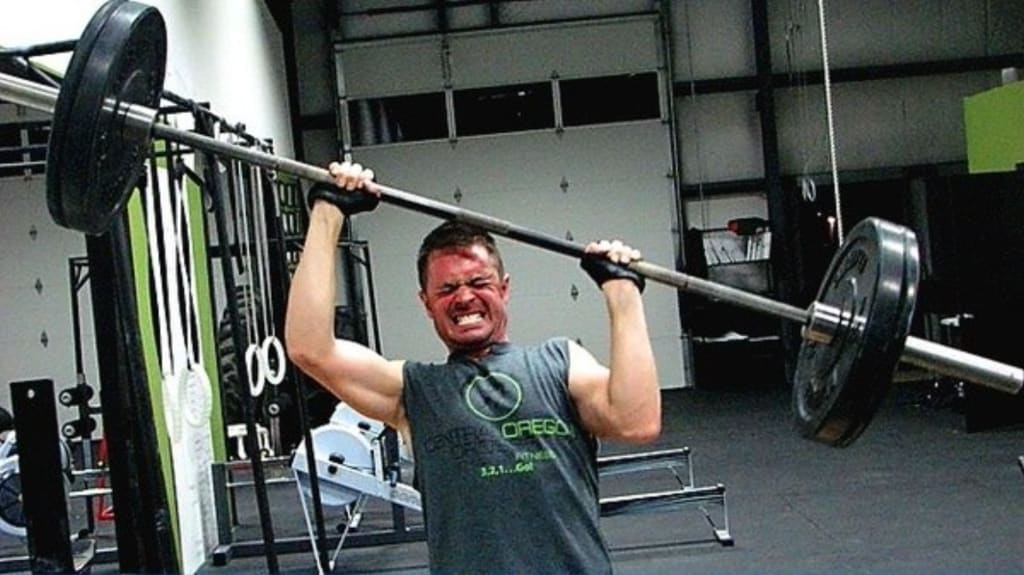
You've probably been here before. You are deep into a workout. Maybe it is your near to last, or last, set. You are thinking about how close you are to being done with a hard workout. You're happy with the work you've put in so far and just need to get those last few reps in. You aren't focused on maintaining proper form because it's all about those last reps and being able to count them and cross them off the list as completed. You use your last bit of energy to get those reps in and then you're done. You pat yourself on the back for banging it out and getting it done. You go on with your day. The next morning you wake up and your lower back is sore. It isn't the normal muscle soreness you feel after a good workout. No, this is different. You tweaked something. Bending over is painful. Twisting is painful. The next day, it isn't any better. You didn't sleep well because you were uncomfortable. Your recovery is effected and the work you did yesterday is wasted. Now you have to skip today's workout. Double loss.
Does some version of this sound familiar? Maybe it wasn't your lower back, but it was your shoulder or your knees. Whatever part of your body it was, the likely underlying cause had a lot to do with proper form, or lack thereof.
Our bodies are amazing, I mean they really are. Tens of thousands of years ago, our species evolved to develop this amazing attribute called Synergistic Dominance. The body's neuromuscular system works synergistically. When the primary muscle used during a particular movement is inhibited or weak, the body will recruit other muscles to assist with the movement. This is a fantastic adaption to have if you are out in the jungle, tired from hunting all day, see a tiger or bear and you need to run. Your body doesn't care if your hamstrings are inhibited from walking around all day. It will recruit whatever it needs to to get your ass moving and keep you alive.
Today, this is something we need to be aware of when we work out. Just because you can recruit secondary muscle groups to help you bang out those last couple of reps, doesn't mean you necessarily should. This puts you at risk for injury over time, which leads us to our list.
1.) Injury: This is the primary reason to always use proper form. You have to be aware of the proper way to move and stay mindful of your form for each rep, each and every set. Improper form can lead to muscle, tendon and/or ligament damage. Best case scenario, you don't hurt yourself that day, but you build bad habits and over time those bad habits will result in injury. It isn't worth getting in those last couple of reps with bad form, if the result is an injury that prevents you from working out for weeks or months.
2.) Efficacy: Performing an exercise with bad form means you aren't working the muscles you are intending to work, which then means you won't get the results you are working for in the first place. As I mentioned in the beginning of this post, our bodies have an amazing ability to recruit secondary muscle groups to help a primary muscle group. You may also not be working the target muscle group through its full range of motion if you are using improper form, resulting in suboptimal output and performance. You may have to start with lesser weight when using proper form, but over time, as you get better at the movement and stronger, you will ultimately be able to lift MORE weight in the long run. More weight means bigger gains. Start slow to go farther.
3.) Wasted Effort: This ties into the efficacy to a degree. You may think you are getting more done by getting in those last few reps with poor form, but you are actually wasting energy because of the body's need to recruit additional secondary muscle groups to compensate. This results in a negative net benefit, from an energy utilization standpoint. Using proper form means you are using the most efficient movement for that exercise.
4.) Breathing: Breathing also ties into the concept of efficacy and wasted effort. Lifting improperly results in inefficient breathing. Inefficient breathing results in not enough oxygen being taken in and not enough carbon dioxide being exhaled. The result is less energy and less energy means you can't do as much work. If you can't do as much work, you don't progress as fast. Pretty simple.
Our egos can get the better of us. We want to keep up with the other people lifting around us. We don't want to be the one with the least amount of weight on the bar. It takes disciple to do things the right way, especially when the wrong way is so much easier. Our bodies want to do it the easy way, not the right way. You have to think about lifting as a skill. The movements need to be learned, then progressed.
About the Creator
Daniel Wilkins
I am a NASM (National Academy of Sports Medicine) Certified Personal Trainer, MMA Conditioning Specialist and Youth Exercise Specialist. I have been competing, and coaching both children and adults, in Brazilian Jiu Jitsu (BJJ) since 2009.
Keep reading
More stories from Daniel Wilkins and writers in Longevity and other communities.
Maintaining Bone Health
Gnarly fact: Pound for pound, your bones are 4x stronger than concrete. Pretty cool, right? Now for the downer, according to the American Academy of Orthopedic Surgeons, peak bone density is reached between the ages of 25-30 and by age 40, density starts to decline. Even worse, our best opportunity to influence peak bone density occurs in early childhood through early adulthood, when the greatest amount of growth is occurring. If you're reading this and you are over the age of 30, you may be asking what the hell you can do about that now then.
By Daniel Wilkins5 years ago in Longevity
Day 4 of Quitting
If this is how sobriety feels, maybe it’s better to go through life a little buzzed… this, along with other hits like, I want to kill myself, I wish I was dead, and I’m going to throw myself off a bridge have been the only thoughts on rotation these past few days. I promise myself that if, in a month, I still feel like this (‘this’ meaning despondent, full of rage, and simultaneously numb) I can go back to smoking. Until mid-February though? Nicotine is off the table.
By sleepy drafts10 days ago in Longevity
What Is Proprioception? Why Body Awareness Matters More Than You Think
Balance is something most people take for granted—until it starts to feel unreliable. A moment of unsteadiness, a fear of falling, or difficulty walking on uneven ground can raise questions that many people struggle to answer. Strength alone doesn’t always explain these changes. In many cases, the missing piece is something far less talked about: proprioception.
By AhmedFitLife3 days ago in Longevity


Comments
There are no comments for this story
Be the first to respond and start the conversation.