
Edible Offal Market Size and Forecast 2025–2033
Global Appetite for Sustainable, Affordable Protein Pushes Edible Offal Market Toward US$ 59.60 Billion by 2033

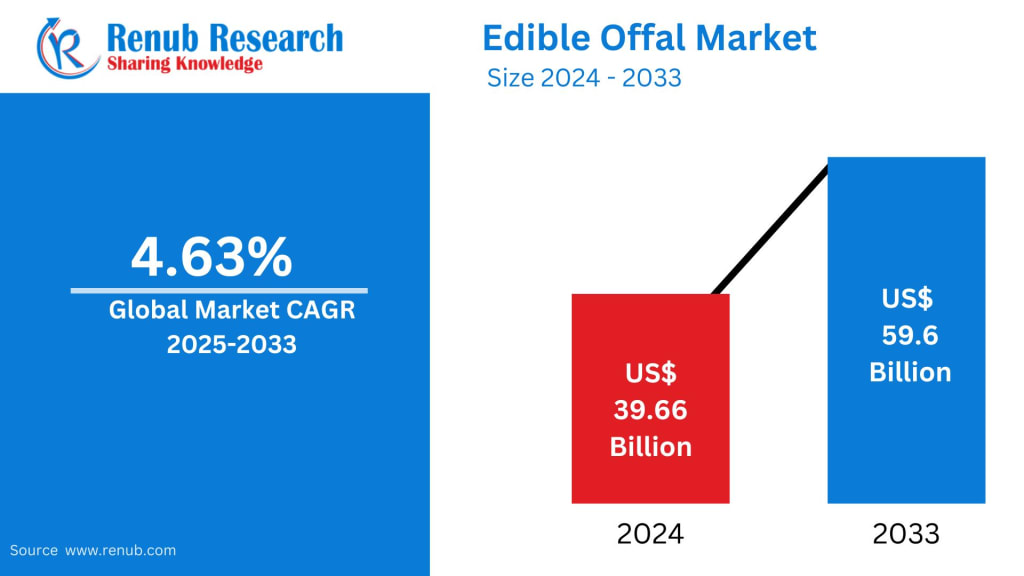
The global Edible Offal Market is entering a period of steady expansion as shifting consumer preferences, sustainability-driven food habits, and demand for affordable nutrient-dense protein reshape the dynamics of meat consumption worldwide. According to Renub Research, the market is projected to reach US$ 59.60 billion by 2033, rising from US$ 39.66 billion in 2024, at a CAGR of 4.63% from 2025 to 2033.
Edible offal—once overlooked in many Western food cultures—is regaining recognition for its nutritional richness, culinary diversity, and alignment with resource-efficient animal utilization. As nations grapple with food waste, rising prices, and health-driven consumption, offal is moving from the margins of cuisine back into mainstream conversations.
Edible offal includes the internal organs and entrails of animals that are consumed as food. These commonly include liver, kidney, heart, tongue, tripe, brain, and other organ meats from cattle, pigs, sheep, poultry, and goats. Across Asia, Africa, Latin America, and parts of Europe, these products have long been cherished in traditional cuisines for their depth of flavor and high nutrient content.
In recent years, the market has witnessed a revival driven by:
Growing environmental consciousness
Nutritional awareness
Rising global meat consumption
Higher emphasis on whole-animal utilization
Rapid expansion of ethnic and specialty food markets
Offal’s affordability and culinary versatility are also making it appealing amid global inflation and economic uncertainty.
Furthermore, technology in cold-chain logistics, hygienic processing, and packaging continues to elevate product consistency and safety—helping producers access new markets where offal was previously underutilized or stigmatized.
Growth Drivers for the Edible Offal Market
1. Rising Global Demand for Affordable Protein
A major force propelling the edible offal market is the growing need for cost-effective protein sources, especially in developing countries where financial constraints and rising meat prices push consumers toward more economical alternatives.
Offal provides:
High-quality protein
Essential vitamins like A, B6, and B12
Iron, zinc, and selenium
Lower cost per gram of protein compared to muscle meats
As global inflation persists and food insecurity challenges intensify, communities increasingly turn to organ meats as a reliable source of nourishment. Offal is deeply woven into many traditional cuisines, ensuring demand remains consistent among both rural and urban populations.
In emerging markets across Asia and Africa, offal is frequently preferred over muscle meat because it offers superior nutrition at substantially lower cost. This long-standing cultural acceptance combined with economic necessity positions edible offal as an essential part of the global protein economy over the next decade.
2. Creative Culinary Trends and Adventurous Eating
A revival of culinary experimentation is reshaping the market. Chefs, food influencers, and enthusiasts are embracing offal as a canvas for innovation—turning once-overlooked cuts into gourmet experiences.
Examples include:
Liver pâtés and mousse used in fine dining
Beef heart skewers and grilled lamb hearts
Tripe-based stews and soups
Tongue tacos, a staple that has now gone global
The popularity of food documentaries, cooking shows, and social media food culture has accelerated the visibility of organ meats. Nose-to-tail cooking—a philosophy that promotes using every part of the animal—has evolved into both a culinary art and a sustainability statement.
Celebrity chefs and Michelin-starred restaurants routinely incorporate offal into premium menus, normalizing it for younger and more adventurous consumers. This wave of culinary creativity not only boosts demand but also reshapes perceptions in markets where organ meat once carried social stigma.
3. Growing Awareness of Sustainable Eating Habits
Sustainability has emerged as a powerful narrative in reshaping global food systems. Edible offal perfectly aligns with this ethos by reducing waste and promoting efficient resource utilization.
Key sustainability benefits include:
Minimizing slaughterhouse waste
Supporting zero-waste cooking movements
Reducing reliance on high-cost muscle cuts
Offering environmentally efficient nutrition
Climate-conscious consumers increasingly prefer foods that use the whole animal, not just selective cuts. Offal’s nutrient density also appeals to health-driven consumers who prioritize natural, minimally processed foods.
Restaurants, retailers, and food manufacturers are responding by expanding their offal-based offerings—from ready-to-cook products to gourmet preparations. As sustainability becomes central to global food culture, edible offal stands positioned as a key beneficiary of this shift.
Challenges in the Edible Offal Market
1. Cultural Barriers and Perception Issues
Despite its cultural significance in many regions, edible offal faces strong resistance in parts of North America, Europe, and Australia—where organ meats are sometimes seen as outdated or unappealing.
Challenges include:
Negative perceptions related to taste or texture
Associations with poverty or old-fashioned cooking
Discomfort with the idea of consuming internal organs
Lack of familiarity among younger consumers
Overcoming these barriers requires education, marketing innovation, and culinary storytelling. Increasing visibility through restaurant menus, influencer endorsements, and modern packaging is essential to drive acceptance in hesitant markets.
2. Regulatory and Food Safety Complexities
Offal is highly perishable and requires strict hygiene and temperature control. Regulations vary widely across countries, affecting:
Import/export rules
Storage and transportation requirements
Labelling standards
Slaughterhouse processing guidelines
For smaller producers, compliance can be expensive and challenging. Inconsistent global regulations also hinder cross-border trade. Addressing these challenges requires standardization efforts and investment in cold-chain systems.
Country-Level Insights
United States Edible Offal Market
The U.S. is witnessing a gradual but notable resurgence in offal consumption, driven by:
Consumer interest in sustainable eating
Rising popularity of ethnic cuisines
Trendy restaurants showcasing nose-to-tail cooking
Health-conscious buyers exploring nutrient-dense foods
Chefs and culinary influencers are playing a pivotal role in reshaping perceptions. Offal-based dishes like bone marrow toast, liver pâté, and oxtail stew are appearing on gourmet menus nationwide. Growing awareness of organ meats’ high vitamin and protein content is opening new opportunities for retailers and processors.
Germany Edible Offal Market
Germany’s deep-rooted culinary heritage supports strong demand for offal, especially in regions like Bavaria and Baden-Württemberg. Dishes such as Kalbsleber (veal liver) and Saure Lunge (sour lungs) remain traditional favorites.
Market drivers include:
Strong regional cuisine traditions
Specialty butchers preserving artisanal methods
Growing interest among gourmet chefs
Renewed enthusiasm among younger consumers
Germany strikes a balance between embracing modern tastes and preserving culinary legacy, ensuring stable demand for offal.
India Edible Offal Market
India’s edible offal market is flourishing, rooted in centuries-old cooking traditions. Organ meats play a key role in diverse regional dishes such as:
Kaleji (liver curry)
Gurda-Kapoor (kidney and testicle fry)
Bheja fry (goat brain)
Paya soup (trotter broth)
In recent years, urban consumers have shown renewed interest in offal, thanks to:
Food influencers exploring traditional dishes
Startups offering gourmet organ-meat preparations
Rising awareness of sustainability and whole-animal eating
India’s rich culinary ecosystem ensures that edible offal remains both culturally significant and economically important.
Saudi Arabia Edible Offal Market
In Saudi Arabia, offal is deeply integrated into local cooking traditions, especially in festive and family dishes. High demand is supported by:
Cultural acceptance
Preference for nutrient-dense foods
Integration in celebratory cuisine
Strong domestic production
As sustainability gains attention across the Middle East, organ meats are being rediscovered for their environmental efficiency and culinary value.
Recent Industry Developments
May 2023 – A research study titled “The Importance of Food Neophobia on Consumers' Intention to Buy Edible Beef Offal” recommended strategies including chef-led cooking shows and innovative packaging to improve consumer acceptance.
May 2022 – JBS Foods acquired Biotech Foods, strengthening its global presence and enhancing its offal-processing capabilities.
Edible Offal Market Segmentation
By Source
Pig
Beef
Sheep
Poultry
Others
By Application
Fresh
Processed
By Distribution Channel
Food Service
Retail
By Region (25 Country Viewpoints)
North America: United States, Canada
Europe: France, Germany, Italy, Spain, U.K., Belgium, Netherlands, Turkey
Asia-Pacific: China, Japan, India, Australia, South Korea, Thailand, Malaysia, Indonesia, New Zealand
Latin America: Brazil, Mexico, Argentina
Middle East & Africa: South Africa, UAE, Saudi Arabia
Key Companies Covered (5 Viewpoints Each)
Offal Good
Offal Delight
Offal Cuisine
JBS Food Canada
Alpha Field Products Co.
Yoma International
Cenfood International Inc.
Sure Good Foods Ltd.
Organic Meat Company
Final Thoughts
The Edible Offal Market is moving into a new era—one shaped not just by affordability and tradition, but by sustainability, global food security, and culinary innovation. As consumers and businesses embrace whole-animal utilization, offal stands poised to become a key pillar of future food systems. With a robust forecast through 2033 and rising cultural acceptance, the market promises significant opportunities for producers, chefs, retailers, and global food innovators.
About the Creator
Ben Tom
Ben Tom is a seasoned content writer with 12+ years of experience creating SEO-friendly blogs, web copy, and marketing content that boosts visibility, engages audiences, and drives results.
Day 4 of Quitting
If this is how sobriety feels, maybe it’s better to go through life a little buzzed… this, along with other hits like, I want to kill myself, I wish I was dead, and I’m going to throw myself off a bridge have been the only thoughts on rotation these past few days. I promise myself that if, in a month, I still feel like this (‘this’ meaning despondent, full of rage, and simultaneously numb) I can go back to smoking. Until mid-February though? Nicotine is off the table.
By sleepy drafts5 days ago in Longevity
United States Wound Care Market Size and Forecast 2025–2033
United States Wound Care Market Outlook The United States wound care market is entering a sustained phase of expansion as healthcare systems respond to the growing burden of chronic diseases, an aging population, and increasing surgical procedures nationwide. According to Renub Research, the market is expected to grow from US$ 6.45 billion in 2024 to US$ 10.4 billion by 2033, registering a compound annual growth rate (CAGR) of 5.44% from 2025 to 2033.
By Renub Research5 days ago in Longevity


Comments
There are no comments for this story
Be the first to respond and start the conversation.