
Digital Detox: Reclaiming Control in a Hyper-connected World
Wake up yo reality

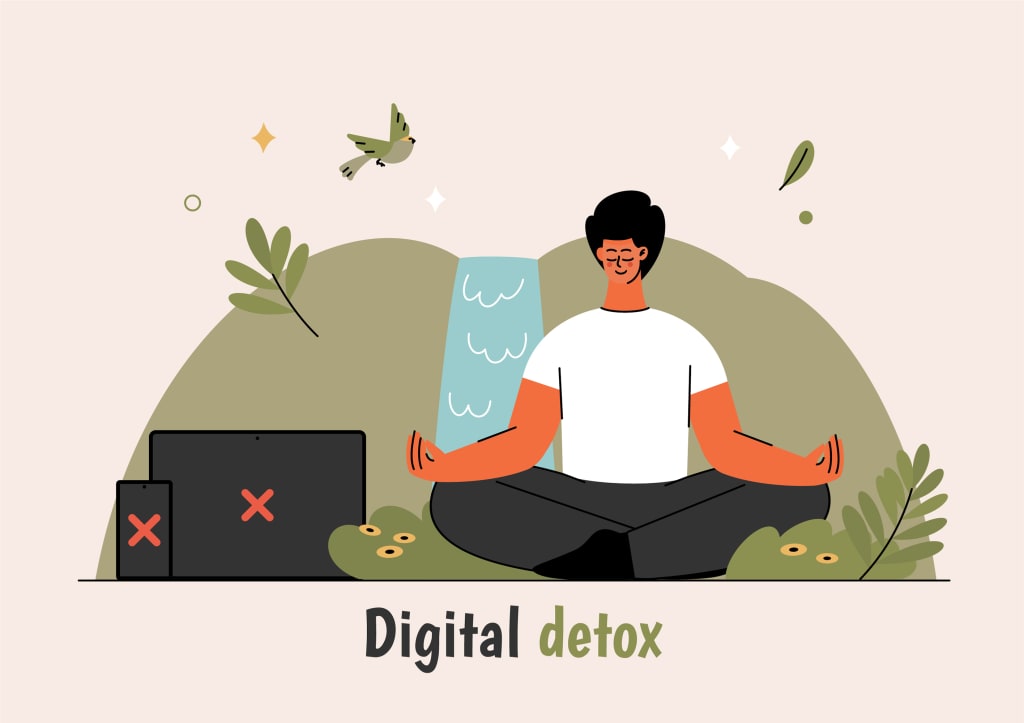
We wake up to the sound of notifications and fall asleep with screens in our hands. From dawn to dusk, much of our time is consumed by digital devices—social media, emails, endless scrolling, and streaming. Technology has changed how we live and communicate, but it has also made us more dependent, anxious, and burned out. Enter Digital Detox—a conscious effort to unplug from digital distractions to restore balance, mental clarity, and a deeper connection with the real world. In an age where attention is currency, learning to disconnect is no longer a luxury; it’s a necessity.
What is a Digital Detox?
A period of deliberate disconnection from digital devices, particularly smartphones, computers, and social media platforms, is known as a digital detox. It’s about taking a step back from the noise, allowing the mind and body to reset, and making space for more meaningful real-life interactions.
The goal isn’t to reject technology but to reclaim a healthy balance. Like fasting for the body, digital detoxing is rest for the mind.
Why Are We So Addicted?
Digital addiction isn’t just a bad habit—it’s a carefully engineered psychological trap. Platforms are designed to trigger dopamine hits—the feel-good chemical—in your brain whenever you get a like, a message, or a fresh video recommendation.
Other factors:
FOMO (Fear of Missing Out): The anxiety that you’re missing out on something important if you disconnect.
“Always-on” culture: Work emails at midnight, group chats during dinner—it’s hard to unplug when everything is urgent.
Infinite scroll: There’s no “end,” so we don’t stop.
Warning Signs You Need a Detox:
You feel anxious without your phone nearby.
You check your phone constantly—even without notifications.
Without digital distractions, you struggle to concentrate. Your sleep quality has declined.
You feel emotionally drained or overwhelmed after being online.
If any of these come to mind, your mind probably needs a break.
How to Start a Digital Detox:
1. Set boundaries: Establish tech-free times, like one hour before bed or during meals.
2. Use monitoring tools: Apps like Forest, Digital Wellbeing, or Moment can track and limit screen time.
3. Replace screen time: Pick up a book, go for a walk, journal, or engage in creative hobbies.
4. Inform others: Let friends and coworkers know you're detoxing so they respect your boundaries.
5. Detox gradually: detox for a few hours at a time, then move on to full days or weekends.
How to Stay Focused During a Digital Detox:
a. Set Clear Intentions: Know why you're doing it. Mental peace? More time with family? Better sleep? Be specific.
b. Plan Ahead: Schedule offline activities so you don’t default back to scrolling when bored.
c. Designate Tech-Free Zones: Keep devices out of bedrooms and dining spaces.
d. Journal the Journey: Track how you feel—day by day. It keeps you motivated and aware.
e. Practice Mindfulness: Meditation, deep breathing, or even mindful observation helps calm the urge to "check" things.
Make it a way of life rather than a one-time event. Digital detox doesn’t have to be a rare retreat. You can incorporate it into your routine:
One day a week without screens
Unfollow and unsubscribe to declutter digital noise
Prioritize people over pixels
Mindful tech use is not about rejection; it's about control. When you stop letting your device dictate your time, you begin to reclaim your life.
Final Thoughts
In a world that rewards constant connection, choosing to disconnect can feel radical—but it’s one of the most powerful acts of self-care. A digital detox isn’t about going offline forever; it’s about being more present, more focused, and more human.
So take a breath, put down the phone, and reconnect—with yourself.
About the Creator
Keep reading
More stories from writers in Longevity and other communities.
Day 4 of Quitting
If this is how sobriety feels, maybe it’s better to go through life a little buzzed… this, along with other hits like, I want to kill myself, I wish I was dead, and I’m going to throw myself off a bridge have been the only thoughts on rotation these past few days. I promise myself that if, in a month, I still feel like this (‘this’ meaning despondent, full of rage, and simultaneously numb) I can go back to smoking. Until mid-February though? Nicotine is off the table.
By sleepy drafts9 days ago in Longevity
Why Minimal Skincare Routines Are Winning in 2026
If you had told me a few years ago that my skincare routine would shrink to just three or four steps, I probably wouldn’t have believed you. Like many of us, I went through the ten-step routine phase, the acid-everything phase, and yes — the “TikTok made me buy this” phase too.
By Veronica Bennettabout 22 hours ago in Longevity
A Dart at Dusk
Seconds ago, the sullen sun set on the two of us… my exuberant furry companion and me. A fresh breeze embraces us, delivering welcome relief from the day’s oppressive heat. His typical stumbling and staggering along — apace with a sloth — has turned into trip-trapping, high-stepping, almost skipping along.
By Angie the Archivist 📚🪶2 days ago in Petlife
Getting Serious About Comedy (Part I)
If I were asked to remark on my life and the childhood that paved some road leading me to this point, I would have to say something about all the funny people who surrounded me for the last 26,872 days (and counting). Somewhere along that road, I became a big fan of laughter and the comedy that spawns it – and, I mean not only my own laughter, but the laughter of others, some of which I have actually been responsible for inducing.
By John Oliver Smith7 days ago in Humor


Comments
There are no comments for this story
Be the first to respond and start the conversation.