
Development and Validation of In Vitro Release Testing (IVRT)
IVRT - In Vitro Release Testing

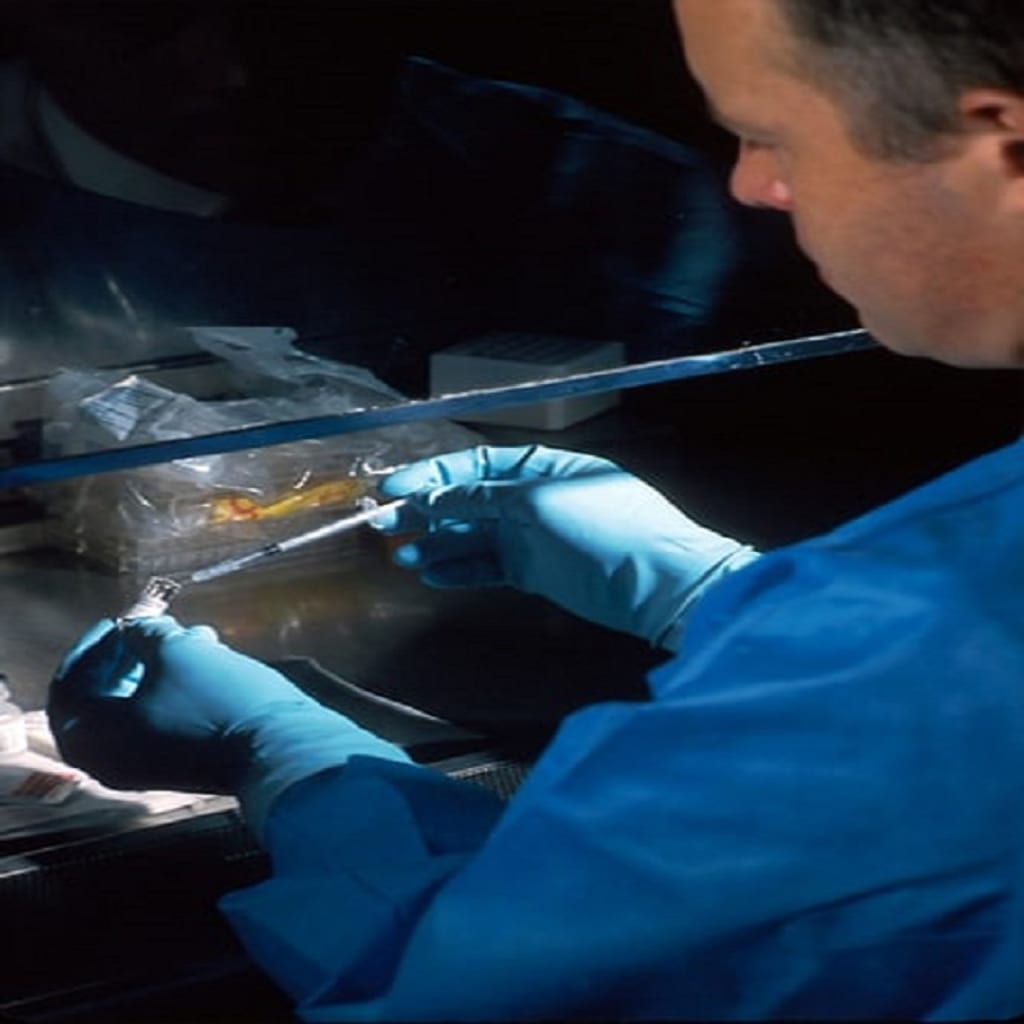
Development and Validation of In Vitro Release Testing (IVRT)
Development and Validation of in In Vitro Release Testing have become an essential issue in this advanced era. Vitro Release Testing, also known as, IVRT plays a significant functional role in medical experiments. In the course of any drug product development, the measurement of the drug is very vital. IVRT has proved to be quiet a promising factor in the measurement of the drug release elements. The release ratio is controlled by API (Active Pharmaceutical Ingredient) in drug testing. The testing process goes on during all the phases of the experiment. IVRT is especially needed in the non-oral doses and semi-solid formulations to measure the drug elements.
IVRT (In Vitro Release Testing)
In Vitro Release Testing performs a functional role in segregating the performances and released elements. In comparison to the traditional method, IVRT proves to be faster and cheaper. According to the research work of Neha D. Singh, of the Formulation Development in Research Triangle Park, In Vitro Method Development, a technology-based program focuses on consistency and quality. The effective measurement technique of IVRT uses tested quality tests on dermatological solutions. In Vitro Release Testing shows the combined effect of physical and chemical parameters. IVRT also emphasizes on particle size and solubility of the Active Pharmaceutical Ingredient (API). For five decades, dissolution testing form has been used to measure solid dose forms.
One of the most common In Vitro Release Testing uses an open chamber model like the 'Franz diffusion cell system". This system has two categories; Figure 1 and 2. Researchers use this method with the assistance of tissue construct, biological skin sample, synthetic membrane etc. The membranes divide different elements best on the testing. PBS (Phosphate Buffered Saline) is known to be the medium of a collection.
IVRT - In Vitro Release Testing is used to measure the release rate of a drug by using some diffusion cells and synthetic skin membrane. Dissolution test is applicable for the oral dosage drugs. The below mentioned semi-solid dosage forms are analysed through the IVRT Method,
• Ointments
• Lotions
• Aerosols
• Creams
• Suspensions
• Hydrogels
• Liposomes
• Microencapsulation
According to the guidelines of FDA, In Vitro Release Testing and Vivo Bioequivalence Documentation for the semi-solid dosages In with some needed route of administration. The method indicates,
• Changing Level
• CMC (Chemistry, Manufacturing and Controls) tests to track the Change
• Recommended Tests
• Proper Documentation upgrade to record the Change
In this blog, we are trying to present a detailed view of the development and validation of In Vitro Release Testing. The motto of an IVRT protocol must have the ability to satisfy both the development and regulatory processes. A few protocols are applied to validate the In Vitro Release Testing. The primary function of the protocol is to test reproducibility, repetition and robustness. There are some basic parameters fixed to measure the Release test.
The Development of In Vitro Release Testing (IVRT) Method
A successful and reliable experiment of In Vitro Release Testing enables the researchers to have a flawless measurement through the physical elements. To focus on the identification of the experimental parameters relies upon the API properties. The test aims at the selection of active membrane, proper recipients and samples.
To test the receiving medium, the SUPACSS FDA guidance allows the researchers with a number of reasons. According to the guideline, a suitable receptor medium for soluble drugs can be applied. A few examples are also attached to the research work. Thus, the first stage to measure the task is to test the Active Pharmaceutical Ingredient's solubility in different kinds of solutions. The main purpose is to differentiate the solvents along with the given conditions in the IVRT test. IVRT evaluation mostly focuses on hydro-alcoholic solvents and aqueous solvents.
One principal purpose of In Vitro Release Testing is to work as a surrogate in the In Vivo Testing. In this case, primarily physiological fluid is given the preference as the medium. For this very reason, PBS is enlisted at the top of the selection list. Sometimes, changes in the PBS model are necessary to develop solvency. Besides alcohol, surfactants and liposomal preparations are used to enhance the solubility level of the recipient medium. On occasions, two selection models for the In Vitro Release Testing can be used. One of the two selection models must focus on the durability test and manufacturing model, and the other on Mimic in Vivo behaviour through the medium of a physiological method. The second model also might help in a beautiful correlation between Vitro and Vivo testing.
IVRT or In Vitro Release Testing is an effective method that emphasizes on drug release in a proper way. The process has been developed and validated by the researchers with growing time. Even at present, the model is evolving as a more advanced and polished method. The testing process is becoming a medium to specify product ranges. As per the recent research survey, In Vitro Release Testing is going to become an inseparable part of the measurement process. More features are added to the model to improve the version. Above all, it is not easy to develop a perfect IVRT Model, which will be useful, reliable and upgraded at the same time.
A successfully developed IVRT system is dependent on the test material. The In Vitro Release Testing engages a number of phases. The first step to this process is solubility screening. The screening is done to create a receptive medium to maintain the sinking condition. After that, in the second level, a membrane is selected with no leach and has the capability to minimise drug binding. The membrane should not have any rate limitation on release. Through the selection of the appropriate elements, the process leads to the path of success. Along with this selection process, the proper collection of equipment is also very important.
The In Vitro Release Technology is used to compare the different formula prototypes to add some other qualities to the product. The methodology also focuses on the comparison of the prototypes with Reference Listed Drugs (RLD). There are some methodological differences between figure 1 and figure 2.
Validation of In Vitro Release Testing (IVRT) Method
In Vitro Release Testing has been qualified based on a number of parameters. The parameters or measuring tools act as a part of this validation process. The Parameters do not intend to limit the method to repetition, reproducibility, discrimination etc. A balance is a necessary part of this validation process. Other than Figure 1 and Figure 2, there are also Figure 3 and Figure 4. The analysis of figure 3 shows the necessity of precision and day-to-day changes. On the other side, figure 4 shows the variability of the two analysts. This methodology focuses on the validation to measure the changing results due to different drug applications, which is conveyed in Figure 5.
The validation of the IVRT method possesses several benefits in the process. The validated method enables the researchers to provide with a simple tool to measure the drug releases. The technique is used to validate optical thermodynamic activity and every performance. One of the primary focuses is, indeed, the unique quality. The validated technique is also used to build uniformity among the batches manufactured by various companies. After the In Vitro Release Testing method receives validation, the products are tested for the final round to stamp the quality. If any other change is needed, it is also executed within a specific time period. One of the major positive effects of the In Vitro Release Testing is the ability to manipulate the experiment stages. The development and validation process passes through a number of steps via different models. This is to remember that in today's world, In Vitro Release Testing's contribution is none the lesser than magic to overcome such obstacles in the field of medicinal experiment. The data output of the In Vitro Release Testing ranges from four to six hours to complete the entire process. This blog does not provide you, the readers, the detailed record and formula of the development and validation of the In Vitro Release Testing. The blog tries to present to you the importance of the development and validation of In Vitro Release Testing in the experimentation of drugs.
Hopefully, the blog helps you in understanding the matter in depth. For further queries, you can contact us via the website.
About the Creator
Tergus Pharma
Tergus Pharma is Pharmaceutical company in Durham, North Carolina. We are specialized in IVRT, IVPT, topical drug manufacturing.
Keep reading
More stories from Tergus Pharma and writers in Longevity and other communities.
Importance of IVPT in skin studies
Importance of IVPT in skin studies In Vitro permeation testing (IVPT) researches across biological membranes of the skin or in the eye & act as a critical guide to product development and to build product bioequivalence, along with QbD-guided formulation development and robust IVRT methodologies, Absorptions Systems’ optimized and validated IVPT testing provides complete data required to enable the highest degree of success for NCE, ANDA or 505(b)(2) filing.
By Tergus Pharma5 years ago in Longevity
Day 4 of Quitting
If this is how sobriety feels, maybe it’s better to go through life a little buzzed… this, along with other hits like, I want to kill myself, I wish I was dead, and I’m going to throw myself off a bridge have been the only thoughts on rotation these past few days. I promise myself that if, in a month, I still feel like this (‘this’ meaning despondent, full of rage, and simultaneously numb) I can go back to smoking. Until mid-February though? Nicotine is off the table.
By sleepy drafts9 days ago in Longevity



Comments
There are no comments for this story
Be the first to respond and start the conversation.