
Daily care helps reduce hair loss
Reduce hair loss


In the dermatology department of the hospital, I often see patients asking anxiously: "Doctor, I have been losing my hair very badly recently. I am about to be bald, please help me!" "How bad is your hair loss? How many roots are lost every day? "The pillows, the floor, and the toilet drain are all my hair, piles of hair, so terrible." "Your hair is so long, you can pile up a few hairs, have you counted it and lost it in about a day?" How many?" "About 20~30?"
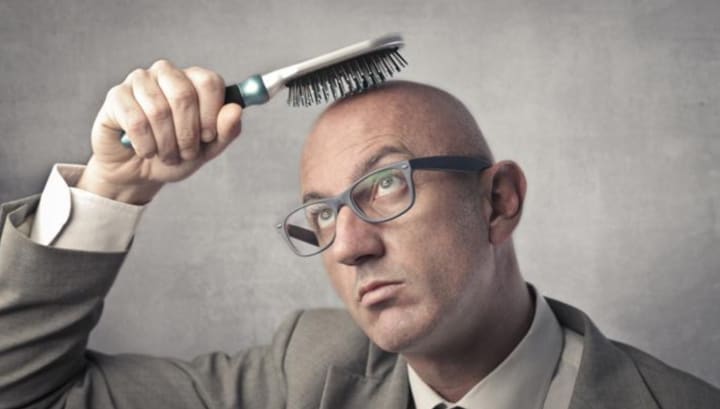
Many people are suffering from hair loss. On average, 1 in 6 people has hair loss. Among them, a large number of post-90s and even post-00s have also joined the ranks of hair loss. But what kind of hair loss can really make people bald?

It is normal to lose 50-100 hairs a day
According to Pan Huiyi, hair loss refers to the phenomenon of hair loss, most of which is a normal metabolism. Everyone will lose hair in life. There are two types of hair loss.
Physiological alopecia: The growth of hair is cyclical, generally divided into growth phase, anagen phase and telogen phase. The growth period is longer, with an average of 2 to 6 years, the regression period is several weeks, and the resting period is about 4 months. The hair growth rate is about 0.27~0.4mm per day, and there are more than 100,000 normal hairs, 90% of which are in the growth phase. Normal people can shed 50-100 hairs per day, and at the same time they will regenerate the same amount of hair, so there is no need to be too anxious.

Pathological alopecia: If you lose more than 100 hairs a day, and it lasts for 2 or 3 months or more, or you see an overall upward movement of the hairline, an M-shaped upward movement of the forehead hairline, or obvious thinning of the hair (from the top of the head) Mainly) Wait, this requires attention. Those with hair roots, that is, those with small white bumps that can be seen or touched at one end of the hair, are considered as hair loss.
There are many reasons for pathological hair loss, including genetic factors, abnormal androgen secretion, mental stress, postpartum, smoking, hyperlipidemia, excessive drinking, weight gain, decreased serum ferritin, thyroid disease, polycystic ovarian syndrome Symptoms, anemia, and local lesions of the scalp. There are also many manifestations of pathological alopecia, including localized patchy alopecia, diffuse alopecia on the top of the head, alopecia that moves back the front hairline, scar alopecia and so on.
"Hair pull test" to check hair loss easily
Hair pulling experiments can help check whether hair loss is normal. Method: Use your thumb and index finger to pinch a tuft of hair (about 40-60 hairs), and then quickly and gently pull the hair from the proximal end to the distal end. If more than 6 to 10 hairs are pulled out at one time, the hair pull test is positive.
It should be noted that the hair pull test is not applicable to all types of hair loss. For example, alopecia areata is mostly positive, and seborrheic alopecia is mostly negative. If the tester has just used the shampoo to wash his hair or combed his hair vigorously on the day of the examination, a false-negative hair pull test may occur, while if the tester has not used shampoo to wash or comb his hair for several days, a false-positive result may occur.
Seven tips to help reduce hair loss
Clinically, there are different treatment methods for different types of hair loss, and the types of Chinese medicine will also be different. When it is found that there is a real hair loss problem, you should go to a regular hospital to prescribe the medicine in time, follow the doctor's instructions, relax your mind, and cooperate with the treatment. The following seven tips can help reduce hair loss during daily care.
1. Pay attention to the frequency of shampooing: Generally, shampoo 2~3 times a week. In summer, you can increase the frequency. Too frequent shampooing will destroy the scalp's regulating function; while shampooing, it is best to massage the scalp with fingertips to keep the scalp clean , And can help the scalp invigorate blood. In addition, it is necessary to pay attention to the choice of shampoo, do not use strong degreasing or alkaline shampoo, which will easily dry the hair.
2. Try to avoid using plastic combs: plastic combs are easy to generate static electricity, which will cause bad irritation to the hair and scalp. It is best to use wooden combs or ox-bone combs, which can remove dandruff, increase hair luster, and massage the scalp to promote blood circulation.
3. Reduce perm and hair dyeing: The frequency of perm dyeing should not be too much. Perms and hair dyes have a greater impact on the hair. Repeated perm and dyeing of the hair can make the hair dry, frizzy, and easy to break. It may also cause allergic reactions and scalp inflammation, damage the hair follicles, and cause hair loss.

4. People with long hair usually avoid tying or hooping their hair too tightly to prevent traction alopecia.
5. Hair should always change the position of the seam to avoid excessive stimulation of a certain scalp and reduce hair loss.
6. Ensure adequate sleep, do not stay up late, maintain a good mood, and properly relieve mental stress. These are all factors that affect hair loss.
7. Eat a balanced diet, eat more foods that are high in protein and rich in vitamins, such as milk, eggs, lean meat, fish, soy products, and fresh fruits and vegetables. Those who have more head oil should eat more crude fiber foods and grains. In addition, it is necessary to limit the intake of fats, such as fatty meat, lard, animal offal, etc., eat less sugar foods and strong tea, and avoid irritating foods such as peppers and raw garlic.
About the Creator
Keep reading
More stories from writers in Longevity and other communities.
Day 4 of Quitting
If this is how sobriety feels, maybe it’s better to go through life a little buzzed… this, along with other hits like, I want to kill myself, I wish I was dead, and I’m going to throw myself off a bridge have been the only thoughts on rotation these past few days. I promise myself that if, in a month, I still feel like this (‘this’ meaning despondent, full of rage, and simultaneously numb) I can go back to smoking. Until mid-February though? Nicotine is off the table.
By sleepy drafts24 days ago in Longevity
A Slow Collapse - What Actually Happens When You Ignore Your Body for Decades
Nobody wakes up one day suddenly broken. That's not how it works. What happens is slower. Quieter. More insidious. You wake up at 45 and realize you can't remember the last time you felt actually good. Not "fine." Not "managing." Good. Light. Strong. Capable.
By Destiny S. Harris4 days ago in Longevity
Living in a hemp house
Hemp, a multi-purpose crop that delivers fibres, shivs, seeds, and pharmaceuticals is currently used in insulation materials and bio-composites for a more sustainable construction industry. Russ Martin and his wife Karon Korp tell their story as owners of the first hemp house in the U.S.
By Susan Fourtané 5 days ago in Interview
TUS NUA - ch 49
TUS NUA – ch 49 New Beginnings – Mia and Midnight (*)(*)(*) As Mia spoke on the phone to Ali’s sister, Ellen, Finola slipped quietly away and walked to the stream behind Tus Nua. Carefully, she put a block on her family so no one could know what she was about to do.
By Margaret Brennan6 days ago in Fiction



Comments
There are no comments for this story
Be the first to respond and start the conversation.