
COVID-19: A highlighter of inequality in South Africa.
COVID-19 is yet another of measure of inequality in South Africa exposing the economic inequality in the country.

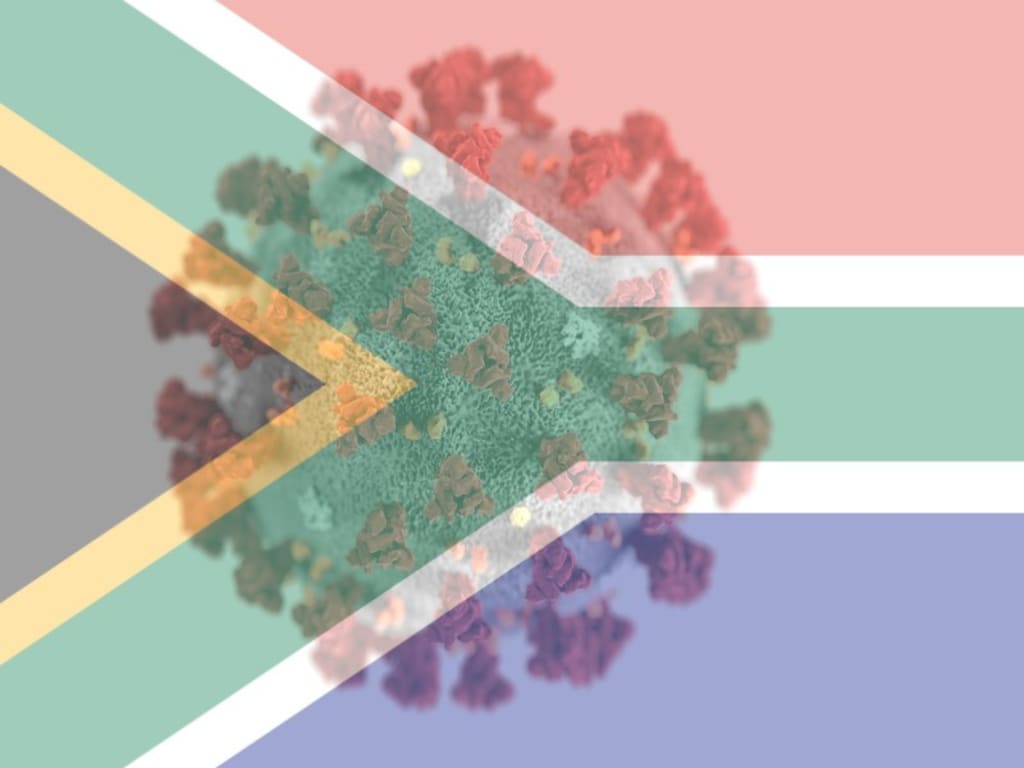
The SARS-CoV-2, the new coronavirus that causes COVID-19, that was first detected in Wuhan, China in the late 2019 which then set off a global pandemic is more than just a virus in South Africa, but more of a measure of inequality.
The first positive case in South Africa was confirmed on the 5th of March 2020. On the 15th of March 2020, the President of the Republic of South Africa, Cyril Ramaphosa, declared a National State of Disaster. The President then announced measures that would lead the nation's plan to contain the spread and mitigate the negative impact of coronavirus. The measures announced included immediate travel restrictions and the closure of schools from the 18th of March 2020.
In order to prevent the spread of COVID-19 measures such as: maintaining a safe distance from other people even if they do not appear to be sick, cleaning of hands using water and soap or a alcohol based sanitiser, wearing a mask in public, and choosing open and well ventilated spaces over closed ones are encouraged.
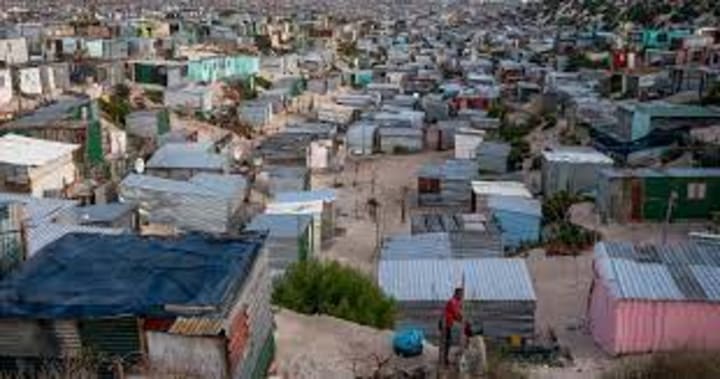
However, the measures that prevent the spread of COVID-19 was to a great extent challenging for the vast majority in South Africa to adhere to. Firstly, it was difficult for many South Africans to frequently wash their hands with running water and soap simply because they do not have access to running water. It is reported that more than 3 million South Africans lack the access to basic water supply. Furthermore, more than 14 million South Africans lack access to safe sanitation. Having access to basic water supply ensures that South Africans are able to protect themselves from COVID-19 and other diseases. The lack thereof means that South Africans are at a higher risk of contracting the disease. Secondly, 1.3 million households, which is 5 million people, live in informal settlements. Informal settlements are characterised by: a lack of basic services, pollution, over-crowding and poor waste management.
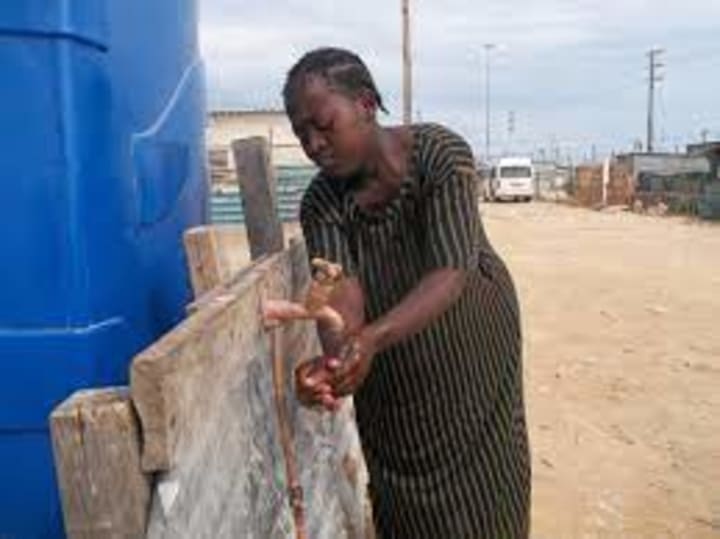
The estimated 5 million people living in informal settlements have a challenge of taking the measure of choosing open and ventilated spaces because one of the natures of informal settlements is crowding. Since, living in an informal settlement is characterised by crowding, ventilation is minimal and the spreading of COVID-19 is at an increased pace.
On the other hand, the stable middle class and the elite of South Africa are more able to effectively implement the preventative measures of coronavirus. Only 20% of South Africans belong to the stable middle class whilst only 4% belong to the elite. The main reason why the middle class and the elite could effectively implement preventative measures of COVID-19 is due to the fact that they have better living conditions which could be directly linked to their economic status. The stable middle class and the elite have access to safe running water, basic sanitation, and do not live in crowded spaces. This then leads to the stable middle class and the elite being able to wash their hands more frequently and thus limiting their chances of contracting the disease.
Additionally, the government imposed measures that would curb the spread of COVID-19 in schools. Children in low income communities are confronted with overcrowding in classrooms. As such, the government implemented rotational timetables for learners in order not to have crowding in schools. This however led to difficulties with the syllabus being completed on time.
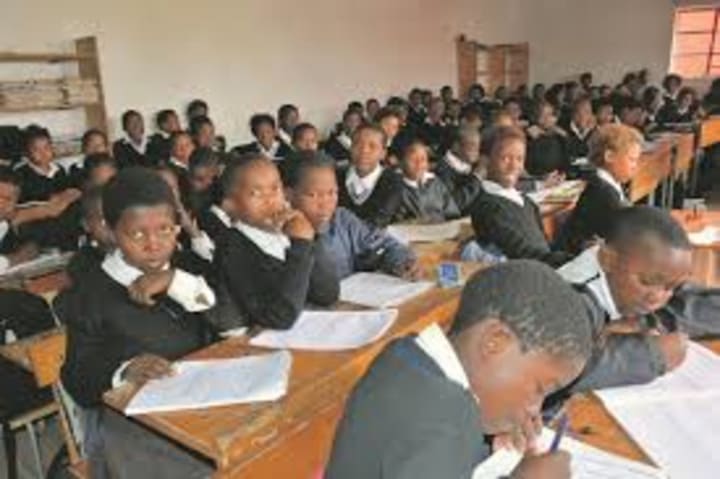
However, private schools which cater to the upper middle class and the elite were not in the same predicament. Private schools have less students in classrooms hence, there is no crowding in private schools. When the country was in a hard lockdown and schools were closed, private schools continued operating online. Public schools are unable to operate online because of a lack of resources by schools and learners. Further, private schools are big enough to cater to all students and there was no need to implement the rotational timetable.

The inequality is also visible in our healthcare sector even prior to the COVID-19 pandemic the South African healthcare system has been under pressure. The public healthcare system in South Africa has been confronted with challenges such as crowding, inadequate facilities, and a shortage of healthcare workers. The COVID-19 outbreak in South Africa added more pressure on the healthcare sector on the healthcare sector. During the year 2020, hospitals were frequently full to maximum capacity. The shortage of healthcare workers and inadequate facilities, particularly in the public healthcare sector, made it more difficult for the country to control the spread of COVID-19.
As such, COVID-19 was more than just a disease in South Africa and to a great extent a highlighter of the inequality that exists in the country. Those who belong to the disadvantaged economic groups found it challenging to maintain the spread of COVID-19 and to even protect themselves from it. While on the other hand, those who belong to the middle class and the elite were able to better manoeuvre in order to control the spread of COVID-19 and protect themselves from it.
About the Creator
Keep reading
More stories from Dimpho Moepane and writers in Longevity and other communities.
Why Castration Would Still Not Guarantee Our Safety
The African National Congress Women's League has called for few recommendations on how sexual offenders should be dealt with. The recommendations include: life imprisonment without parole, no bail, and chemical castration.
By Dimpho Moepane7 years ago in Viva
How Trackless Mining Equipment Suppliers in China Operate in 2026
When searching for reliable trackless mining equipment manufacturers in China, the options get overwhelming fast. You jump on a supplier portal and suddenly see thousands of identical looking machines. Buying heavy machinery for a mine is not like ordering basic office supplies. If a loader breaks down three miles underground, the whole production schedule stops immediately. The financial hit is massive. Finding the right factory matters a lot more than just getting a cheap price tag on a shiny new vehicle.
By CEO A&S Developers3 days ago in Longevity



Comments
There are no comments for this story
Be the first to respond and start the conversation.