
Common causes of urinary stones you should know
Increased excretion of solutes into the urine, calcification of plaques, and obstruction of the urinary tract facilitate the formation of urinary stones.

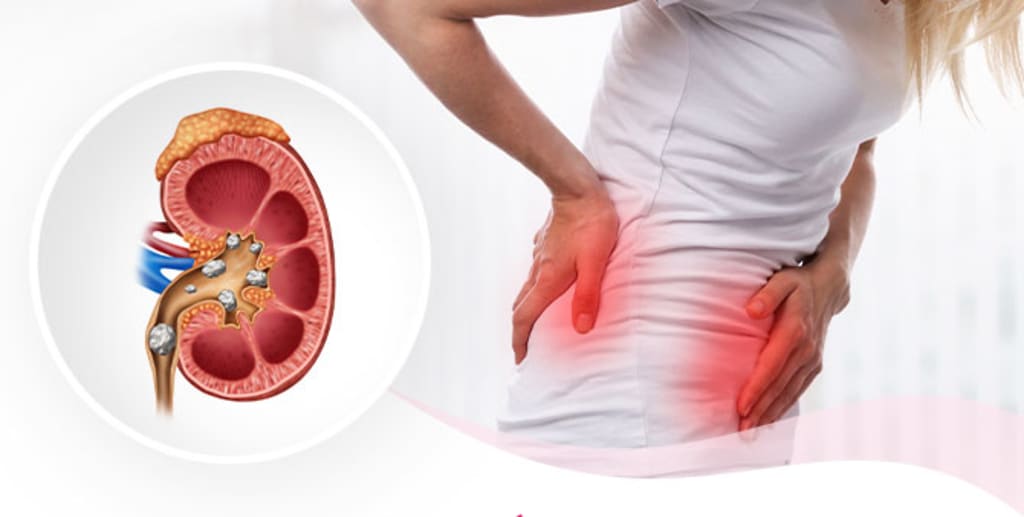
Increased excretion of solutes into the urine, calcification of plaques, and obstruction of the urinary tract facilitate the formation of urinary stones.
This article was professionally consulted by Dr. Tra Anh Duy, Men's Health Center.
Urinary stones are stones formed by the natural crystallization of inorganic crystals in urine. Stones appear mainly in the kidneys, then can move down the ureter or bladder and cause obstruction or be expelled through the urethra, so they are also called kidney stones.
Classify
According to chemical composition, urinary stones include calcium stones, magnesium ammonium phosphate stones, cystine stones, and urate stones.
Urinary stones are also classified based on clinical examination, with the doctor prescribing the appropriate method based on the location of the stone, including kidney stones, ureteral stones, bladder stones and urethral stones.

Reason
Stones appear mainly in the kidneys, then can move down the ureter or bladder.
Stones appear mainly in the kidneys, then can move down the ureter or bladder.
The process of stone formation is quite complex, currently there is no clear unified theory about the cause. Common causes include:
Increased excretion of solutes into urine
Increased calcium excretion
When the calcium content in urine exceeds the threshold of 100-175 mg/day, the risk of urinary stones increases.
Eating too much calcium-containing foods such as milk, butter, cheese...
Taking more vitamin D increases intestinal calcium absorption.
Patients lying still for a long time cause calcium deposits.
Diseases that affect calcium metabolism such as hyperparathyroidism, bone and bone marrow metastases...
Increased oxalate excretion
It may be due to eating a lot of foods containing oxalate such as spinach, okra, beets, kale, celery, soy milk...
However, the leading cause is still a genetic defect in glyoxylic acid metabolism.
Increased cystine excretion
Usually rare and due to genetic disorder.
Increased uric acid excretion
Due to using too much protein in foods such as meat, seafood, poultry...
Changes in physical properties of urine
When patients do heavy work, drink little water or hot weather causes dehydration, urine flow will decrease, causing the concentration of salt and organic substances in the urine to increase, causing the risk of stone formation.
When there is a change in the pH concentration of urine due to food, drinking water or medication, some inorganic salts will be difficult to dissolve in an alkaline environment, causing sedimentation and stone formation.

Drinking little water or hot weather causes dehydration, the urine flow will decrease, causing the concentration of salt and organic substances in the urine to increase, causing the risk of stone formation. (Photo: Pexels).
Calcified plaques
Calcified plaques are often found in the renal papillae. When conditions are suitable, they can form nuclei that help insoluble substances in urine adhere, creating kidney stones.
In addition, bacterial corpses, renal epithelial cell corpses, and blood clots can also cause stone formation.
Urinary tract obstruction
When there is a congenital or acquired obstruction of the urinary flow, it will cause urine to stagnate, creating conditions for sediments to form stones.
When the stone does not move or cause obstruction, it usually causes few symptoms, although the patient may have an accompanying urinary infection.
When the stone has caused a blockage, it will lead to symptoms such as colic pain in the abdomen or lower back, also known as renal colic, the pain is very severe; blood in the urine; cloudy pus or foul-smelling urine; little or no urine; burning urination, frequent urination; systemic symptoms such as: high fever, chills, nausea...
Symptom
Palpable abdominal distension, pain in the flank and back with stones, positive renal vibration test, positive renal touch test if there is a lot of hydronephrosis in the kidney. In case of severe kidney infection, pus retention, there may be abdominal wall reaction.
In some cases, patients have a condition called "silent stones". The stones have formed for a long time and cause blockage of the renal pelvis without symptoms, causing the patient to be subjective. When discovered, there are often serious complications causing infection, severe irreversible kidney damage, and may require kidney removal surgery.
Treatment
Currently, urinary stone treatment is a combination of internal medicine and surgery.
Medical treatment is applied in cases of small stones (<5 mm), no complications of retrograde infection, no pain or urinary tract obstruction. Patients should drink plenty of water (>2 liters a day), combined with drugs to relax the smooth muscle of the urinary tract, anti-inflammatory, diuretic to expel stones from the body.
Surgical treatment includes many methods such as extracorporeal shock wave lithotripsy (ESWL), endoscopic retrograde laser lithotripsy, transcutaneous nephrolithotomy (PCNL), laparoscopic surgery to remove stones from the flank or open surgery depending on the specific location of the stone on the patient's body. The surgeon will rely on the results of the paraclinical tests, the location and size of the stone to provide the least invasive and safest method for the patient during the stone removal process.

Treatment of urinary stones is a combination of internal and external medicine.
Prevent
Prevent and cure urinary tract infections.
Do not hold urine during daily activities and work.
Drink enough water every day (>2 liters a day).
Exercise, healthy and moderate sports.
Avoid eating too much salt and limit eating too much animal protein.
This is a common disease that can recur in patients who have had stones before. Therefore, patients with a history of stones should be examined and monitored periodically to detect stones early.
About the Creator
HK Decor
Telling stories my heart needs to tell <3 life is a journey, not a competition
If you like what you read, feel free to leave a tip,I would love some feedback
https://s.shopee.vn/7fFUMxnnBx?share_channel_code=8
The Power of Black Coffee: Benefits, Nutrients, and Uses (Heath Tips)
Introduction: Black coffee is one of the most popular drinks in the world. Millions of people enjoy it every day, especially in the morning, because it helps them feel fresh, active, and focused.
By Health Tips8 minutes ago in Longevity



Comments (1)
Hi 👋 I just subscribe you I hope you subscribe me too