
Cold Plunge Calories Burned
How Cold Water Therapy Impacts Your Metabolism

Cold plunges are gaining immense popularity among athletes, wellness enthusiasts, and biohackers for their impressive health benefits. But one question that often comes up is: how many calories do you burn during a cold plunge? Surprisingly, cold water immersion has the potential to torch calories while offering benefits like improved recovery, reduced inflammation, and enhanced mental clarity.
RELATED: Best Outdoor Cold Plunge Tubs for 2025
In this article, we’ll dive deep into the science of cold plunge calories burned, explore how cold exposure influences your metabolism, and provide actionable tips to maximize calorie burn during cold plunges.
What is a Cold Plunge?
A cold plunge involves immersing your body in cold water, typically between 37°F and 59°F, for therapeutic purposes. This practice has been used for centuries to enhance recovery, boost circulation, and improve overall health. While these benefits are well-documented, recent research reveals that cold plunging can also influence your body’s energy expenditure.
The calorie-burning aspect of cold plunging is closely linked to how your body responds to cold temperatures, which we’ll explore in detail below.
How Does a Cold Plunge Burn Calories?
When you expose your body to cold water, it triggers a physiological response to maintain your core body temperature. This process is known as cold-induced thermogenesis, and it’s the key mechanism behind calorie burning during a cold plunge.
1. Activation of Brown Fat (BAT)
Brown adipose tissue (BAT), or brown fat, plays a significant role in calorie burning during cold exposure. Unlike white fat, which stores energy, brown fat burns calories to produce heat and maintain body temperature.
Studies show that cold exposure can increase the activity of brown fat, leading to higher calorie expenditure. This effect is particularly pronounced during a cold plunge, as the water temperature forces your body to work harder to generate heat.
2. Increased Metabolic Rate
Cold plunges can temporarily boost your metabolic rate as your body expends energy to stay warm. Research suggests that even brief exposure to cold water can elevate your resting metabolic rate by up to 350%, depending on factors like water temperature, immersion duration, and individual body composition.
3. Shivering Thermogenesis
In extremely cold water, your body may initiate shivering as a last-ditch effort to generate heat. Shivering involves rapid muscle contractions, which can significantly increase your calorie burn. While shivering isn’t necessary for most cold plunges, it highlights the intense metabolic response to cold exposure.
For an affordable yet professional cold therapy solution, check out our full The Ice Pod Review.
How Many Calories Do You Burn in a Cold Plunge?
The exact number of calories burned during a cold plunge depends on several factors, including:
- Water temperature: The colder the water, the more energy your body expends to stay warm.
- Duration: Longer plunges lead to higher calorie burn, but they should be done with caution to avoid hypothermia.
- Body composition: People with higher levels of brown fat or lean muscle mass may burn more calories during a cold plunge.
- Immersion level: Full-body immersion burns more calories than partial exposure, as it maximizes the surface area in contact with cold water.
On average, a 10–15-minute cold plunge at 50°F can burn 50–150 calories, depending on the variables above. While this may not rival the calorie burn of high-intensity workouts, the metabolic benefits of cold plunging extend beyond the session itself.
Cold Plunge vs. Traditional Exercise for Calorie Burning
It’s essential to understand that while cold plunging burns calories, it’s not a substitute for traditional exercise. Instead, it serves as a complementary practice that enhances overall metabolic health.

Cold plunging stands out because it continues to boost your metabolism after the session ends. This phenomenon, known as the afterburn effect, occurs as your body restores its core temperature and replenishes energy stores.
Discover how easy it is to set up a home ice bath with the CoreChill Cold Plunge Review.
Additional Health Benefits of Cold Plunges
While calorie burning is a bonus, the primary benefits of cold plunges extend far beyond weight loss. Regular cold water immersion can:
- Reduce inflammation: Cold water constricts blood vessels, decreasing swelling and promoting faster recovery.
- Enhance mental clarity: The shock of cold water triggers the release of endorphins, improving mood and focus.
- Boost circulation: Alternating between cold and warm temperatures enhances blood flow and vascular health.
- Strengthen immunity: Studies show that cold exposure can increase white blood cell production, bolstering your immune system.
Factors That Influence Calorie Burn in a Cold Plunge
1. Water Temperature
Colder water temperatures require your body to expend more energy to maintain warmth. While 50°F is a common starting point, advanced users may opt for temperatures as low as 37°F for maximum calorie burn.
2. Duration of Immersion
Longer sessions increase calorie burn but should be approached cautiously. For most people, 10–15 minutes is a safe and effective duration.
3. Frequency of Plunges
Consistent cold plunging can train your body to adapt to cold temperatures, potentially increasing brown fat activity and long-term metabolic efficiency.
Click here to learn more about the best time to cold plunge.
4. Post-Plunge Recovery
The process of warming up after a cold plunge contributes to additional calorie burn. Activities like light movement, stretching, or using a heated blanket can enhance this effect.
How to Maximize Calorie Burn During a Cold Plunge
If your goal is to optimize calorie burning during cold plunging, follow these tips:
1. Start with Cold-Adaptation Practices: Gradually expose your body to colder temperatures through cold showers or brief plunges.
2. Combine with Light Movement: Gentle movements like treading water or flexing muscles during the plunge can increase calorie burn.
3. Incorporate Contrast Therapy: Alternate between cold plunges and warm environments (e.g., sauna) to amplify circulation and calorie expenditure.
4. Stay Consistent: Regular cold plunges can enhance brown fat activity and metabolic efficiency over time.
Cold Plunge Safety Tips
To ensure a safe and enjoyable cold plunge experience, keep these guidelines in mind:
- Start Slow: Begin with shorter sessions and gradually increase immersion time as your tolerance improves.
- Monitor Temperature: Avoid water temperatures below 37°F unless you are highly experienced.
- Listen to Your Body: Exit the plunge if you experience extreme discomfort, dizziness, or numbness.
- Warm Up Gradually: After the plunge, use a towel or light movement to warm up. Avoid jumping into a hot shower immediately.
- Consult a Doctor: If you have cardiovascular issues or other medical conditions, seek medical advice before starting cold plunging.
Cold Plunge Myths About Weight Loss
While cold plunges do burn calories, they are not a magic solution for weight loss. Here are some common myths debunked:
1. Myth: Cold plunging melts away body fat instantly.
Fact: The calorie burn from cold plunging is modest compared to regular exercise. It should be part of a balanced wellness routine.
2. Myth: Longer plunges always burn more calories.
Fact: Extended immersion can lead to hypothermia. Stick to safe time limits.
3. Myth: Shivering is the best way to burn calories.
Fact: While shivering burns calories, it’s not necessary for effective cold plunging and can be uncomfortable.
Cold Plunge vs. Cryotherapy for Calorie Burn
Both cold plunging and cryotherapy expose your body to cold temperatures, but they differ in approach and calorie-burning potential.
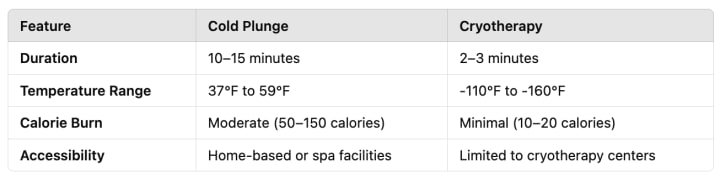
Cold plunging offers a more sustainable and accessible way to burn calories and enjoy the benefits of cold exposure.
Read our Ice Bath vs Cryotherapy to learn the difference between them.
Final Thoughts: Cold Plunge for Calorie Burning and Beyond
Cold plunging is a powerful wellness practice that offers modest calorie-burning potential alongside a host of physical and mental health benefits. While it may not replace traditional workouts, it can be an excellent complement to your fitness and recovery routine.
By activating brown fat, boosting metabolism, enhancing recovery and increase testosterone, cold plunges provide a holistic approach to health that goes beyond calorie counting. Whether you’re an athlete, a wellness enthusiast, or simply curious about the benefits of cold exposure, incorporating an ice plunge into your routine can transform your overall well-being.
Are you ready to take the plunge and unlock the benefits of cold water therapy? Start your journey today and discover how cold plunging can elevate your health and fitness goals.
P.S. If you’re just starting your cold therapy journey, an ice bath is a practical and budget-friendly choice. For the ultimate recovery setup, explore at-home solutions like the Inergize Cold Plunge Chiller, which combines the benefits of cold water immersion with convenience and advanced technology.
About the Creator
Arctic Plunge Gear
I’m passionate about cold therapy and wellness. Explore more at https://arcticplungegear.com/
Keep reading
More stories from Arctic Plunge Gear and writers in Longevity and other communities.
Best Workouts for Fat Loss
If you’ve ever tried to lose weight, you’ve probably wondered which workouts actually help burn fat the fastest. Many people start exercising with excitement but soon get confused by the endless options—cardio, strength training, HIIT, yoga, and more. The truth is that not every workout burns fat in the same way.
By Veronica Bennett4 days ago in Longevity
6 Things to Avoid After 5 P.M. for Better Blood Sugar Control, According to Dietitians
Do you wind down at night by doom-scrolling on the couch with a glass of wine? Do you stay up way too late or eat a large dinner before bed? These seemingly harmless evening habits could be sabotaging your blood sugar more than you realize.
By Good health to everyone4 days ago in Longevity
The Piggy Project
I’ve had so many names in this life I lose track of which ones were ever really mine and which ones I wore because someone needed me to. Some were handed to me before I had words to refuse them, before I knew what they meant, before I knew I could say no. Most weren’t meant to hurt. That doesn’t mean they didn’t leave marks. Marks that told me who I belong to, who I am by way of who claims me, recognizes me in the good and bad, who walks beside me.
By Fatal Serendipity5 days ago in Confessions


Comments
There are no comments for this story
Be the first to respond and start the conversation.