
Cervical Cancer in Pakistan: The Silent Epidemic No One Talks About
Cervical cancer kills thousands of women in Pakistan every year—yet it’s one of the most preventable cancers. Learn how awareness, early detection, and the HPV vaccine can save lives.

n cancer among Pakistani women aged 15 to 44, just behind breast cancer. Globally, it is the fourth leading cause of cancer-related deaths among women. In Pakistan, the statistics are grim: over 5,000 new diagnoses every year and a mortality rate of up to 85%.The high fatality rate is not due to the severity of the disease itself, but rather the late stage at which it is typically diagnosed. In contrast, countries with established screening programs have reduced cervical cancer death rates dramatically over the last few decades.
The Primary Culprit: Human Papillomavirus (HPV)
HPV, a sexually transmitted infection, is responsible for over 95% of cervical cancer cases. While many HPV infections resolve on their own, certain high-risk strains can cause lasting damage to the cervix, eventually leading to cancer. Globally, the fight against cervical cancer has focused on two major strategies: routine Pap smears to detect pre-cancerous changes and HPV vaccination to prevent infection in the first place.
Why Pakistan Lags Behind
The main barriers to prevention in Pakistan aren’t technological—they’rePrompt
A highly detailed 3D animated Islamic scene showing an elderly Muslim scholar (Maulana) with white hair and a long white beard, facing the camera while standing at a wooden podium with an open Quran. He wears a white turban and a flowing white robe, making expressive hand gestures as he speaks into a microphone. Behind him, a group of men and boys in traditional Islamic clothing are seated on prayer rugs, all facing the camera with calm, attentive expressions. The mosque is beautifully lit with natural sunlight, featuring grand arched windows, elegant chandeliers, and intricate Islamic calligraphy on the walls.
Cervical cancer is slow-growing,which means it can be caught and treated early—but only if women are being screened regularly. Unfortunately, most women in Pakistan only visit a doctor once symptoms appear. By then, the disease has often progressed to an advanced stage, making treatment difficult and outcomes much worse.
In countries where Pap smears and HPV testing are routine, cervical cancer has become one of the most preventable and treatable cancers. Pakistan has the tools—but lacks the infrastructure, outreach, and cultural support.
Solutions: What Needs to Change Now
To turn the tide against cervical cancer in Pakistan, a multi-layered approach is essential:
Public Awareness Campaigns
Efforts must begin with education. National campaigns—through media, schools, mosques, and community centers—should focus on dispelling myths and promoting the importance of regular gynecological check-ups. Women should understand that cervical cancer is preventable and that HPV vaccination is safe and effective.
Accessible Screening Services
Mobile clinics and women’s health centers must be equipped to offer **free or low-cost Pap smears** and HPV tests. These services need to be available not just in cities but also in rural and underprivileged areas.
HPV Vaccination Programs
Pakistan must introduce a **national HPV vaccination campaign** targeted at both girls and boys aged 9–14. The vaccine is already being used successfully in over 125 countries, with remarkable results.
Healthcare Worker Training
Doctors, nurses, and public health workers need to be trained not only in screening methods but also in communicating with sensitivity and respect especially when dealing with unmarried or young women.
Policy and Government Commitment
The Pakistani government must prioritize cervical cancer in its national health agenda. This includes allocating resources, subsidizing vaccines,and integrating cervical health into routine medical services.
Breaking Cultural Taboos
No solution will work unless we also tackle the cultural silence around women’s health. Conversations about reproductive and sexual health must become normalized. Religious leaders, educators, and parents can play a vital role in breaking taboos and promoting awareness.
It’s equally crucial to involve men in the conversation. Fathers, husbands, and brothers need to support the women in their families by encouraging regular health check-ups and vaccinations, not viewing them through the lens of shame or suspicion.
Hope for the Future
Cervical cancer doesn’t have to be a death sentence. With the right interventions, Pakistan could cut its mortality rate in half within a decade. Other countries have done it—we can too. But it starts with education, compassion, and action.
Every woman deserves to live without the fear of a preventable disease. Every girl deserves access to the vaccine that could one day save her life. And every community deserves the knowledge to protect its mothers, daughters, and sisters.
Final Thought
Let’s stop letting silence steal lives. Cervical cancer can be beaten—but only if we talk about it, test for it, and treat it before it’s too late.
* Women’s Health
* HPV Awareness
* Cancer Prevention
* Cervical Cancer in Pakistan
* Feminist Health Advocacy
* South Asia Health
* Vaccine Access
* Healthcare Inequality
* Reproductive Rights
* Health Education Campaigns
About the Creator
How Hegseth Came to See Moral Purpose in War as Weakness
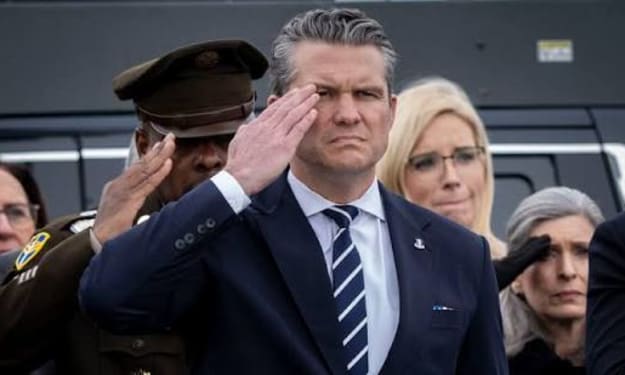
An analytical exploration of the evolution of Pete Hegseth’s war ethos and the implications for U.S. policy Over the past decade, Pete Hegseth has undergone a dramatic transformation from conservative media personality to one of the most polarizing figures in American military policy. Today serving as the United States Secretary of Defense under President Donald Trump, Hegseth’s public pronouncements and strategic decisions suggest a worldview in which traditional moral frameworks surrounding war are increasingly dismissed as liabilities. What began as rhetorical emphasis on strength and combat readiness has evolved into a broader ideological stance that treats moral purpose in war—moral clarity, restraint, and adherence to legal norms—as signs of weakness rather than virtue. Hegseth’s rise to prominence began long before his appointment to the Pentagon. As a Fox News host and conservative commentator, he championed aggressive U.S. military action and frequently criticized what he saw as excessive political correctness. In his 2020 book American Crusade: Our Fight to Stay Free, he framed global conflicts in starkly moralistic terms, calling for a broad “crusade” against forces he characterized as hostile to Western civilization. This early rhetoric laid the groundwork for his later rejection of moral constraints on warfare, equating moral caution with lack of resolve. Once in office, Hegseth’s framing of war shifted further. In public briefings on the current U.S.-Iran conflict—dubbed Operation Epic Fury—he regularly emphasizes military dominance and operational success while refraining from articulating broader humanitarian or moral objectives. “We didn’t start this war but … we’re finishing it,” he told reporters, focusing on strategic outcomes like neutralizing Iran’s missiles and naval capability rather than advancing a clear moral purpose or vision for peace. Critics argue this shift reflects a deeper intellectual and ethical stance: that moral qualifiers in war make victory harder to achieve. Hegseth has disparaged established rules of engagement and what he calls “politically correct wars,” suggesting that adherence to international legal norms or concerns about civilian casualties constrains effective action. In comments widely circulated on social media, he reportedly scoffed at traditional rules designed to minimize harm, embracing instead a version of warfighting that prioritizes lethality over deliberation. In broader public discourse, commentators observe that Hegseth’s approach redefines moral purpose—not as a guiding principle that justifies violence only under strict conditions, but as a hindrance that dilutes the effectiveness of military force. This echoes a critical academic debate about the role of moral clarity in war: traditionally seen as essential to maintaining legitimacy and support, moral purpose now, in Hegseth’s framing, appears subordinate to the singular goal of “winning.” Analysts note that this perspective aligns with a broader trend in some conservative circles that equates restraint with weakness. Under this view, moral purpose—whether rooted in international law, humanitarian concern, or the protection of noncombatants—is often portrayed as undermining national strength and strategic advantage. Instead, proponents argue, moral restraint handicaps military operations by imposing constraints that adversaries do not accept or follow. Hegseth’s critics, however, warn that this logic risks eroding longstanding norms designed to limit suffering and uphold a rules‑based international order. The implications of this philosophical shift are substantial. On the battlefield, dismissing moral purpose can lead to decisions that escalate violence and damage alliances. Outside war zones, it raises questions about the U.S. commitment to global norms and its moral leadership. When moral restraint is reframed not as strategic prudence but as “weakness,” the boundaries that separate responsible military action from unchecked aggression become blurred. This evolution in Hegseth’s rhetoric and policy underscores a broader tension in American strategic culture: the balance between strength and ethics. While military potency is undeniably central to national security, history demonstrates that moral purpose in war—rules of engagement, protection of civilians, legal accountability—serves essential functions, both practical and normative. When war is waged without meaningful moral purpose, critics warn, it may achieve tactical objectives at the cost of long‑term strategic stability and international legitimacy. In redefining moral purpose as weakness, Hegseth embodies a school of thought that prizes power over principle. Whether this approach will prove effective—or whether it will deepen divisions and erode foundational norms of conduct in warfare—remains a pivotal question in U.S. defense policy.
By Fiaz Ahmed 4 days ago in Longevity


Comments
There are no comments for this story
Be the first to respond and start the conversation.