
Can teeth be corrected if they missed the "prime time"?
Orthodontics

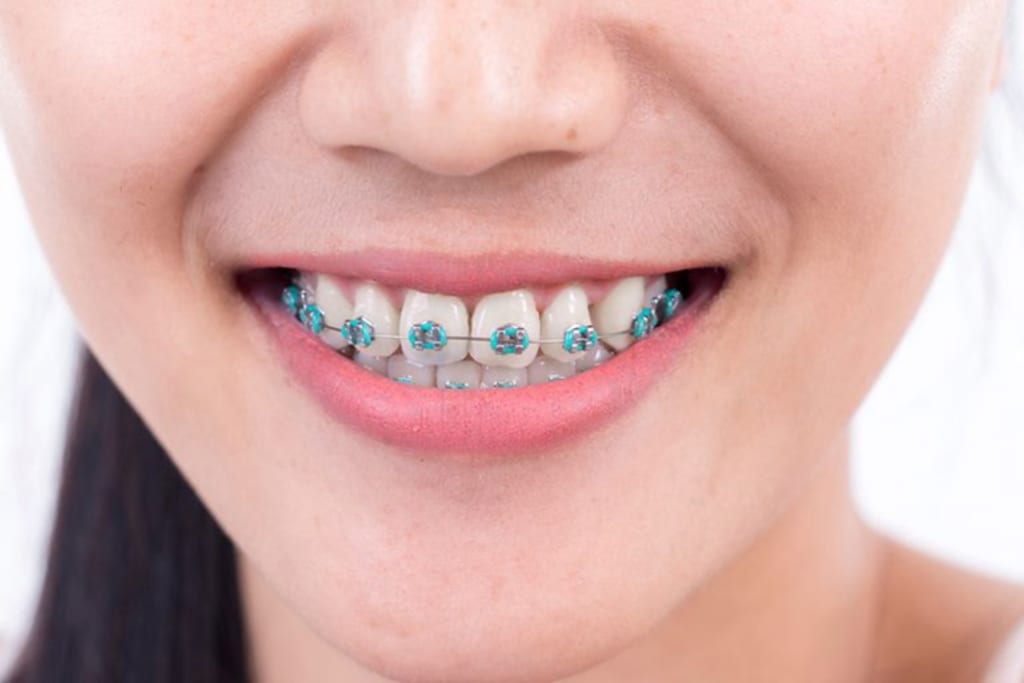
Orthodontic treatment has a "prime time" in clinical practice. Boys are 12 to 15 years old, and girls are 11 to 14 years old. The reason is that in this period of time, the shape of the jaw bone is basically determined for the child, which is not much different from that of an adult. Most of the permanent teeth have erupted, and the child is in a period of rapid development and has strong bone metabolism. Orthodontic treatment can be done with half the effort. However, there are many people who have not been able to receive orthodontic treatment during this "prime time", and they may have weakened their crowns and stood up in a flash, and they may even have reached the age of confidence.
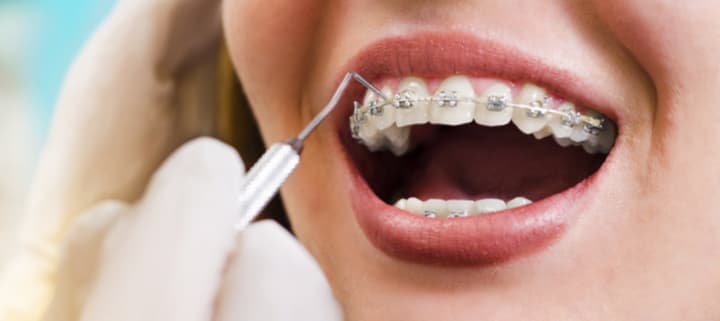
I missed the "prime time", can I still correct my teeth? The answer is yes. Age will not be a key factor in restricting orthodontic treatment. As long as your physical health permits, orthodontic treatment in your sixtieth year is also acceptable.
1. Will orthodontics in adulthood cause premature tooth loss?
The advancement of modern medicine can more or less help a person to improve their appearance, and orthodontics is one of the effective methods. Orthodontics, commonly known as "tooth", is a comprehensive correction of tooth, jaw, and facial deformities. Orthodontists believe that irregular dentition and malocclusion will cause many adverse effects on the physical and mental health of patients. For example, it is easy to cause oral diseases such as dental caries and periodontitis; affect the appearance and beauty; serious can cause psychological obstacles in normal interpersonal communication. Therefore, the main purpose of orthodontics is to restore the normal occlusal relationship and chewing function of the teeth, as well as to change the appearance.

However, "safety" is the primary concern of most adult patients. Because they feel that the teeth are all over, and they are not children, will they loosen the teeth if they are pulled back and forth with the appliance? When you get older, maybe your teeth will fall out early?
There are two points to explain to everyone here.
First of all, the bones around the teeth are the most active bone tissue in the human body. It will constantly change during a person's life, and the teeth will also change accordingly. For example, if some people lose their teeth without inserting them, the next teeth will move to the missing teeth to fill the gaps, but this movement is often passive and unhealthy. This shows that the bones around the teeth can be changed and the teeth can also be moved.
Secondly, the force used by orthodontics to move teeth is very light, generally 50g-150g. This force does not really pull the teeth, but sends a signal to the bones around the teeth, prompting the direction in which the teeth need to move, and inducing the growth of these bones, thereby realizing the movement of the teeth. In layman's terms, teeth are not pulled over artificially, but grow over by themselves under the guidance of a doctor. This is essentially the same as the process of getting teeth out of bones when a person is a child.
Therefore, normal and standardized orthodontic treatment will not affect the stability and long-term health of the teeth.

2. How to achieve tooth displacement
Many adults choose orthodontic treatment because of some local reasons. For example, some of the teeth are crooked, and it feels like just aligning them. In fact, orthodontic treatment is a systematic project. Most adults will have some health problems in the oral cavity. There are bad teeth that have been filled or not, there are missing teeth that have been inserted or not, there are swollen or receding gums... At this time, the orthodontic treatment needs to be designed as a whole, we use a metaphor Tell everyone the way.
First of all, the doctor should design the final tooth position for the patient based on the analysis of X-rays, tooth models and facial photos, so that the teeth are arranged neatly and can form a good occlusal function, and improve the facial shape-this process is equivalent to The architect is exploring the terrain and doing the overall layout design.
Then, according to the final target location, determine which teeth need to be treated or removed, and the corresponding professional doctor will handle it-this process is similar to the leveling of the terrain before the building, the filled pit is filled, and the removed stone is removed. Sometimes even if a branch is luxuriant, it must be removed based on overall considerations.
Finally, the orthodontist uses a variety of appliances to move the teeth according to the blueprint-this process is similar to construction, to choose the right tools, to be careful, step-by-step, and safe production.
The duration of different orthodontic treatments is different, most of which are about two years, because you have to wait for the teeth to move slowly. After the teeth are all in place, doctors from other departments will come on stage to solve some of the remaining problems that have not been solved by orthodontics through dental implants, dental implants, or partial cosmetic surgery. This process is rarely encountered by children, but it is more common in adult patients. They often have various dental health problems before orthodontics, and follow-up measures are needed to make up for it. For example, if a large tooth is missing before treatment, a new tooth cannot be transformed from orthodontics, so it has to keep the position and restore it after the orthodontic treatment is over. This process is similar to finishing the building and doing fine decoration. Each has its own problems and solutions.
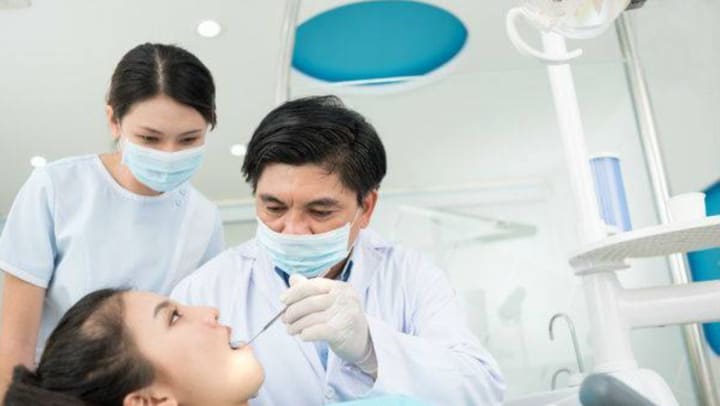
3. How to choose dazzling appliances
There are many tools to choose from orthodontic treatment to the implementation level. Which one is better depends on the orthodontist. The simple understanding is that if you want to build a building, what equipment should be used should in principle depend on the construction team. If the orthodontist says that a certain appliance is not suitable, and you don't believe it, you can change to another doctor to see it again. Don't use some advocacy or online cases to force the doctor to use a certain brand of appliance.
At present, the commonly used adult appliances include the following two categories.
The first category is fixed appliances
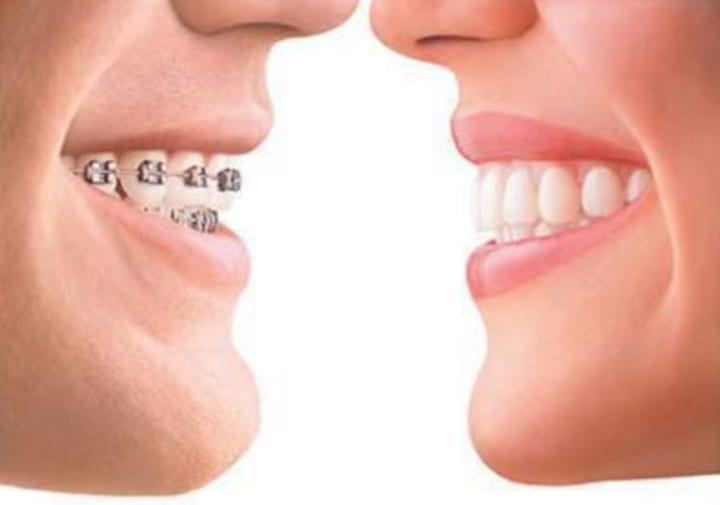
Glue "small pieces" of various materials on the teeth, and then use special metal wires to adjust the position of the teeth to achieve the treatment goal. These "small pieces" come in all kinds, in addition to the most common metal texture, there are also ceramic textures that are similar in color to the teeth, self-locking appliances with a locking mechanism, and lingual appliances glued to the inside of the teeth. The principle is the same, it is fixed after wearing it, and it will be accompanied by the entire orthodontic process until the end of the treatment. Among them, the ordinary “small pieces” are cost-effective, the ceramic “small pieces” are more beautiful, the self-locking “small pieces” are more comfortable, and the “small pieces” on the tongue side are completely invisible.
These appliances have their own advantages and disadvantages, and have a wide range of adaptations. Basically, they can complete all orthodontic tooth movements. You can choose according to your needs.
The second category is removable appliances
Adults mainly use invisible braces without brackets, which is a kind of transparent braces, which are buckled on the teeth like gloves and can be removed and worn by themselves without sticking "small pieces". This kind of appliance is a new technology developed in recent years. It simulates the process of orthodontic tooth movement through a computer, and then uses 3D printing to make a series of appliances. The patient needs to switch to the steps according to the steps to gradually achieve the effect of tooth movement. Its advantages are beauty and comfort, but it tests the ability of orthodontists. Because the computer simulation of the orthodontic tooth movement is directed by the orthodontist, it is necessary to have a clear idea of how the tooth should go, who moves first, and how much each time it moves. If the simulation is wrong, the result will be totally different. Moreover, unlike traditional fixed appliances, this appliance cannot be adjusted at any time.
Removable aligners are not suitable for all cases due to the material characteristics and limited development time. Moreover, the effects of doctors with different experiences may vary greatly. Patients must consult carefully and listen to the opinions of professionals.
I need to remind everyone that some people sell some kind of aligners online, which are called "high-tech big data artificial intelligence design, don't need to see a doctor, directly buy and wear them online", don't be credulous. If these people were not liars, they would have passed through it 20 years later. Today's artificial intelligence may not be able to do this kind of design, but there is not enough room to use it for orthodontics.
4. What is the ideal treatment effect?
The ideal orthodontic treatment result is definitely that the teeth are tidy, the cusp relationship between each other is perfect, and the appearance is improved. But it needs to be particularly pointed out that adult orthodontics should not be high school and pursue perfection. Because most adult patients are accompanied by certain oral health problems, some teeth are not suitable for large-scale movement; some theoretically abnormal tooth apex relationships can function well after years of running-in; some people’s facial features The value problem may not be because of the teeth... If you want to get the perfect result you imagined only through orthodontics, it is often disappointing.
Therefore, patients should communicate well with orthodontists and inform them of what they care about, what they like, and what they hate. The doctor will also provide safe, needed, and healthy advice. In the end, the two parties will reach a most suitable and cost-effective solution. The goal is to make the greatest improvement on the basis of health.
In addition, many adult patients' dental occlusion problems are caused by abnormal bones. Orthodontic treatment can cover up minor cases, and surgical operations are required for severe cases. This is called combined orthodontic orthognathic treatment, which means that you need to go to the operating table. Removal or trimming of bones. In this case, it needs to be determined by the strength of the patient's personal will and a more professional clinical evaluation.
Outpatient
These 4 functional abnormalities will affect the child's appearance
Why do children have problems that affect their appearance, such as bulging, buckling, and uneven teeth? In addition to congenital genetic factors, it is mainly related to 4 kinds of acquired function abnormalities such as breathing, chewing, swallowing, and lips and tongue functions.
Whether a person looks good or not depends largely on the facial structure, and from the perspective of "beauty in the bone but not in the skin", the coordination of the facial structure largely depends on the internal skeletal structure, namely the upper and lower jaws. The shape of the upper and lower jaws is not only affected by congenital genetic factors, but also by acquired growth, which is mostly due to functional stimulation. If, during the growth process, the bones receive reasonable functional stimulation, that is, the place that should grow up grows up, the place that should be reduced shrinks, and there is no "off-track", then the appearance will be relatively stable.
However, if the acquired breathing, chewing, swallowing, lips and tongue function, etc. have problems, it will often cause the child's skeletal deformities, which in turn will lead to irregular teeth and malocclusion, which is called malocclusion in the dentistry department. Let's talk about why these functional abnormalities can lead to malocclusion.
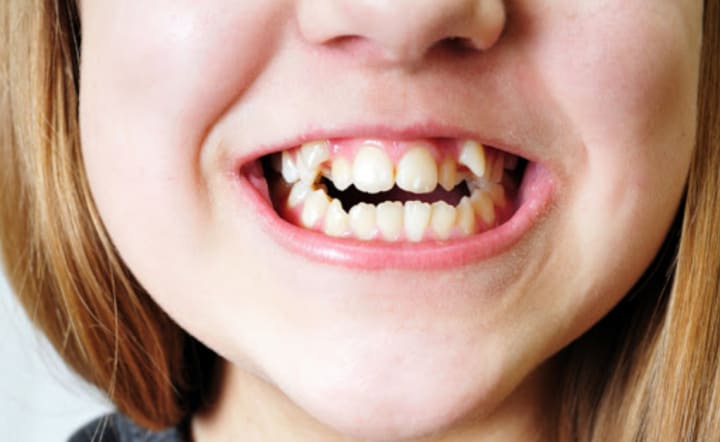
Mouth breathing can cause "long face" and "no chin"
Normal people use the nasal cavity to breathe, and the passage of airflow through the nasal cavity will stimulate the nasal cavity to widen and increase the space, and the jaws will gradually grow into a normal shape. However, many children are accustomed to mouth breathing due to many reasons such as adenoid hypertrophy, rhinitis, and turbinate hypertrophy. In this way, the air flow through the mouth will stimulate the upper jaw of the mouth to become deeper and higher, making the face gradually elongated, and the elongated face shape will affect the rotation of the chin, causing the chin to shrink more and more, forming a typical "adenoid" Decent face"-a long face, no chin, protruding teeth, and much exposed gums.
In addition to affecting the appearance of this face, it also brings about the problem of teeth occlusion. Therefore, if you find that your child has mouth breathing problems, you should go to the otolaryngology department and orthodontics department as soon as possible. Generally, the problem of unblocked nasal and respiratory tract should be solved first, and then orthodontic intervention can be carried out to change the breathing habits.
Chewing disorder can cause "to protect the sky"
The process of chewing is the anastomosis between the upper and lower teeth. You can imagine two machines with gears rotating in coordination with each other. However, if the teeth are not aligned or disordered, there will be problems with the coordination between the gears, causing the two machines to freeze when rotating. The machines naturally have to make adjustments to avoid damage. This adjustment is a bad stimulus. Causes disharmony between the upper and lower jaw bones. For example, if the upper part is big and the lower part is small, the upper teeth will appear protruding without the chin; the upper part and the lower part are big, and it will become "covering the sky", appearing that the middle part of the face is slumped and the chin is big; Face crooked.
Therefore, if there is obvious occlusal (chewing) dysfunction, it is also necessary to intervene in advance to adjust the stuck gear so that the machine can run freely and develop normally.
Teeth clenching or swallowing problems
Swallowing is a complex process involving the upper and lower jaw bones, muscles, tongue, teeth, and lips. Normal swallowing is to clench the teeth, close the lips and close the mouth, and then the tongue bulges upward to exert force on the upper jaw, squeezing the food to move to the throat. However, some children develop other types of swallowing habits for various reasons. For example, if the teeth are not clenched, the tongue is stuffed between the upper and lower teeth to close the mouth, and the tongue is forced toward the teeth to squeeze the food toward the throat. This abnormal force is used day by day with the swallowing action. The sun and the earth stimulate the bones, which can cause abnormal bone development. The common manifestation is that the jaw is overdeveloped and the front teeth cannot be bitten (leave room for an abnormally powerful tongue).
This is also a dysfunction that requires early intervention to help children form correct swallowing habits.
Can't close your mouth when you relax
In theory, the position of human teeth is at the balance point between the lips and the tongue. You can imagine that the tongue is constantly pushing the teeth, and the lips bind the teeth like a bandage, forming a balance of forces and ultimately determining the position of the teeth. When this balance is broken, the position of the teeth will be abnormal. For example, people with big tongues are prone to gaps in their teeth, which are sparse, mainly to make room for the movement of the tongue; some children have short upper lip and cannot close the mouth in a relaxed state. The restraint of the lips cannot be exerted, and the tongue will push the teeth. Move forward, become more and more buck-toothed, and even more unable to close the lips; there are also some children who like to lick their teeth, and they become crooked. In addition, the habits of sucking fingers, biting pencils, etc., will have adverse effects on facial bone development in the long run, so early intervention is required if the child can cooperate.
Generally speaking, if the above-mentioned functional problems are found, the earlier the orthodontic treatment is, the better, the sooner the dysfunction is removed, and the faster the bone growth environment returns to normal, and the child's appearance can be improved.
The common sense of orthodontics introduced in this article may not apply to every individual. Because children's malocclusion and deformities may vary greatly, if there are related problems, you need to see a professional orthodontist, receive a complete examination, and listen to professional treatment suggestions. It is generally believed that the first comprehensive orthodontic examination should be performed when the child is about 7 years old, and it can be advanced to 4 years old in special circumstances. For example, if there is reverse occlusion or partial occlusion in the deciduous period, that is, obvious obliteration, crooked chin, and malocclusion in the deciduous period, you need to take your child to the orthodontics department as soon as possible.
Physician reminded
You don’t need to rectify your teeth as soon as possible
The previous article introduced the situation related to facial bone growth that requires early intervention. If the teeth are simply missing, you can wait until all permanent teeth are replaced before performing orthodontics. In other words, simple tooth irregularities do not belong to the category of the earlier treatment, the better. Starting orthodontics too early will often lead to prolonged orthodontic treatment and bring unnecessary burden to the child.
However, there are three special dental problems that require early intervention: tooth replacement disorder, tooth impact, and traumatic occlusion. Tooth replacement disorder is often due to various reasons such as deciduous tooth decay, resulting in missing teeth that should be lost or teeth that should not have been lost first, causing trouble to the subsequent permanent teeth and causing misaligned eruption. The situation of impacted teeth is more complicated, that is, a certain tooth is stuck in the bone and cannot grow on its own. Traumatic occlusion refers to the abnormal position of the teeth after the teeth erupt, causing abnormal bumps in certain teeth when the upper and lower teeth occlude. Such bumps can damage the teeth themselves.
About the Creator
Keep reading
More stories from writers in Longevity and other communities.
Day 4 of Quitting
If this is how sobriety feels, maybe it’s better to go through life a little buzzed… this, along with other hits like, I want to kill myself, I wish I was dead, and I’m going to throw myself off a bridge have been the only thoughts on rotation these past few days. I promise myself that if, in a month, I still feel like this (‘this’ meaning despondent, full of rage, and simultaneously numb) I can go back to smoking. Until mid-February though? Nicotine is off the table.
By sleepy drafts24 days ago in Longevity


Comments
There are no comments for this story
Be the first to respond and start the conversation.