
Can't Catch This
Understanding Immunotherapy and The Innovations It Is Bringing About in Cancer Treatment

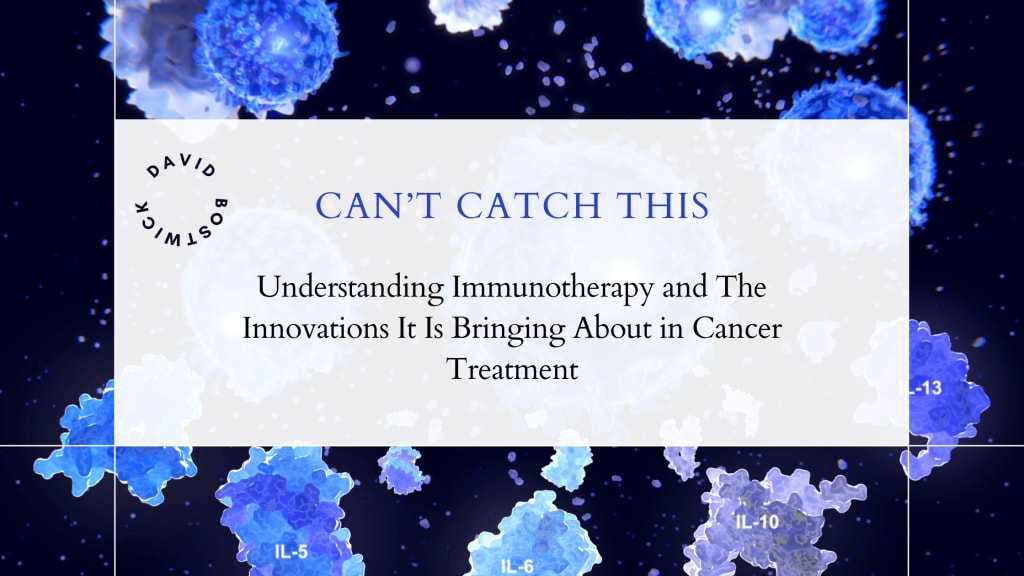
Immunotherapy is transforming the landscape of cancer treatment, offering new hope to patients and clinicians alike. Unlike traditional treatments such as chemotherapy and radiation, which directly target cancer cells, immunotherapy harnesses the body's immune system to identify and combat cancer. This innovative approach is leading to significant advancements in more personalized, effective, and less toxic treatments.
At its core, immunotherapy leverages the natural power of the immune system. The immune system is adept at identifying and destroying abnormal cells, but cancer cells can sometimes evade detection by creating an environment that suppresses immune activity. Immunotherapy aims to overcome these challenges by boosting the immune response or helping the immune system recognize and target cancer cells more effectively.
One of the most prominent forms of immunotherapy is checkpoint inhibitors. These drugs work by blocking the proteins that prevent immune cells from attacking cancer cells. For instance, drugs targeting PD-1/PD-L1 and CTLA-4 checkpoints have shown remarkable success in treating various cancers, including melanoma, lung cancer, and renal cell carcinoma. Patients who previously had limited treatment options are now experiencing prolonged survival and, in some cases, complete remission.
Another groundbreaking approach in immunotherapy is CAR-T cell therapy. This personalized treatment involves extracting a patient's T cells, genetically modifying them to recognize cancer cells better, and then infusing them back into the patient's body. CAR-T cell therapy has shown significant success in treating certain blood cancers, such as acute lymphoblastic leukemia and non-Hodgkin lymphoma, achieving high remission rates even in patients with advanced disease.
In addition to checkpoint inhibitors and CAR-T cell therapy, cancer vaccines are another promising area of immunotherapy. Unlike traditional vaccines that prevent disease, cancer vaccines aim to treat existing cancer by stimulating the immune system to attack cancer cells. These vaccines can be made from tumor cells, tumor antigens, or even the patient's dendritic cells. While still largely in the experimental stage, cancer vaccines are showing potential in clinical trials, particularly in preventing cancer recurrence.
The combination of immunotherapy with other treatment modalities is also an area of active research and innovation. Combining immunotherapy with chemotherapy, radiation, or targeted therapies can enhance the overall effectiveness of treatment. For example, chemotherapy can sometimes increase the visibility of cancer cells to the immune system, while radiation can cause cancer cells to release antigens that attract immune cells. These synergies can lead to more comprehensive and durable responses in patients.
Innovations in immunotherapy are not limited to new drugs and treatment combinations. Advances in biotechnology and precision medicine are playing a crucial role in developing next-generation immunotherapies. Researchers are increasingly able to identify specific genetic and molecular characteristics of tumors, allowing for the creation of more targeted and personalized immunotherapies. This precision approach ensures that treatments are tailored to the unique profile of each patient's cancer, maximizing effectiveness while minimizing side effects.
Despite the remarkable progress, challenges remain in the field of immunotherapy. Not all patients respond to current immunotherapies; some may experience severe side effects. Ongoing research is focused on understanding the mechanisms of resistance and developing strategies to overcome them. Additionally, efforts are being made to identify biomarkers to predict which patients will most likely benefit from immunotherapy, allowing for more precise and effective treatment planning.
Immunotherapy is revolutionizing cancer treatment through innovative approaches that harness the power of the immune system. From checkpoint inhibitors and CAR-T cell therapy to cancer vaccines and combination treatments, these advancements offer new hope for patients and represent a significant leap forward in the fight against cancer. As research continues to unravel the complexities of the immune system and its interaction with cancer, the future of immunotherapy holds even greater promise for achieving long-lasting, effective cancer treatments.
About the Creator
David Bostwick
Dr. David G. Bostwick is a medical professional and entrepreneur based in Orlando, FL. He is the CEO of Triopsy Inc. and Rampart Health. Visit DavidBostwick.org.
Keep reading
More stories from David Bostwick and writers in Longevity and other communities.
AI and Precision Medicine: Revolutionizing Cancer Research and Treatment
Cancer remains one of humanity's greatest health challenges, but breakthrough technologies are transforming how we detect, understand, and treat this complex disease. From artificial intelligence to personalized medicine, innovative approaches are offering new hope to patients while accelerating the pace of research.
By David Bostwickabout a year ago in 01
Day 4 of Quitting
If this is how sobriety feels, maybe it’s better to go through life a little buzzed… this, along with other hits like, I want to kill myself, I wish I was dead, and I’m going to throw myself off a bridge have been the only thoughts on rotation these past few days. I promise myself that if, in a month, I still feel like this (‘this’ meaning despondent, full of rage, and simultaneously numb) I can go back to smoking. Until mid-February though? Nicotine is off the table.
By sleepy drafts19 days ago in Longevity
Which City Is Called the Queen of the Arabian Sea: Discover Its History, Trade Legacy, and Multicultural Heritage
The “Queen of the Arabian Sea” is a title that evokes images of bustling harbors, golden sunsets over tranquil waters, and centuries of cultural exchange. This title belongs to Mumbai, India’s financial capital and one of the most iconic cities on the western coast of the country. From its strategic location on the Arabian Sea to its rich history and vibrant multicultural society, Mumbai’s story is as fascinating as it is complex.
By Fiaz Ahmed Brohi7 days ago in Longevity


Comments (2)
Thank you for this! I was diagnosed with non-Hodgkins lymphoma in 2012 and treated with chemotherapy in 2013. Once I was clear I was told the type of cancer I had was treatable, probably not curable. After that, I have been doing the best I can to prevent. I had a PET scan. First one since 2013 and I continue to have no signs of cancer in the eyes to thighs scan. I take essiac daily to assist with my immune system. Without it, I get sick. Haven't tested that in years but I wake with sniffles and after taking it the sniffles are gone.💗
So informative. Welcome to Vocal!