
Can frequent hair coloring cause cancer?
How often is it good to dye?

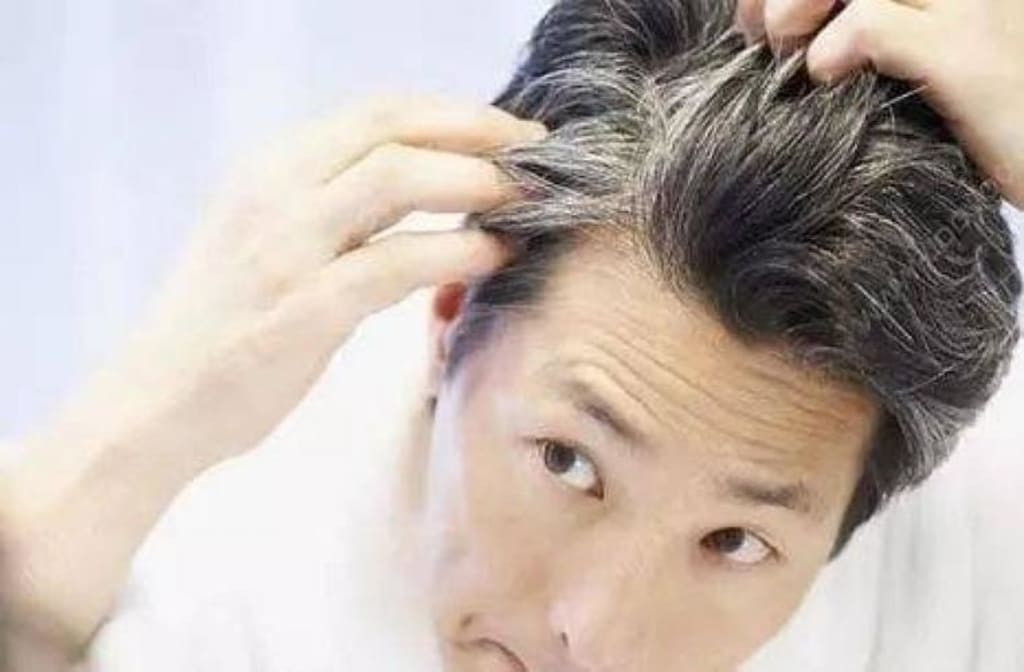
"Don't dye your hair anymore, or it will induce cancer!"
Uncle Liu is 52 years old, and although he is not very old, his hair so much turned white. This white hair makes Uncle Liu older, and for this reason, he started to dye his hair. After dyeing his hair once, his hair will lose its color in about 3 months, so Uncle Liu dyed his hair every 3 months.
Unbeknownst to him, 3 months had come and Uncle Liu then started to dye his hair. After the neighbor saw Uncle Liu dyeing his hair, he was worried for him, so he said the words at the beginning of the article to Uncle Liu. After hearing the neighbor's words, Uncle Liu did not think it was a good idea and told the neighbor that several of his relatives had dyed their hair for more than ten years without getting cancer. The neighbors felt that persuasion was fruitless, and stopped talking.
There are always different voices about whether hair dyeing causes cancer or not. Does hair dyeing cause cancer or not? Is it dangerous to health? To let you have more knowledge and understanding about hair dyeing, today the doctor's good advice will have a good chat with you about related knowledge.
1. After 8 years of hair dyeing, Ms. Wang was found to have leukemia!

Ms. Wang is a person who likes fashion, and to make herself look more trendy, she often dyed her hair. The frequency of hair dyeing is not fixed, sometimes twice a month, sometimes 4 times a month.
So unknowingly 8 years have passed, and Ms. Wang has been dyeing her hair frequently. However, in recent times, Ms. Wang always had nosebleeds. At first, she thought it was because of staying up late, as long as she rested well, she would not have a nosebleed. However, after she rested for 3 days, she still kept having nosebleeds. As a last resort, Ms. Wang went to the hospital.
After fully understanding the situation, the outpatient doctor gave Ms. Wang a rhinoscopic examination, which also did not reveal any broken blood vessels. To rule out blood system diseases, the outpatient doctor prescribed routine blood tests and coagulation tests for Ms. Wang. After the test results came out, it was found that the white blood cells were particularly high, other blood cells were low, and the coagulation function was normal, so the preliminary consideration was hematologic disorders.
Subsequently, the outpatient doctor told Ms. Wang that the diagnosis of any hematologic disorder could not be confirmed yet. To confirm the diagnosis, she would need to be hospitalized and then have a bone marrow aspiration test. Ms. Wang realized the seriousness of her condition, so she followed the outpatient doctor's advice. Afterward, Ms. Wang underwent a bone marrow aspiration, and the results came back indicating lymphocytic leukemia.
When Ms. Wang learned of the results, she was particularly uncomfortable and asked the doctor if she had been misdiagnosed. When the doctor heard Ms. Wang's question, he explained that the bone marrow aspiration test is the gold standard for confirming leukemia, so the chance of misdiagnosis is relatively low.
2. Is it true that frequent hair dyeing can cause cancer?
Some people believe that hair dye is carcinogenic, mainly because hair dye contains p-phenylenediamine, which is itself a carcinogen.
There is no denying that p-phenylenediamine is indeed classified as a carcinogen, but there is still a lack of strong evidence that hair dyeing causes cancer. This is mainly because cancer is the result of a combination of factors, and hair dyes need to meet a certain dose to cause cancer, otherwise, it is a hooligan to talk about cancer without the dose.
At the same time, the relevant authorities have also taken into account the carcinogenicity of p-phenylenediamine, so there are strict requirements on the amount of p-phenylenediamine in hair dyes. The regular hair dyes on the market are tested by the relevant departments, so the content of p-phenylenediamine in these dyes is also in line with the national standards.

Some friends may have questions, since p-phenylenediamine in hair dyes is a carcinogen, then why do you still use this substance? This is mainly because p-phenylenediamine is a relatively important dye, which has a strong affinity for hair. If p-phenylenediamine is not used in hair dyes, it will be difficult to fix the color of the hair.
It is important to note that regular hair dyes are not carcinogenic, but it is hard to say about informal hair dyes.
Some hairdressers may use poor-quality hair dyes for their customers to pursue high profits, and poor-quality hair dyes may have cancer risks. Some friends will find an unpleasant smell on their heads after they dye their hair, and such hair dyes may contain benzene and benzene substances.
When you dye your hair with a hair dye containing benzene and benzene substances, the benzene and benzene substances contained in it may enter your body. When hair is dyed, the hair may be heated, so benzene and benzene substances are more likely to enter the body. Long-term use of this hair dye may cause benzene and benzene substances to enter the bone marrow, thus increasing the risk of leukemia.
Regular hair dyes are not carcinogenic, but irregular ones are not so good, depending on the ingredients.
3. Pay attention to 4 points to reduce health risks!
Although regular hair dyes are not carcinogenic, long-term use of hair dyes may still bring some health problems. Because for your health, you need to pay attention to the following points.
❶ Choose big brands of hair dyes.
For now, there are more brands of hair dyes on the market. When we choose a hair dye, try to choose some big brands. Although they are more expensive, the safety is guaranteed, while some small brands of hair dyes may use some non-compliant ingredients to reduce costs. #Healthy Star Program
When buying hair dyes, you also need to pay attention to the origin, production date, shelf life, and other information about the hair dyes.
You can check the Internet to find out exactly what brand of hair dye to choose.
❷ Special people should not dye their hair as much as possible.
People like pregnant women, nursing mothers, those allergic to hair dyes, those preparing for pregnancy, and those with broken scalps are not suitable for hair dyeing.
Take pregnant women, if they dye their hair, there is a chance that the harmful ingredients in the hair dye will enter the blood circulation of pregnant women. These harmful ingredients may enter the fetus through the umbilical cord, thus increasing the risk of fetal malformation. In severe cases, it can also directly cause miscarriage.
❸ Avoid contact with hair dyes on the scalp.
When dyeing your hair, try not to let the hair dye come into contact with your scalp. This is mainly because hair dye is irritating and may cause pain and itching of the scalp, and also the hair dye lifting the scalp for a long time may also allow some harmful substances to enter the human body.
❹ Control the frequency of hair dyeing.
For the sake of your health, you should control the frequency of hair dyeing.
The number of times you dye your hair a year should be controlled to less than 3 times.
About the Creator
Hartney Veach
Treat all people with honesty, live in harmony with the many, frequent the few, and be close to only one.
Keep reading
More stories from Hartney Veach and writers in Longevity and other communities.
Day 4 of Quitting
If this is how sobriety feels, maybe it’s better to go through life a little buzzed… this, along with other hits like, I want to kill myself, I wish I was dead, and I’m going to throw myself off a bridge have been the only thoughts on rotation these past few days. I promise myself that if, in a month, I still feel like this (‘this’ meaning despondent, full of rage, and simultaneously numb) I can go back to smoking. Until mid-February though? Nicotine is off the table.
By sleepy draftsabout a month ago in Longevity
Rare Fungus Spotted for First Time in 50 Years
Scientists have confirmed the discovery of a rare fungus species that had not been seen in the wild for more than half a century, marking a major breakthrough in biodiversity research and conservation science. The fungus, believed to have vanished due to habitat loss and environmental changes, was found during a routine ecological survey in a remote forest region. Researchers described the find as “extraordinary,” noting that many species disappear quietly without ever being rediscovered. The reappearance of this fungus offers new hope for conservation efforts and raises important questions about what other organisms may still survive undetected. A Surprise Discovery The fungus was identified by a team of mycologists conducting a long-term study of forest ecosystems. While collecting soil and plant samples, researchers noticed unusual fruiting bodies growing on decaying tree bark. Laboratory analysis later confirmed it was the same species last recorded in the early 1970s. “It was completely unexpected,” said one of the lead scientists involved in the study. “We assumed this species was either extinct or extremely close to it. Finding it again shows how little we still know about fungal diversity.” The fungus is known for its distinctive pale coloring and fragile structure, which makes it difficult to detect. It only appears under very specific environmental conditions, including high humidity, stable temperatures, and the presence of certain tree species. Why It Disappeared Experts believe the fungus vanished from records due to deforestation, climate shifts, and pollution. Fungi are especially sensitive to changes in moisture and soil chemistry. Even small alterations in forest environments can disrupt their life cycles. In the decades following its last sighting, large areas of woodland were cleared for agriculture and development. The loss of old-growth trees removed the fungus’s natural habitat, making survival difficult. Climate change may have played a role as well. Warmer temperatures and unpredictable rainfall patterns likely reduced the narrow window in which the fungus could grow and reproduce. Importance to the Ecosystem Although small and easily overlooked, fungi play a critical role in ecosystems. They break down organic matter, recycle nutrients, and form symbiotic relationships with plants. This rare species is believed to help decompose specific types of hardwood, contributing to soil health and forest regeneration. “This fungus is part of a hidden network that supports entire ecosystems,” explained a forest ecologist. “Its return suggests the environment may be recovering in subtle ways.” Scientists are now studying the fungus’s genetic makeup to understand how it survived for so long undetected. Some believe it may have adapted to new conditions or retreated into isolated microhabitats. Conservation Implications The rediscovery highlights the importance of protecting remaining natural forests. Conservation groups argue that this finding proves even heavily impacted environments can still shelter rare life forms. Following the discovery, local authorities announced plans to limit logging and increase monitoring in the area. The site where the fungus was found will likely be designated a protected research zone. Environmental organizations welcomed the news but warned that protection must be long-term. “One rediscovery does not mean the species is safe,” said a conservation spokesperson. “It means we have been given a second chance.” A Growing Trend of Rediscoveries The fungus is not the only species to reappear after decades of absence. In recent years, scientists have rediscovered rare frogs, birds, and insects once thought extinct. Improved technology, satellite mapping, and DNA analysis have made it easier to identify species in hard-to-reach locations. However, experts caution that such success stories are rare compared to the number of species quietly disappearing each year. “Rediscoveries make headlines, but extinction happens every day without notice,” said a biodiversity researcher. “This is why protecting habitats is so urgent.” Public Interest and Scientific Curiosity News of the fungus’s return has sparked excitement among scientists and nature enthusiasts alike. Social media images of the tiny organism have circulated widely, drawing attention to fungi as an often-ignored part of biodiversity. Schools and universities are already discussing the discovery in biology classes as an example of resilience and the importance of field research. For scientists, the fungus offers a valuable opportunity to study long-term survival under environmental stress. Understanding how it endured decades of change could help researchers predict which species are most likely to survive future climate challenges. What Happens Next Researchers will continue to monitor the area over the coming months to see if more specimens appear. They plan to map its distribution and analyze soil and tree conditions to understand why it survived there. Strict guidelines have been issued to prevent tourists or collectors from disturbing the site. Scientists stress that human interference could easily destroy the fragile population. “This fungus survived half a century in silence,” said one researcher. “Our responsibility now is to make sure it does not disappear again.” A Symbol of Hope The rediscovery of the rare fungus serves as a powerful reminder that nature still holds secrets, even in a world shaped by human activity. It also underscores the need for patience, protection, and respect for ecosystems that operate beyond human notice. While many environmental stories focus on loss, this one offers a rare moment of hope. A species once thought gone has quietly returned, proving that life can persist even under the most challenging conditions. For scientists and conservationists, it is not just a scientific achievement—it is a call to safeguard what remains before more wonders vanish unseen.
By Fiaz Ahmed 6 days ago in Longevity
Rachel Reviews: Lunch Tales: Teagan by Lucille Guarino
Well, I did enjoy this! Sometimes, all you need is just great storytelling and this is what Lucille Guarino delivers here. There's no big message to this book; it's just about folks and families, living their lives and coping with everything that's being thrown at them and finding their way. But when it's done well, like it is here, then you have characters to whom you can relate, tension which leaves you rooting for a better outcome, attraction which has your heart racing and an urge, as a reader, to see the characters happy with the people with whom they belong.
By Rachel Deemingabout 12 hours ago in BookClub


Comments
There are no comments for this story
Be the first to respond and start the conversation.