
Can Condoms Prevent Mycoplasma and Chlamydia? The Truth
What condoms can and can’t do, plus step-by-step safer sex tips

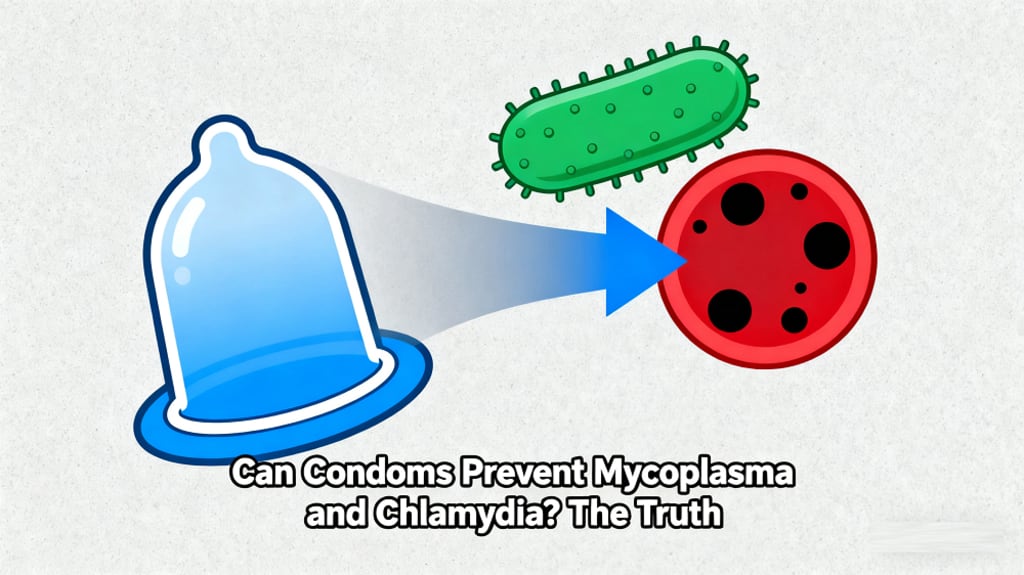
Ever had that “wait—am I protected enough?” moment right before sex? You’re not alone. Condoms are the go-to for birth control and safer sex, but many people still wonder: can using a condom actually prevent Mycoplasma and Chlamydia infections? Short answer: condoms are one of your best defenses—but they’re not a magic force field. Here’s the practical, science-backed truth.
What are Mycoplasma and Chlamydia?
Chlamydia (usually Chlamydia trachomatis) and Mycoplasma genitalium are sexually transmitted infections (STIs) that can infect the urethra, cervix, rectum, and throat.
They often cause no symptoms at first. When symptoms do appear, they can include discharge, burning with urination, pelvic pain, or bleeding after sex.
Untreated infections can lead to complications like pelvic inflammatory disease, infertility, and increased risk of acquiring other STIs.
How condoms protect you
Condoms—external (male) and internal (female)—create a physical barrier that reduces contact between body fluids and mucous membranes. That matters because Chlamydia and Mycoplasma spread mainly through direct sexual contact and exchange of genital fluids.
Used correctly and consistently, condoms:
Greatly lower the risk of Chlamydia and Mycoplasma transmission during vaginal and anal sex
Provide solid protection against many other STIs transmitted via fluids, like gonorrhea and HIV
Help with birth control with no systemic side effects
What condoms can’t do (and why risk isn’t zero)
Not 100%: Breakage, slippage, or putting the condom on late (after genital contact has already happened) can allow exposure.
Oral sex risk: Chlamydia can infect the throat; Mycoplasma infection of the throat appears less common but is possible. Condoms and dental dams lower risk during oral sex.
Skin-to-skin spread: Some STIs (like herpes and HPV) can pass from areas not covered by a condom. This isn’t the main route for Chlamydia or Mycoplasma, but it explains why no method is perfect.
Fomites are not the worry: Contrary to internet myths, catching Chlamydia or Mycoplasma from toilet seats, bathtubs, or shared laundry is extremely unlikely. These bacteria don’t survive well outside the body. The real risk is unprotected sexual contact. Vertical (mother-to-baby) transmission can happen with Chlamydia during childbirth, which is why screening in pregnancy matters.
Condom use, step by step (for real-life success)
Condom protection depends on technique. Here’s a quick start-to-finish checklist:
Before sex
Choose quality: Buy condoms from a reputable brand. Pick the right size to prevent slippage or breakage.
Check the date and package: Don’t use expired or damaged condoms. Feel for the air “pillow” in the wrapper.
Use the right lube: Use water- or silicone-based lubricants. Oil-based products (like lotion or petroleum jelly) can weaken latex.
During sex
4) On from the start: Put the condom on before any genital contact.
5) Pinch the tip: Squeeze the reservoir tip to remove air, then roll down to the base of the erect penis. For internal condoms, gently insert the closed end into the vagina or anus; the open ring stays outside as a barrier.
6) One at a time: Never “double up” two condoms—that increases friction and breakage.
7) Switch smartly: If switching from anal to vaginal sex, use a new condom to prevent bacterial transfer.
After sex
8) Hold the base: Withdraw while still erect, holding the condom at the base to prevent leakage.
9) Tie and toss: Tie off, wrap in tissue, and throw in the trash (not the toilet).
Extra safer sex tools
Consider internal condoms or dental dams for oral sex on the vulva or anus.
Get vaccinated for HPV and hepatitis B.
Talk with partners about STI testing history and recent results.
Limit overlapping partners or use condoms more consistently when you have new or multiple partners.
Testing and treatment: If you test positive
Testing is simple: Chlamydia and Mycoplasma testing typically uses a urine sample or a swab (vaginal, cervical, urethral, rectal, or throat depending on exposure).
Who should test: Sexually active people under 25 (and others at higher risk) should test for Chlamydia at least yearly; test sooner if you have symptoms or a new partner. Mycoplasma testing is considered when symptoms persist or Chlamydia/gonorrhea tests are negative but irritation continues.
Treatment is effective: Chlamydia is usually treated with antibiotics such as doxycycline. Mycoplasma genitalium can be trickier due to antibiotic resistance; clinicians often use a two-step approach and may prescribe moxifloxacin if needed. Avoid unproven remedies—stick to evidence-based antibiotics prescribed by a healthcare professional.
Pause sex and tell partners: Avoid sexual activity until you and your partners complete treatment and any recommended test-of-cure. Partner treatment prevents ping-pong reinfection.
Retest: For Chlamydia, retest in about three months to make sure you’re clear and to catch reinfection early.
Quick answers to common questions
Will condoms prevent Mycoplasma and Chlamydia? They significantly reduce risk when used correctly, but no method is 100%.
Can I get these infections from a toilet seat or shared towels? That’s highly unlikely. Focus on safer sex and regular screening instead.
Do I need condoms if I’m on birth control? Yes—birth control prevents pregnancy, not STIs.
What about condoms during oral sex? Yes, they reduce risk for oral Chlamydia; dental dams help for oral–vaginal or oral–anal contact.
Your take-home plan
Use condoms from start to finish, every time.
Learn the fit and steps that work for you; keep quality condoms and lube on hand.
Get routine STI screening, especially if you’re under 25, have new partners, or have symptoms.
If you test positive, follow your clinician’s treatment plan and notify partners.
Bottom line
Condoms are one of the most effective, accessible tools we have to prevent Chlamydia and Mycoplasma infections—provided you use them correctly and consistently. Pair that with regular testing and honest conversations, and you’ll stack the odds in favor of your sexual health. Start with your next encounter: a good condom, the right lube, and a plan. Your future self will thank you.
About the Creator
Shuang hou
I write about prostatitis, epididymitis, seminal vesiculitis, orchitis, and male infertility — offering insights on natural therapies, and real solutions for chronic male reproductive conditions.
Keep reading
More stories from Shuang hou and writers in Longevity and other communities.
From Roommates to Soulmates: Reclaiming Intimacy When the Spark Fades
It often happens quietly, without a grand announcement. One day, you look across the dinner table at the person you’ve built a life with, and a strange realization dawns on you: you’ve become excellent co-managers of a household. You are partners in scheduling, parenting, and paying bills. You’ve become, for all intents and purposes, roommates. The shared glances that once held fire now just mean, “Did you remember to take out the trash?”
By Shuang hou2 months ago in Longevity
Why You Seniors Love Chocolate: The 10 Essential Points
Dear senior friend, There is something deeply comforting about dark chocolate. It carries memories, warmth, and a sense of quiet pleasure. At this stage of life, small rituals matter more than ever. A simple square of good-quality dark chocolate can become one of those daily moments that feel both indulgent and intentional.
By Bubble Chill Media 5 days ago in Longevity
Guard Your Battery
Why are some people so attractive just by standing there? It’s not because they are "likable," but because they don’t need everyone to like them. I realized later that truly charismatic people allow themselves to be criticized, but they never criticize themselves. They never try to please the world; instead, the world stops to watch them.
By Emily Chan - Life and love sharing3 days ago in Poets


Comments
There are no comments for this story
Be the first to respond and start the conversation.