
Breathe Less, it's Important
When we do something as much as 15,000–20,000 times a day, it's important to know what's going on. Otherwise, all hell can break loose

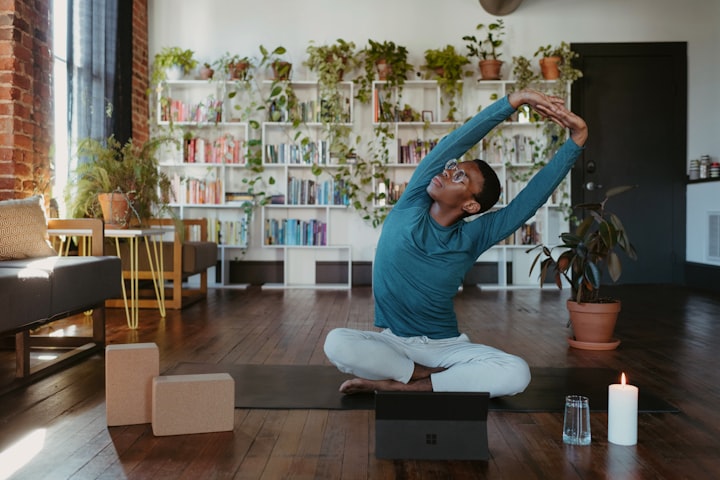
Most people believe that to live a healthier life, we need to breathe more. More oxygen = more life, right?
Wrong.
Let me explain.
It might surprise you to learn that to live a healthier life, we actually need to breathe less.
That's because oxygen provides one of the most ironic paradoxes in life: It is absolutely vital to living a healthy life but too much of it can be damaging.
It is damaging in much the same way that too much sun and too much food are. So, just like how too much sun can cause sunburn and skin cancer and too much food can cause obesity and diabetes, too much oxygen can have equally damaging side effects as well.
These range from brain fog, poor digestion, inflammation, chronic fatigue, and even heart problems.
---
Now, there's a strong correlation between the number of breaths we breathe per minute to the levels of stress we experience in the body. And as stress is on the rise, learning how to take fewer breaths per minute could be a saving grace in a world that's only getting faster.
Take a moment to review the table below. Notice the four different examples of how many breaths we breathe per minute and what effects they have on our overall health.
20 breaths per minute
Effect: High, consistent stress levels in all areas of life.
Possible side effects: Anxiety, depression, poor digestion, poor sleep, skin conditions like eczema, etc…, inflammation, chronic pain, chronic fatigue, a stronger tendency to have addictions such as overeating, drug use, coffee, alcohol, tobacco, etc…
---
15 breaths per minute (the average person's breath count)
Effect: Medium levels of stress consistently throughout each day.
Possible side effects: Anxious (or overly confident). Brain fog, tiredness, fatigue, poor digestion, a tendency to have addictions or dependency on substances such as coffee, tobacco, alcohol, marijuana, etc…
---
10 breaths per minute
Effect: Calm, collective, peaceful, balanced. Stronger resistance to emotional and mental stressors. Less emotionally reactive.
Possible side effects: N/A
---
5 breaths per minute
Effect: Consistent meditative mind, optimal awareness.
Possible side effects: N/A
---
Before moving on, what's important to note here is that this table is based on our day-to-day routine life. Exercising, eating, talking, lovemaking, and other daily activities will naturally fluctuate the number of breaths we take per minute. So, on average, it's how many breaths we are breathing most consistently throughout the day which is that matters.
This table demonstrates how we breathe stress into the body but it also shows us how to breathe it out. Below is one example of how to do just that:
1 minute = 60 seconds
60 seconds divided by 10 (breaths) = 6
6 breaths divided by 2 (inhale & exhale) = 3
Inhale - 3 seconds
Exhale - 3 seconds
That's very doable!
Now, what might surprise you is that oxygen's partner in crime - carbon dioxide - is a fantastic gas that supports this process.
Carbon dioxide
As the breath is made up of two parts - inhale and exhale - we can't talk about oxygen (inhaling) without talking about its partner in crime: carbon dioxide (exhaling).
Unfortunately, carbon dioxide is most commonly known for being that waste gas we breathe out. This has often discredited the role it plays in our overall health and nothing understands this more than oxygen.
That's because oxygen needs carbon dioxide to release it from our red blood cells. Otherwise, a sticky protein called haemoglobin would cling onto oxygen and not let go. So without it, we certainly wouldn't experience oxygen's life-giving energy half as much as we do.
Not only that, CO² helps to:
- Fight off diseases, illnesses, and viruses
- Reduce inflammation
- Boost the immune system
- Balance the nervous system
- Support growth and healing
- Aid neuroplasticity (the growth of neural networks in the brain)
- Strengthen muscle tissue
- Increase blood flow and circulation
- Maintain an optimal pH balance
As you can see, it's not such a waste gas after all!
Getting to know how the breath works can mean the difference between gaining access to these benefits or not. An easy way to do this is to train the body to become more oxygen efficient by taking slower, deeper breaths through the nose.
(Think about how some foods contain more nutrients so less food is needed. The same is true with the breath: when each breath contains enough oxygen, fewer breaths are needed.)
However, to become more oxygen efficient, building up a tolerance to carbon dioxide is vital.
That's because our body's first impulse to breathe comes from a build-up of CO² and not from needing more oxygen. That comes shortly after. So, by extending the urge to breathe out, fewer breaths are needed to be breathed in.
A winning formula:
Nose breathing + slow, relaxed breaths + engaged diaphragm = health and longevity
Turning to nature
It's been suggested that our ancestors turned towards nature to better understand how to prolong their lives and live with more health and vitality. What they discovered was that certain animals take fewer breaths than others and those that do, live longer lives.
Elephants, for example, live up to 70 years. Tortoises live between 80–150 years. Sperm whales 70+ years and the naked mole-rat remarkably lives up to 32 years (some 6x longer than its rodent relatives). However, one of the most interesting observations about these animals is not just the length of their lives that's impressive but the quality of their lives too.
These slow-breathing animals seem to have a high resistance to disease, illness, and cancer, and the correlation between taking fewer breaths per minute and breathing them slowly seems to be a big factor in this.
The Chinese even came up with a fabulous proverb to explain the phenomenon: "breathe like a tortoise, live like a King."
If humans breathed 10 breaths or less per minute, could we also experience such health and resilience? From the large array of studies that have been conducted over the years, the results seem to suggest so.
---
Our relationship to oxygen and our relationship to our breath can and will dramatically affect our day-to-day lives, either consciously or unconsciously. Freedivers, yogis, and ancient practices such as martial arts and tai chi have known this for years. Now, with the help of modern science, this knowledge is slowly becoming more and more accepted into the mainstream. And as more and more people are awakening to its potential, more and more people are feeling the long-term benefits.
---
Do you want to join the party?
Discover my favourite breathwork technique for enhancing health and longevity by supporting breathers to breathe less here
Or alternatively, sign up for a free online masterclass here
About the Creator
Andy Murphy
Writer & Soma Breath faciliatator
Keep reading
More stories from Andy Murphy and writers in Longevity and other communities.
This One Daily Habit Could Add Years to Your Life (And Almost Nobody Takes It Seriously)
When people think about longevity, they often imagine expensive supplements, strict diets, or cutting-edge medical treatments. The idea of living longer has become a billion-dollar industry filled with promises of quick fixes and miracle solutions. But what if one of the most powerful factors influencing your lifespan is something far simpler—and often ignored?
By Lukáš Hrdlička2 days ago in Longevity



Comments
There are no comments for this story
Be the first to respond and start the conversation.