
Book a GP Appointment?
Sure, if you can get past the receptionist...
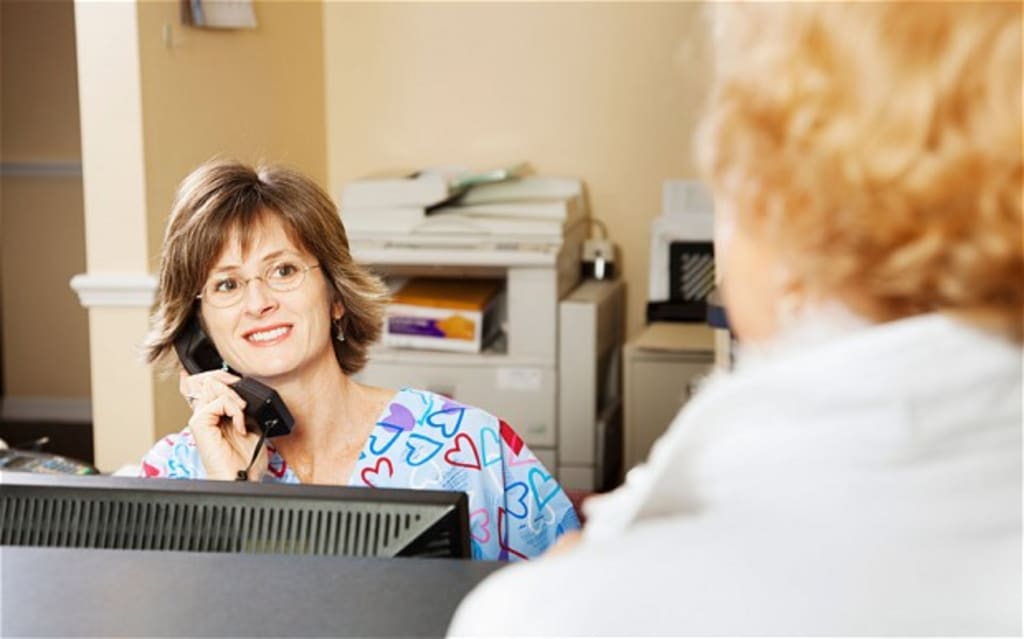
You feel ill. You moan to your partner, mum, friend, colleague, or cat... What do they say?
“Go see your GP!” is the usual answer from your well-meaning sounding board (OK, maybe the cat won’t say this, but you get the point).
Your response? “I would, but I can never get an appointment with the Doctor!”
And therein lies the issue, you can’t see a doctor. The receptionist—let's call her Fran—won’t book you an appointment with a GP, because she thinks she runs the place and knows everything even though she never went to medical school—and she always puts her nose in and wants to know exactly what kind of ‘ladies problem’ you have going on with your foof. Fran is a disembodied voice at the other end of the phone, wanting to know about your nunni problem. You are horrified that this just-a-secretary wants to know what’s wrong! So she can have a giggle at lunchtime with her fellow secretaries about you? No. Because she has a weird fascination with other peoples' bodily functions and when they go wrong? No. Really, no.
Then why on Earth does she want to know?! This must be the most common complaint I hear when people discuss their own GP surgeries, so let’s explain about Fran.
No, she does not think she’s the Appointments Gatekeeper. When you ask for an appointment, most surgeries have a handy computer programme that lets them select your details from their records, book you in at a certain time, and has a helpful box to fill in to describe the main issue that warrants an appointment. Why? So the healthcare professional knows what they are seeing you about! They are going to see about 30 to 40 people in one day, and that’s not counting the phone calls, visits and paperwork they have to do as well.
Imagine this: You walk into a room to see someone you barely know about a very personal problem, and your opening line is, “my fanny hurts, can you have a look?” Awkward. In all honesty, some prior warning goes a long way. Plus, before you arrive, the healthcare professional will already have been reading through your notes, taking notice of your medications, past medical history, and—if you gave Fran a good gist of what’s wrong—they could even be thinking already what your diagnosis and treatment will be—with a high probability of never having to drop your knicks in the first place—bonus!
Note I said healthcare professional earlier, not doctor? This is because Fran is trained to Signpost. This is exactly as it sounds: get an idea of the problem and point you in the right direction. So many problems can be dealt with by someone other than a doctor.
Because you might not need to see a doctor at all! A Nurse Practitioner could see you for that vexing vajayjay, for example. There are also practice nurses and healthcare assistants who specialise in certain healthcare areas. Also, podiatrists, midwives, health visitors, physiotherapists, pharmacists; the list is nearly endless, these healthcare professionals can see you for all sorts of problems, and for some of them, you wouldn’t even need to set foot in your GP surgery.
If we think we need non-urgent medical advice or healthcare, it’s not just a doctor we could see. However, we so frequently forget this, meaning that appointments with a GP get clogged up with more minor issues that could be dealt with by popping into a pharmacy, or self-care. The knock-on effect is that the people who need to see a GP specifically can’t, as there are no appointments. This then means that they won’t get the help they may need early enough, so they attend a walk-in centre or urgent care unit- stretching an already maxed out health service.
So, when someone says, “Go see your GP”, in 2018 they may not mean a GP at all. They could mean:
- Phone your surgery and speak to Fran; she can tell you where to go from there.
- See a Nurse Practitioner or Practice nurse.
- Go to a pharmacy.
- Ring a health advice number (UK is 111, it’s free).
- Visit NHS Choices at www.nhs.uk for advice on the most common problems and to find your local services.
The most important point I need to make is this: Fran is not just a secretary. Of course, she does the million and one things a regular secretary does, but on top of that, she is chasing your prescription request/your health insurance documents that need signing/your urgent referral for continuing treatment. As well as answering the many queries from patients by phone and other staff. Now multiply that by the amount of patients your surgery may have on their books at any one time. That’s a lot of stuff to keep track of without adding your problematic snootch.
So please, be nice to Fran.
*Of course, I am not suggesting that people should not seek advice or help in the event of an emergency in the UK its 999 (also 112 from a mobile) for a life-threatening emergency, 111 for advice.
About the Creator
Day 4 of Quitting
If this is how sobriety feels, maybe it’s better to go through life a little buzzed… this, along with other hits like, I want to kill myself, I wish I was dead, and I’m going to throw myself off a bridge have been the only thoughts on rotation these past few days. I promise myself that if, in a month, I still feel like this (‘this’ meaning despondent, full of rage, and simultaneously numb) I can go back to smoking. Until mid-February though? Nicotine is off the table.
By sleepy drafts8 days ago in Longevity
Best Kratom Strains for Euphoria, Energy, and Mood Enhancement
Kratom, also known as Mitragyna speciosa, is a tropical tree native to Southeast Asia. People use kratom in herbal form for pain relief, mood support, and opioid withdrawal. Others use it for recreational effects such as mild euphoria, higher energy, and lower anxiety. Common formats include tea, powder, and capsules.
By Jack Wilderabout 15 hours ago in Longevity




Comments
There are no comments for this story
Be the first to respond and start the conversation.