
Body as Compass: Navigating Emotion Through Sensation

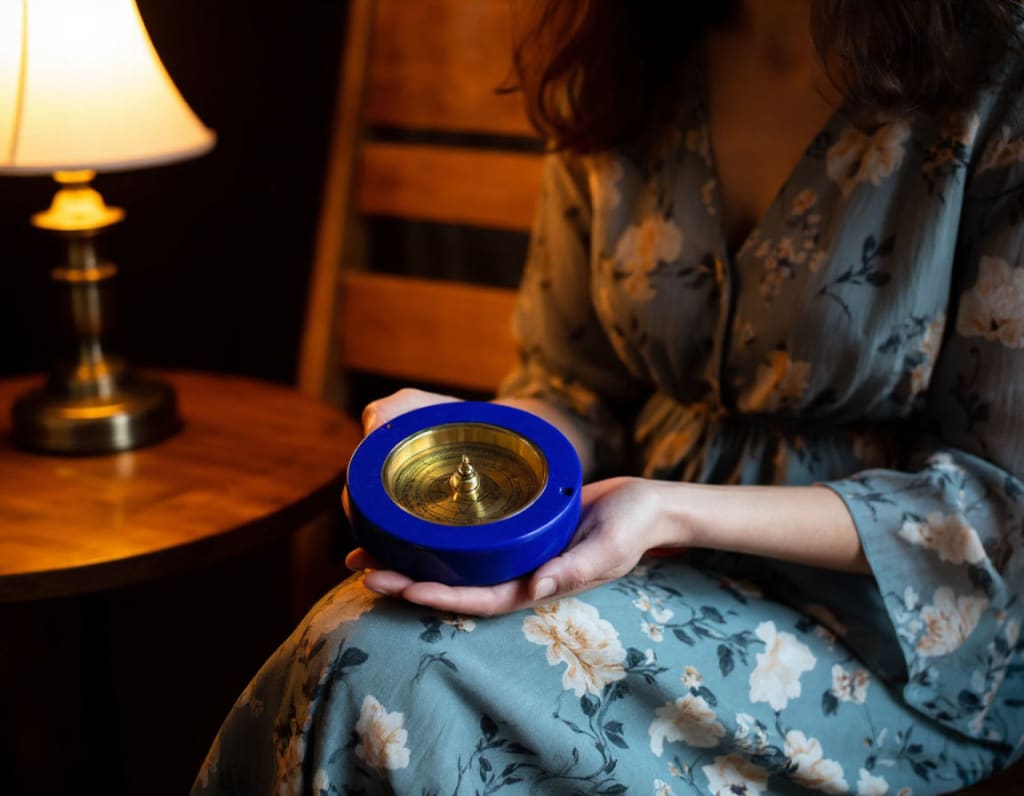
In a world that constantly urges us to think, analyze, and decide, we often forget the quiet wisdom of the body — the way it feels truth before the mind can name it. The body, in its subtle language of tension and release, expansion and contraction, becomes a kind of compass. It points us not north or south, but inward — toward the truth of what we are actually feeling beneath the noise of thought.
Emotions, though often described as mental states, are deeply physical experiences. Fear might feel like a tightness in the chest. Joy might rise as warmth through the face. Sadness may linger as heaviness behind the eyes. We tend to label these sensations after the fact — “I’m anxious,” “I’m happy,” “I’m angry” — but before the story, there is the body. And if we can learn to pause and feel it directly, without rushing to interpret or suppress, we discover that the body already knows how to guide us through emotion.
Meditation offers a way to reconnect with this inner navigation system. Instead of analyzing feelings, we can feel them — not conceptually, but viscerally. Sit quietly and bring your awareness to a current emotion, whatever it may be. Notice where it lives in the body. Is it still or moving? Heavy or light? Sharp or dull? By giving it space and attention, you allow emotion to transform on its own. The body’s sensations become a map — not of where you’ve been, but of where presence lives now.
This kind of somatic mindfulness doesn’t try to fix or change what arises. It listens. It trusts that every sensation has intelligence. A flutter in the stomach might say, “You’re uncertain, but curious.” A tightening in the throat might whisper, “There’s something unsaid.” When you meet these signals with compassion, they soften, expand, and eventually release their grip. Emotion moves like weather — passing through, reshaping the inner landscape, leaving clarity in its wake.
The beauty of using the body as a compass is that it grounds you in reality. Thoughts can deceive, memories can distort, but the body never lies. It speaks in sensation, rhythm, and subtle vibration — in the present tense only. By learning to listen, you cultivate a kind of embodied truth that anchors you even in chaos. When decisions feel clouded, or emotions overwhelming, you can return to the physical — to breath, to weight, to pulse — and find orientation again.
In daily life, this practice might look simple: pausing before reacting, taking a breath when discomfort rises, noticing how your body feels in a conversation. These small acts of awareness are how intuition grows — not as something mystical, but as embodied understanding. Over time, the body’s signals become clearer, more nuanced, and more trustworthy. You learn to sense when something aligns and when it doesn’t, when to lean in and when to step back.
As you explore this path, it helps to have gentle guidance and grounded practices. Resources like https://meditation-life.com/ offer ways to deepen your connection with bodily awareness, helping you recognize the signals your nervous system sends long before they turn into stress or fatigue. By returning to the body, you learn to navigate life with greater honesty and ease.
Because in truth, the body is not a passive vessel but a living field of intelligence — one that continuously reflects your inner state and the world around you. When you learn its language, you no longer need to chase understanding in thoughts alone. Sensation becomes compass, movement becomes dialogue, and awareness becomes your north star.
The next time emotion swells — before you name it, justify it, or act upon it — pause. Ask your body, where is this felt? Then listen. Beneath the tension, there’s a message. Beneath the ache, a direction. The body doesn’t shout; it whispers. And when you follow those whispers, you discover that presence is not something to think your way into — it’s something you feel your way toward.
About the Creator
Keep reading
More stories from Marina Gomez and writers in Longevity and other communities.
Breathing with the World: Inhale Connection, Exhale Separation
In the constant motion of our days, it’s easy to forget that breathing isn’t something we do alone. Each inhale we take is a quiet act of communion — an invisible thread that ties us to every living thing. The air filling your lungs this very moment has drifted through forests, over mountains, across oceans, and through the bodies of countless beings before you. Breathing is not ownership; it’s participation in the vast, ongoing exchange of life itself.
By Marina Gomez5 months ago in Longevity
The Real Cost of Vehicle Accidents in the U.S.A
An automotive industry perspective grounded in data, history, and lived experience on America’s roads. Vehicle crashes are woven into the fabric of daily life in the United States. To many motorists, they’re a tragic “accident” but shift your lens toward the long arc of automotive history and economics, and a much larger picture emerges: one that touches families, business, government balance sheets, and the very structure of American mobility.
By Jane Smith6 days ago in Longevity
Review of 'Man on the Run'
My wife and I saw Man on the Run, a nearly 2-hour documentary on Amazon Prime, about Wings, Paul McCartney's group that flew around the world from shortly after The Beatles broke up in early 1970 to shortly after John Lennon was murdered at the end of 1980, making a Beatles reunion forever impossible.
By Paul Levinson3 days ago in Beat



Comments
There are no comments for this story
Be the first to respond and start the conversation.