
Blue Light, Red Flags
How Digital Overload Ages You Faster

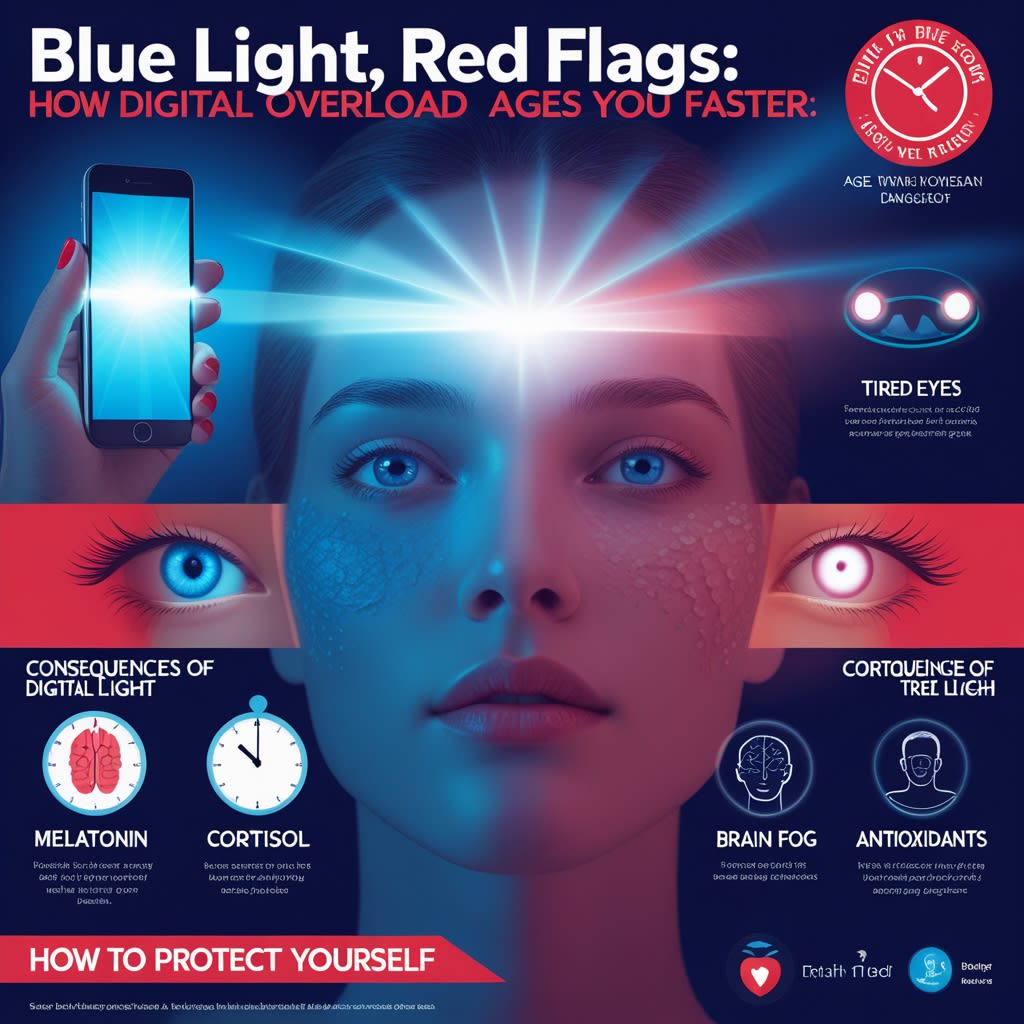
How excessive screen time and artificial light may be accelerating your aging—and what you can do to protect your mind and body.
In our hyperconnected world, it’s no surprise that many of us spend more time with screens than with people. Whether it’s for work, socializing, entertainment, or information, the average adult now logs over 10 hours per day staring at digital devices. But behind those glowing screens lies an unseen threat that may be speeding up the clock on our health and aging: blue light and digital overload.
Though we may think of aging as primarily driven by genetics or lifestyle factors like diet and exercise, scientists are now uncovering a hidden accelerant: constant exposure to artificial blue light from smartphones, laptops, tablets, and LED lighting. Combined with the neurological and hormonal effects of digital overstimulation, these modern habits are silently chipping away at our longevity.
What Is Blue Light—and Why Is It Everywhere?
Blue light is a high-energy visible light (HEV) that’s naturally emitted by the sun. In nature, blue light helps regulate our circadian rhythm—the internal clock that dictates when we sleep, wake, and repair our bodies. But while daylight exposure is healthy and necessary, artificial blue light, especially after dark, throws our biology into disarray.
Screens and LED bulbs emit blue light at intensities far higher than what we’re naturally evolved to handle. Unlike sunlight, this digital blue light comes without the full spectrum of natural wavelengths that our bodies rely on for balance. As a result, late-night scrolling can suppress melatonin, disrupt sleep, and impair the body’s nightly repair cycle—leading to faster cellular aging.
How Blue Light and Digital Overload Accelerate Aging
Here’s how digital habits may be stealing years from your life—one scroll at a time:
1. Sleep Disruption = Accelerated Aging
Melatonin isn’t just a sleep hormone—it’s a powerful antioxidant that protects your DNA and supports cellular repair. Blue light exposure in the evening suppresses melatonin production, leading to:
Poor sleep quality
Reduced REM sleep (critical for memory and mood)
Impaired tissue and immune recovery
Long-term sleep disruption is linked to increased risk of Alzheimer’s, cardiovascular disease, obesity, and early mortality.
2. Digital Stress and Cortisol Overload
Constant digital stimulation—emails, notifications, news feeds—keeps the brain in a state of hyper-alertness. This triggers the stress hormone cortisol, which, when chronically elevated:
Promotes inflammation
Damages collagen (hello, wrinkles)
Disrupts blood sugar regulation
Increases risk of burnout, anxiety, and depression
Over time, this “tech stress” contributes to hormonal imbalance, faster skin aging, and even shortened telomeres—the protective caps on your chromosomes that are key to lifespan.
3. Eye Strain and Brain Fog
“Digital eye strain” or computer vision syndrome affects more than 50% of screen users. Symptoms like blurry vision, dry eyes, and headaches aren’t just annoying—they can reduce your productivity, focus, and overall quality of life.
Additionally, the brain’s constant toggling between screens, apps, and media fragments attention, impairs memory consolidation, and increases mental fatigue—hallmarks of premature cognitive aging.
4. Sedentary Lifestyle and Metabolic Damage
Time on screens often replaces time moving. A sedentary lifestyle is one of the biggest risk factors for heart disease, diabetes, and shortened lifespan. When screen time dominates your day, you’re more likely to skip exercise, neglect posture, and fall into poor eating habits.
How to Fight Back and Protect Your Longevity
While swearing off technology isn’t realistic—or even necessary—you can take practical steps to reduce digital damage and protect your long-term health.
1. Use Blue Light Filters or Glasses
Install blue light–blocking software like f.lux or Night Shift on your devices. For extended screen use, consider investing in blue light–blocking glasses—especially if you’re on screens after sunset.
2. Respect Your Circadian Rhythm
Keep screens out of the bedroom and set a “digital sunset” an hour before bed. This allows melatonin levels to rise naturally and supports deeper, more restorative sleep.
3. Take Screen Breaks—Every 20 Minutes
Follow the 20-20-20 rule: Every 20 minutes, look at something 20 feet away for 20 seconds. It reduces eye strain and gives your brain a reset. Set timers or reminders if needed.
4. Build in Digital Downtime
Designate periods of your day—especially mornings and evenings—without screens. Replace them with analog habits like journaling, walking, or reading physical books.
5. Eat for Cellular Repair
A diet rich in antioxidants (berries, leafy greens, omega-3s) can counteract some of the oxidative stress caused by digital overexposure. Stay hydrated and support your skin and eyes with nutrients like vitamin A, lutein, and zinc.
Final Thoughts: Reclaiming Time and Energy in a Digital World
Technology has given us incredible tools—but it’s also introduced new challenges to our health and longevity. By becoming more mindful of your digital habits and protecting your body from excessive blue light and information overload, you can preserve your energy, protect your brain, and keep your biological clock ticking smoothly.
Because living longer isn’t just about adding years—it’s about making sure those years are vibrant, rested, and well-lived. see this link site: https://www.youtube.com/shorts/nNcUI3f__zQ
About the Creator
Cotheeka Srijon
A dedicated and passionate writer with a flair for crafting stories that captivate, inspire, and resonate. Bringing a unique voice and perspective to every piece. Follow on latest works. Let’s connect through the magic of words!
Keep reading
More stories from Cotheeka Srijon and writers in Longevity and other communities.
Best Artwork Styles for Contemporary Living Spaces
Contemporary living spaces are defined by simplicity, clean lines, and intentional design choices. Unlike traditional interiors that rely heavily on ornamentation, contemporary homes often embrace openness, neutral palettes, and functional layouts. Because of this minimal foundation, artwork plays an essential role in adding personality, warmth, and visual depth.
By CEO A&S Developers5 days ago in Longevity




Comments (1)
Such an interesting article!!!