
Baby Monitor Market Trends & Summary: How Smart Parenting Tech Is Shaping the Future of Child Safety
Rising Working Parents, Smart Homes, and AI-Enabled Monitoring Are Powering a Global Industry Boom


Introduction: A New Era of Digital Parenting
Parenting in the modern world looks very different from what it did even a decade ago. As more parents balance demanding careers with family life, technology has stepped in as a silent partner—helping caregivers stay connected, informed, and reassured. Among the most trusted of these innovations is the baby monitor, a device that has evolved from simple audio tools into intelligent, AI-powered guardians.
According to Renub Research, the global baby monitor market is expected to grow from US$ 1.22 billion in 2024 to US$ 2.62 billion by 2033, expanding at a strong CAGR of 8.88% from 2025 to 2033. This impressive growth reflects not only rising birth rates in emerging economies, but also a deeper cultural shift: parents today demand constant visibility, security, and peace of mind—no matter where they are.
Global Baby Monitor Industry Overview
The baby monitor industry has undergone a remarkable transformation. Once limited to audio-only devices, modern baby monitors now offer a suite of advanced features, including:
High-definition video streaming
Night vision
Temperature and humidity sensors
Motion and sound detection
Two-way audio communication
Smartphone and tablet connectivity
AI-based crying recognition
Cloud storage and remote access
These innovations have turned baby monitors into essential smart home devices, rather than optional accessories.
The increasing adoption of smart homes, combined with rising awareness of infant safety, is driving strong demand across both developed and developing markets. Parents today want real-time updates, instant alerts, and data-driven insights, and manufacturers are racing to deliver smarter, safer, and more user-friendly solutions.
Another major factor boosting demand is the growing number of working parents, particularly in urban areas. With both parents often employed full-time, baby monitors provide a reliable way to keep an eye on infants even when caregivers are away or in another room.
Why the Baby Monitor Market Is Growing So Fast
1. Rapid Innovation and Technological Progress
Technological advancement is the backbone of this market’s expansion. Baby monitors now incorporate AI, machine learning, IoT connectivity, and cloud computing, transforming them into intelligent monitoring systems.
High-definition cameras deliver clear, real-time visuals, while advanced sensors track movement, breathing, temperature, and noise levels. Many devices now integrate with voice assistants like Alexa and Google Assistant, allowing hands-free control.
Cloud-based storage also enables parents to review footage, track sleep patterns, and analyze behavioral trends—making baby monitors as much about data-driven parenting as safety.
2. Rising Demand for Remote Monitoring Solutions
Today’s parents are more mobile than ever. Whether working late, traveling, or simply managing household responsibilities, they want to stay connected to their children at all times.
Smart baby monitors make this possible through remote access via smartphones, allowing parents to check in from anywhere with an internet connection. The emotional reassurance this provides is a key reason behind the market’s rapid adoption.
As awareness of child safety grows, remote monitoring is no longer a luxury—it’s becoming a necessity.
3. Growth of Dual-Income and Nuclear Families
The global rise in dual-income households and nuclear family structures is another major growth driver. With fewer extended family members available for childcare support, technology is filling the gap.
For working parents, baby monitors offer:
Continuous supervision
Emergency alerts
Sleep assistance features (lullabies, white noise)
Reduced anxiety and stress
This makes smart baby monitors an indispensable tool in modern households, especially in urban centers.
Key Challenges Facing the Baby Monitor Industry
Privacy and Security Concerns
As baby monitors become more connected, concerns about data privacy and cybersecurity have increased. Wi-Fi-enabled monitors are vulnerable to hacking if not properly secured, and reported breaches have raised alarms among consumers.
To address this, manufacturers are investing heavily in:
End-to-end encryption
Secure authentication protocols
Local storage options
Stronger firmware updates
Security has become a critical differentiator in purchasing decisions, and companies that fail to protect user data risk losing consumer trust.
Product Reliability and Performance Issues
Parents rely on baby monitors during the most sensitive moments, especially at night. Connectivity failures, battery drain, poor signal strength, or device malfunctions can quickly erode confidence.
Manufacturers must ensure:
Stable Wi-Fi connections
Long battery life
Clear audio/video quality
Durable hardware
Reliability is not just a feature—it’s a requirement in this market.
Regional Market Insights
United States Baby Monitor Market
The U.S. remains one of the largest and most technologically advanced baby monitor markets. High disposable incomes, early adoption of smart home technology, and strong awareness of child safety drive steady growth.
However, privacy concerns and high prices of premium devices remain challenges. To counter this, manufacturers are offering enhanced security features and mid-range models to expand their customer base.
United Kingdom Baby Monitor Market
The UK market mirrors U.S. trends, with strong demand for smart, connected devices. British parents increasingly prefer Wi-Fi-enabled video monitors with smartphone integration. Data protection remains a major concern, pushing companies to comply with strict regulations and enhance encryption standards.
India Baby Monitor Market
India is emerging as one of the fastest-growing markets for baby monitors. Rising disposable income, urbanization, and growing awareness of infant safety are driving adoption.
While affordability remains a challenge, the increasing availability of cost-effective smart monitors is opening the market to middle-income families. Local and international brands are actively competing for market share in this rapidly expanding region.
United Arab Emirates Baby Monitor Market
In the UAE, high-tech lifestyles and smart home adoption are accelerating market growth. Parents in the region show strong interest in premium baby monitors with AI, HD video, and smart alerts. Although prices are higher, strong purchasing power supports demand.
Baby Monitor Market Segmentation
By Product Type
Audio Baby Monitors: Affordable and simple, still popular in budget-conscious households
Video Baby Monitors: The largest and fastest-growing segment due to visual monitoring
Motion Sensor Baby Monitors: Advanced devices that track movement and breathing
By Mode of Communication
Wired: Limited but stable connections
Wireless / Wi-Fi: Dominant segment due to flexibility and smartphone integration
By Distribution Channel
Online Retail Stores
Hypermarkets & Supermarkets
Specialty Stores
Other Distribution Channels
Online platforms are growing fastest, driven by convenience, discounts, and wider product availability.
Competitive Landscape: Key Players Shaping the Industry
The global baby monitor market is highly competitive, with established electronics brands and specialized childcare companies leading innovation. Major players include:
Lenovo Group Limited
Samsung Group
Hanwha Corporation
Panasonic Holdings Corporation
Koninklijke Philips N.V.
Infant Optics
Dorel Industries Inc.
VTech Communications Inc.
Anker Technology (UK) Limited
These companies focus on product innovation, AI integration, security enhancements, and expanding online distribution to gain a competitive edge.
Future Outlook: What’s Next for Baby Monitoring Technology?
The future of the baby monitor market lies in AI-powered predictive monitoring, wearable integration, and deeper smart home connectivity. Devices will not only monitor but also analyze patterns, predict risks, and provide proactive alerts.
We can expect:
Advanced cry analysis
Sleep health insights
Integration with pediatric health apps
Improved data privacy controls
Affordable smart models for emerging markets
As technology continues to evolve, baby monitors will become digital caregivers, empowering parents with real-time intelligence and peace of mind.
Final Thoughts
The baby monitor market is no longer just about listening for a baby’s cry—it’s about building a safer, smarter, and more connected parenting experience. With global revenue expected to more than double by 2033, the industry reflects the changing realities of modern families.
As working parents, smart homes, and AI-powered devices become the norm, baby monitors will remain a cornerstone of child safety technology—quietly watching, learning, and supporting parents every step of the way.
About the Creator
Marthan Sir
Educator with 30+ years of teaching experience | Passionate about sharing knowledge, life lessons & insights | Writing to inspire, inform, and empower readers.
Keep reading
More stories from Marthan Sir and writers in Longevity and other communities.
Global Atherectomy Devices Market Size and Forecast 2025–2033: Minimally Invasive Solutions Transforming Vascular Care
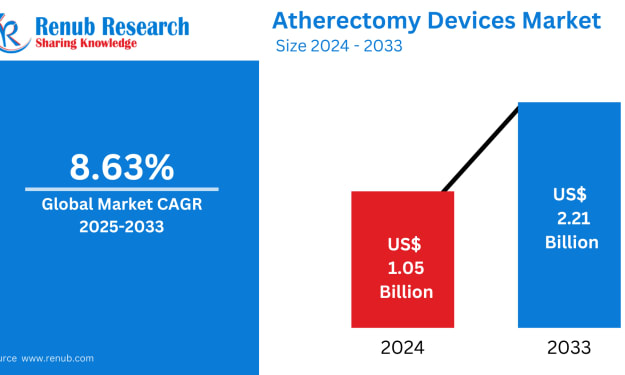
Global Atherectomy Devices Market Overview The global atherectomy devices market is entering a high-growth phase as cardiovascular and peripheral vascular diseases continue to rise worldwide. According to Renub Research, the Atherectomy Devices Market is expected to reach US$ 2.21 billion by 2033, growing from US$ 1.05 billion in 2024, at a robust CAGR of 8.63% from 2025 to 2033.
By Marthan Sirabout an hour ago in Longevity
Day 4 of Quitting
If this is how sobriety feels, maybe it’s better to go through life a little buzzed… this, along with other hits like, I want to kill myself, I wish I was dead, and I’m going to throw myself off a bridge have been the only thoughts on rotation these past few days. I promise myself that if, in a month, I still feel like this (‘this’ meaning despondent, full of rage, and simultaneously numb) I can go back to smoking. Until mid-February though? Nicotine is off the table.
By sleepy drafts13 days ago in Longevity
How Breathing Became Easier Without Me Noticing When
I cannot point to the exact moment it happened. There was no sudden breath of freshness. No noticeable shift in temperature. No sound of ventilation kicking on. If you had asked me that day whether anything had changed in the room, I would have said no.
By illumipure5 days ago in Longevity



Comments
There are no comments for this story
Be the first to respond and start the conversation.