
Australia Dental Diagnostics and Surgical Equipment Market Size and Forecast 2025–2033
Aging Population, Digital Dentistry, and Minimally Invasive Innovations Power Market Expansion

Australia Dental Diagnostics and Surgical Equipment Market Overview
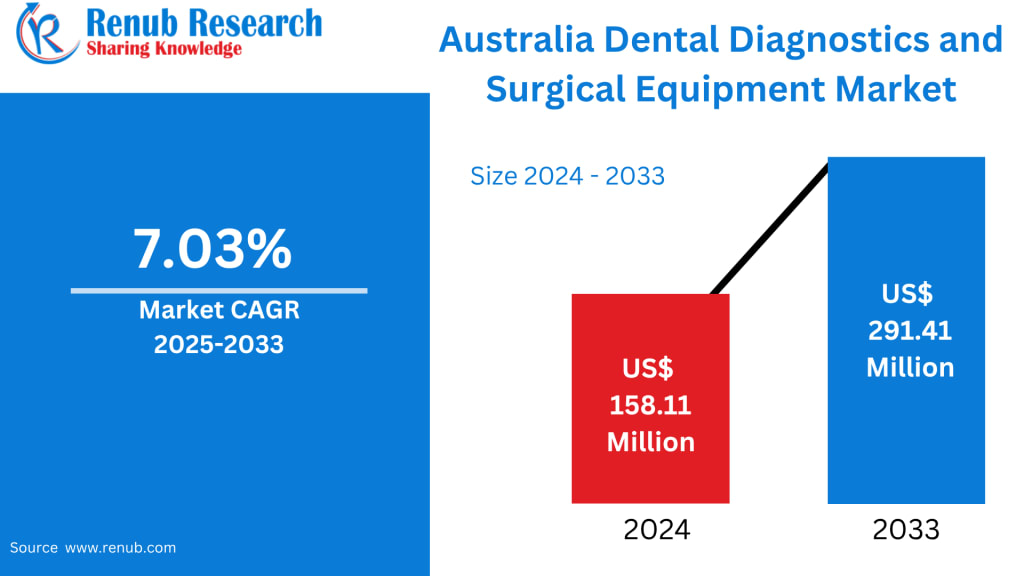
The Australia Dental Diagnostics and Surgical Equipment Market is on a strong growth trajectory, reflecting the country’s increasing focus on preventive healthcare, aesthetic dentistry, and technologically advanced treatment solutions. According to Renub Research, the market is expected to expand from US$ 158.11 million in 2024 to US$ 291.41 million by 2033, registering a CAGR of 7.03% during 2025–2033.
Australia’s aging population, rising awareness of oral health, and growing demand for restorative and cosmetic dental procedures are the primary growth catalysts. Dental implants, crowns, bridges, orthodontic solutions, and periodontal treatments are witnessing sustained demand, driving the adoption of advanced diagnostics such as digital radiography, intraoral scanners, and 3D imaging systems.
At the same time, innovations in CAD/CAM systems, laser dentistry, and minimally invasive surgical tools are transforming clinical workflows. These technologies improve diagnostic accuracy, reduce chair time, enhance patient comfort, and deliver predictable outcomes—making them indispensable in modern dental practices.
Australia’s robust healthcare infrastructure, supportive regulatory framework, and widespread insurance coverage further strengthen market fundamentals. Urban centers such as Sydney, Melbourne, and Brisbane act as technology hubs, while gradual expansion into regional and rural areas continues, albeit with certain access-related challenges.
Key Factors Driving the Australia Dental Diagnostics and Surgical Equipment Market
Rising Prevalence of Dental Disorders
Dental disease remains a significant public health concern in Australia. Gum disease, untreated dental caries, and tooth loss are prevalent across age groups. Studies indicate that around 30% of Australian adults suffer from gum disease, while one in three people aged over 15 has untreated dental decay.
In the 2022–2023 period, nearly 87,000 hospital admissions related to oral health conditions could have been prevented with earlier diagnosis and timely intervention. This has heightened the emphasis on early detection and continuous monitoring, driving demand for high-precision diagnostic equipment such as digital X-rays, panoramic imaging systems, and cone-beam computed tomography (CBCT).
As dental professionals aim to deliver accurate diagnoses and personalized treatment plans, investments in advanced diagnostics and surgical equipment continue to rise across clinics and hospitals.
Growing Demand for Cosmetic and Restorative Dentistry
Cosmetic dentistry is no longer a niche segment in Australia—it has become mainstream. Rising disposable incomes, aesthetic consciousness, and the influence of social media have significantly increased demand for veneers, crowns, teeth whitening, orthodontics, and dental implants.
Technologies such as CAD/CAM systems, digital smile design, intraoral scanners, and 3D printing are reshaping patient experiences. These tools allow dentists to design, simulate, and manufacture restorations with exceptional precision, often within a single visit.
Urban centers including Sydney, Melbourne, and Brisbane remain hotspots for cosmetic dentistry, but demand is steadily spreading to secondary cities as awareness and accessibility improve.
Increasing Popularity of Minimally Invasive Dental Surgery
Patients increasingly prefer minimally invasive dental procedures due to reduced pain, faster recovery times, and lower complication risks. This has accelerated the adoption of laser dentistry, air abrasion systems, and advanced endodontic tools.
Soft tissue and hard tissue lasers are now widely used for periodontal therapy, cavity preparation, and surgical interventions. These technologies preserve healthy tooth structure, minimize bleeding, and improve healing outcomes.
Australia’s strong regulatory oversight ensures that these advanced tools meet stringent safety and quality standards, further supporting their integration into everyday dental practice.
Challenges Facing the Australia Dental Diagnostics and Surgical Equipment Market
High Cost of Advanced Equipment
Despite strong demand, the high cost of dental diagnostic and surgical equipment remains a major barrier. Technologies such as CBCT scanners, CAD/CAM milling units, and laser systems require significant upfront investment, along with ongoing maintenance, software upgrades, and staff training.
For small and medium-sized dental clinics, especially independently operated practices, these costs can be prohibitive. In rural and low-density regions, patient volumes may not justify large capital expenditures, leading many clinics to delay upgrades.
This cost-related challenge continues to slow the uniform adoption of cutting-edge dental technologies across the country.
Urban–Rural Disparities in Access
Australia faces persistent urban–rural disparities in access to advanced dental care. While metropolitan areas are equipped with state-of-the-art diagnostic and surgical tools, many regional and remote clinics rely on older or basic equipment.
Geographic isolation, workforce shortages, infrastructure limitations, and logistical challenges in maintaining sophisticated systems contribute to uneven access. Recruiting and retaining skilled dental professionals in remote regions further compounds the issue.
Bridging this gap remains a priority for policymakers and healthcare providers aiming to ensure equitable oral healthcare nationwide.
Australia Dental Diagnostics and Surgical Equipment Market by State
New South Wales
New South Wales (NSW) leads the Australian market due to its dense network of dental clinics, hospitals, and specialty practices. Sydney serves as a major hub for digital imaging, CAD/CAM systems, and laser dentistry adoption.
Strong public and private investments, coupled with academic and research institutions, encourage early adoption of innovative technologies. While metropolitan regions dominate growth, efforts are ongoing to improve access in regional NSW.
Victoria
Victoria is another key contributor, driven by Melbourne’s extensive dental ecosystem. High adoption of intraoral scanners, CAD/CAM milling machines, AI-assisted imaging, and laser equipment supports market expansion.
The presence of leading research and training institutions fosters innovation and workforce readiness. Public and private funding initiatives further support equipment upgrades, although regional areas continue to trail metropolitan adoption rates.
Queensland
Queensland’s market is expanding steadily due to population growth and rising demand for advanced dental care in Brisbane, the Gold Coast, and the Sunshine Coast. Clinics are increasingly investing in digital radiography, CAD/CAM systems, and dental lasers to improve efficiency and patient outcomes.
Academic institutions support clinical research and early adoption of AI-driven diagnostics. While urban areas dominate uptake, outreach programs and tele-dentistry initiatives aim to improve rural access.
Other States and Territories
Western Australia, South Australia, the Australian Capital Territory, Tasmania, and the Northern Territory represent smaller but gradually growing markets. Adoption rates vary based on population density, infrastructure, and availability of skilled professionals, with urban centers leading technological integration.
Recent Developments in the Australia Dental Diagnostics and Surgical Equipment Industry
Danaher Corporation announced the opening of two new laboratories certified by the College of American Pathologists (CAP) and Clinical Laboratory Improvement Amendments (CLIA) in July 2024. One laboratory in Mascot, Australia, will serve as a collaborative research hub, strengthening the country’s diagnostic capabilities.
Dentsply Sirona introduced new product launches in March 2024, including the X-Smart Pro endodontic system, reinforcing its commitment to innovation in dental diagnostics and surgical solutions.
Market Segmentation Analysis
By Type
Dental Systems and Equipment
Dental Chairs
Hand Pieces
Light Cure Equipment
Scaling Units
CAD/CAM Systems
Dental Lasers
Soft Tissue Lasers
Hard Tissue Lasers
Dental Radiology Equipment
Extraoral Radiology Equipment
Intraoral Radiology Equipment
Other Types
By Treatment
Orthodontic
Endodontic
Periodontic
Prosthodontic
By End User
Hospitals
Clinics
By State
New South Wales
Victoria
Queensland
Western Australia
South Australia
Australian Capital Territory
Tasmania
Northern Territory
Competitive Landscape and Key Players
The Australian dental diagnostics and surgical equipment market is moderately competitive, with strong participation from global and regional players. Key companies covered in the report include:
Danaher Corporation
Straumann
Henry Schein, Inc.
Dentsply Sirona
Zimmer Holdings Inc.
Patterson Companies, Inc.
3M Corporation
Envista Holdings Corporation
These players compete through product innovation, strategic partnerships, mergers and acquisitions, and geographic expansion. Investments in digital dentistry, AI-enabled diagnostics, and minimally invasive surgical technologies remain central to competitive strategies.
Final Thoughts
The Australia Dental Diagnostics and Surgical Equipment Market is set for robust expansion through 2033, underpinned by demographic shifts, technological advancements, and growing patient expectations. While challenges such as high equipment costs and urban–rural disparities persist, ongoing innovation, supportive healthcare policies, and increased investment in digital dentistry are reshaping the competitive landscape.
As dental care in Australia continues its transition toward precision, efficiency, and patient-centric solutions, advanced diagnostic and surgical equipment will play a critical role in defining the future of oral healthcare delivery across the nation.
About the Creator
jaiklin Fanandish
Jaiklin Fanandish, a passionate storyteller with 10 years of experience, crafts engaging narratives that blend creativity, emotion, and imagination to inspire and connect with readers worldwide.
Keep reading
More stories from jaiklin Fanandish and writers in Longevity and other communities.
United States Nootropics Market Size and Forecast 2025–2033
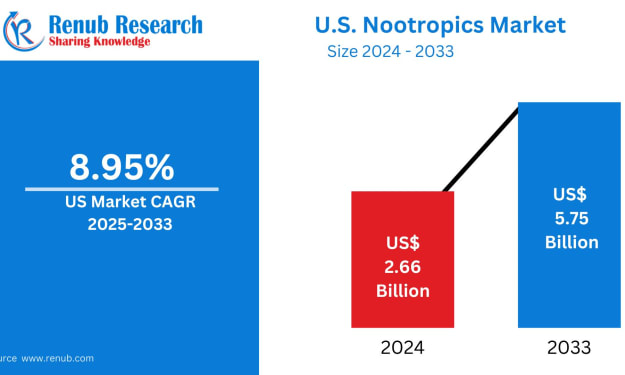
United States Nootropics Market Outlook The United States Nootropics Market is witnessing robust and sustained growth as cognitive wellness becomes a mainstream health priority. According to Renub Research, the market is expected to expand from US$ 2.66 billion in 2024 to US$ 5.75 billion by 2033, registering a CAGR of 8.95% during 2025–2033.
By jaiklin Fanandish19 days ago in Longevity
Day 4 of Quitting
If this is how sobriety feels, maybe it’s better to go through life a little buzzed… this, along with other hits like, I want to kill myself, I wish I was dead, and I’m going to throw myself off a bridge have been the only thoughts on rotation these past few days. I promise myself that if, in a month, I still feel like this (‘this’ meaning despondent, full of rage, and simultaneously numb) I can go back to smoking. Until mid-February though? Nicotine is off the table.
By sleepy drafts5 days ago in Longevity



Comments
There are no comments for this story
Be the first to respond and start the conversation.