
As death draws near, our fantasies provide solace and reconciliation.
As death draws near.


Unwelcome guests-
Like other doctors, Dr. Kerr's first job in medicine was to take care of the physical needs of his patients. But he immediately became aware of a phenomenon that experienced nurses were well familiar with. Many patients experienced dreams and glimpses of their deceased loved ones visiting them in their final moments when they were close to passing away.
These incidents are often interpreted by doctors as drug-induced or delusional hallucinations that may call for additional medication or outright sedation.
But Dr. Kerr chose to take a moment and listen after observing the comfort and calm these end-of-life experiences seemed to provide to his patients. One such vision occurred to a dying patient named Mary in 2005. She started cooing at her infant kid who had passed away infancy decades earlier as she moved her arms as if rocking a newborn.
This didn't seem like cognitive impairment to Dr. Kerr. What if, he pondered, patients' perceptions near the end of life were important to their wellbeing in ways that weren't only for nurses, chaplains, and social workers to consider?
What would medical care look like if every doctor took a moment to listen?
The undertaking starts-
He started gathering and recording testimony provided directly by those who were dying when he saw dying patients reaching out to their loved ones, many of whom they had not seen, touched, or heard in decades. He and his research group interviewed 1,400 patients and their families about their end-of-life experiences over the period of ten years.
He was shocked by what he found. No matter their age, background, or profession, more than 80% of his patients reported end-of-life experiences that seemed to involve more than just weird dreams. These were striking, profound, and transformational. And they were always more common close to death.
They included images of long-lost parents, grandparents, and relatives, as well as the reappearance of deceased pets to console their former owners. They dealt with the restoration of bonds, the rebirth of love, and the accomplishment of forgiveness. They frequently gave comfort, encouragement, acceptance, and calm.
Achieving one's weaving goals-
I was occupied cleaning the horse stall. We frequently talked about Dr. Kerr's research on the dreams and visions of his dying patients because the stables were on his property. He discussed the subject of his TEDx Talk with me as well as the book he was writing.
The research and work of this doctor and scientist impacted me deeply. I offered to assist him when he mentioned that he was having trouble writing. He first hesitance. I was an English professor who was most known for dissecting other people's stories rather than creating my own. His agency was worried that I wouldn't be able to write in a way that the general public could understand because academics aren't exactly known for doing that. The rest is history because I persisted.
To put a human face on the statistical information that had previously been published in medical publications, I was tasked with adding more humanity to the astounding medical intervention that this scientific research represented.
The heartfelt accounts of Dr. Kerr's interactions with his patients and their families supported Michel de Montaigne's dictum that "he who should educate men to die would at the same time teach them to live.
I read about Robert, who was losing Barbara after 60 years of marriage and was struggling with contradictory emotions of guilt, hopelessness, and faith. One day, during a brief period of lucid dreaming that mirrored Mary's experience years previously, he unexplainably saw her reaching for the baby son they had lost decades earlier. Robert was surprised by his wife's serene expression and contented grin. Their perception of the dying process was altered by that instant of absolute oneness. Robert found some peace in the middle of his irreparable loss by witnessing Barbara being soothed as she lived her death as a moment of love reclaimed.
For the elderly couples Dr. Kerr looked after, the idea of being split apart by death after a lifetime of marriage was simply unimaginable. Joan's recurrent dreams and visions assisted in healing the severe wound caused by the death of her spouse several months previously. She would scream for him at night and gesture toward his presence throughout the day, even in her most vivid and eloquent times. These incidents gave her daughter Lisa the confidence that her parents' love was strong. The pre-death dreams and images of her mother helped Lisa on her own path to acceptance, which is a crucial part of grieving.
Children frequently see their cherished, passed-away pets as they approach death. A bone-based cancer patient at the age of thirteen named Jessica began to get glimpses of her former dog, Shadow. She felt at ease with him there. She assured Dr. Kerr during one of his final visits, "I will be OK.
Not alone but also remote-
Changes to the healthcare system are challenging. Dr. Kerr nevertheless desires to assist patients and their loved ones in reclaiming the dying process from a professional perspective to one that is valued as a rich and singular human experience.
The hole that could otherwise be left by the uncertainty and terror that death arouses is filled by pre-death dreams and visions. They aid in the reunion of the dying with the people they had loved and lost, as well as those who had supported, comforted, and confirmed them. They restore dignity, treat old wounds, and recover affection. Understanding this paradoxical fact aids the bereaved in overcoming their grief.
Because of the coronavirus pandemic, hospitals and nursing homes are still prohibited from receiving visitors. Knowing that the terminally ill rarely mention being alone may be helpful. They talk about being cherished and pieced back together.
About the Creator
Paramjeet kaur
Hey people! I am my own person and I love blogging because I just love to share the small Stories
Keep reading
More stories from Paramjeet kaur and writers in Longevity and other communities.
A concept study of "living in the now" for those who are nearing the end of their lives.
In settings providing end-of-life care, the concept of "living in the moment" is crucial to maintaining dignity. Although being in the present is crucial for providing care for the dying, neither the individual nor their family have a strong mental idea of what it means.
By Paramjeet kaur4 years ago in Longevity
Day 4 of Quitting
If this is how sobriety feels, maybe it’s better to go through life a little buzzed… this, along with other hits like, I want to kill myself, I wish I was dead, and I’m going to throw myself off a bridge have been the only thoughts on rotation these past few days. I promise myself that if, in a month, I still feel like this (‘this’ meaning despondent, full of rage, and simultaneously numb) I can go back to smoking. Until mid-February though? Nicotine is off the table.
By sleepy drafts13 days ago in Longevity
SpaceX Rocket Launch
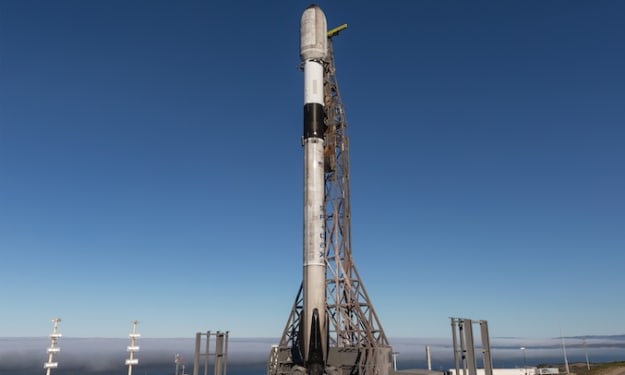
Every SpaceX rocket launch carries more than just payloads into orbit—it carries ambition, experimentation, and a vision of a future where space is no longer unreachable. Founded by Elon Musk in 2002, SpaceX has steadily transformed from a bold startup into one of the most influential aerospace companies in history. Each launch represents another step toward redefining how humanity explores space, communicates across the globe, and imagines life beyond Earth. The Meaning Behind a SpaceX Launch A SpaceX rocket launch is not simply a technical event. It is the result of years of engineering, testing, and problem-solving. From the early Falcon 1 attempts to the now-reliable Falcon 9 and Falcon Heavy missions, SpaceX has focused on one core principle: reusability. This approach has fundamentally changed the economics of spaceflight. Traditional rockets were designed to be used once, making every launch extremely expensive. SpaceX challenged that model by developing rockets that can return to Earth, land vertically, and be flown again. When a Falcon 9 booster touches down on a droneship or landing pad, it marks not just a successful mission, but a proof of concept that spaceflight can be sustainable and repeatable. Falcon 9: The Workhorse of Modern Spaceflight Most SpaceX rocket launches today involve the Falcon 9, a two-stage rocket designed for reliability and efficiency. It has become the backbone of commercial satellite launches, government missions, and cargo resupply trips to the International Space Station (ISS). A typical Falcon 9 launch follows a carefully choreographed sequence. After liftoff, the first stage separates and begins its journey back to Earth, while the second stage continues carrying the payload into orbit. Watching the booster descend through the atmosphere and land upright has become iconic, but it is still a remarkable engineering achievement. These launches often deploy Starlink satellites, part of SpaceX’s effort to provide global internet coverage. For many viewers, a SpaceX rocket launch is their first glimpse into how space technology directly impacts daily life on Earth. Human Spaceflight and the Crew Dragon Era One of the most significant milestones in SpaceX history came with the successful launch of astronauts aboard the Crew Dragon spacecraft. This achievement restored the United States’ ability to launch humans into space from its own soil, ending years of reliance on foreign launch systems. Human-rated SpaceX rocket launches carry a different emotional weight. Every detail—from life support systems to escape mechanisms—is scrutinized to ensure astronaut safety. When a Crew Dragon lifts off, it symbolizes trust: trust in engineering, trust in innovation, and trust in a private company to handle missions once reserved exclusively for national space agencies. These launches have opened new possibilities for international collaboration and long-term space habitation. Starship: The Next Giant Leap While Falcon 9 dominates current missions, Starship represents SpaceX’s most ambitious project yet. Designed as a fully reusable super heavy-lift rocket, Starship is intended to carry humans and cargo to the Moon, Mars, and beyond. A Starship launch is experimental by nature. Test flights focus on learning through iteration—sometimes succeeding, sometimes failing, but always collecting valuable data. Unlike traditional programs that avoid public failure, SpaceX embraces transparency, broadcasting launches and setbacks alike. This approach has reshaped public perception of rocket development. Instead of polished perfection, audiences witness real engineering in progress, complete with challenges and breakthroughs. Why SpaceX Launches Capture Global Attention SpaceX rocket launches attract millions of viewers worldwide, not just because of the technology, but because of what they represent. They remind people that exploration is still alive in the modern world. In an era dominated by digital experiences, watching a rocket break free from Earth’s gravity feels profoundly physical and inspiring. Social media, live streams, and public access have made these launches shared global events. Students, engineers, and casual observers alike tune in, learning about orbital mechanics and rocket science along the way. SpaceX has also changed how people think about careers in science and engineering. For many young viewers, a SpaceX launch is the moment that sparks curiosity and ambition. The Broader Impact on the Space Industry Beyond individual missions, SpaceX rocket launches have forced the aerospace industry to evolve. Lower launch costs and faster turnaround times have encouraged innovation across the sector. Competitors and national agencies alike have begun adopting reusable technology and more agile development methods. This shift benefits scientific research, Earth observation, and communication networks. It also lays the groundwork for future exploration missions that were once considered financially unrealistic. Looking Ahead As SpaceX continues launching rockets at an unprecedented pace, the question is no longer whether spaceflight can be routine, but how far it can take us. Future launches will likely support lunar bases, Mars missions, and expanded satellite networks that connect even the most remote parts of the planet. Each SpaceX rocket launch builds on the last, forming a continuous story of progress. It is a story still being written—one that blends risk, innovation, and a deeply human desire to explore the unknown. In watching these rockets rise into the sky, we are reminded that the boundaries of possibility are not fixed. They are meant to be challenged, tested, and ultimately surpassed.
By Saboor Brohi 3 days ago in Longevity



Comments
There are no comments for this story
Be the first to respond and start the conversation.