
Are Your Hip Flexors to Blame for Your Back Pain?
Hip flexors and Back pain
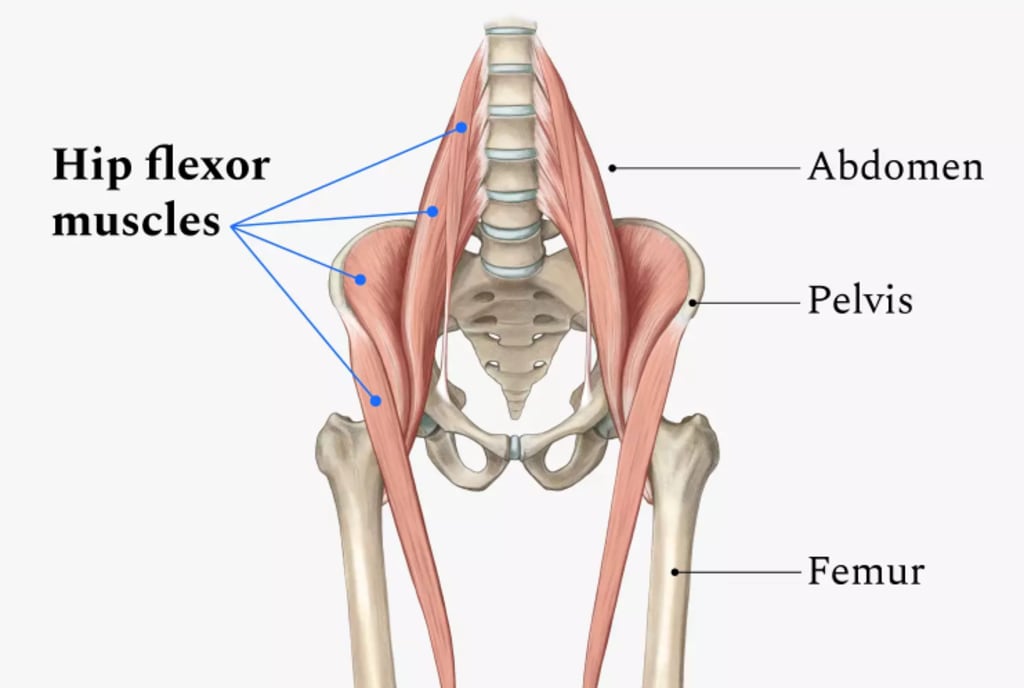
Do you suffer from chronic back pain? If so, you’re certainly not alone. Back pain is one of the most common health complaints among Americans. You may be surprised to learn that the cause of your back pain could be tight hip flexors. In this blog post, we’ll discuss how tight hip flexors can contribute to back pain and the benefits of loosening them. Read on to learn more about how to prevent and alleviate your back pain.
The Connection Between Hip Flexors and Back Pain
The muscles in your hips, known as the hip flexors, play an important role in supporting your spine and helping you move around. When these muscles are tight or become too tight, it can lead to back pain. Tight hip flexors can pull the spine into an unnatural position, resulting in back pain and even sciatica.
When the hip flexors are too tight, it can also lead to a decrease in mobility and range of motion. This can cause further strain on the back muscles and spine, resulting in more pain and discomfort.
It’s important to understand the connection between tight hip flexors and back pain so that you can properly address the issue and improve your quality of life. If you’re experiencing back pain or mobility issues, loosening up your hip flexors may be the key to feeling better.
How to Tell If Your Hip Flexors Are Tight
If you’re experiencing chronic back pain, it’s possible that your hip flexors could be to blame. Knowing how to tell if your hip flexors are tight is important in determining the cause of your pain. Here are some signs that your hip flexors may be too tight:
1. Difficulty Standing Up From a Sitting Position: If you have trouble standing up from a seated position, it could be because your hip flexors are tight. This can cause stiffness and difficulty when trying to stand up straight.
2. Inability to Perform Full Range of Motion: If you can’t move your hips through a full range of motion, such as performing a squat or reaching your toes, this could be due to tight hip flexors. This can cause pain in the lower back and limit movement.
3. Pain in Your Lower Back: If you’re experiencing pain in your lower back, it could be caused by tight hip flexors. When they’re too tight, they can pull on your spine, leading to back pain.
4. Stiffness in the Hips and Legs: If you feel stiffness in your hips and legs, this could be a sign of tight hip flexors. This can cause pain and limited mobility in the hips and legs.
If you experience any of the above symptoms, it’s important to consult with a professional to determine if your hip flexors are too tight. Doing so can help you find relief from your back pain and improve your overall quality of life.
The Benefits of Looser Hip Flexors
Having tight hip flexors can cause a number of problems, including chronic back pain. The good news is that by loosening up your hip flexors, you can reduce the discomfort and improve your overall posture.
Looser hip flexors provide several benefits, such as improved mobility, better posture, and more efficient movement. Improved mobility means that you can move around more easily and with less effort. This also leads to better posture since your body is not having to overcompensate for a tight muscle group. Additionally, looser hip flexors mean that your muscles are better able to work together to perform the necessary movements of everyday life.
Moreover, looser hip flexors mean increased flexibility. When your hip flexors are tight, it can limit the range of motion in the hips, leading to stiffness and a lack of agility. But when they are loose and relaxed, you are able to move more freely and easily, giving you greater flexibility.
Lastly, looser hip flexors help improve your overall health and wellbeing. When your hip flexors are tight, they put additional strain on other muscles and joints, which can lead to further health issues down the line. But by loosening up your hip flexors, you can reduce the stress on other muscles and joints, thus improving your overall health.
Overall, the benefits of looser hip flexors are undeniable. Whether you’re dealing with chronic back pain or just want to improve your overall health, taking the time to loosen up your hip flexors is well worth the effort.
How to Loosen Up Your Hip Flexors
Tight hip flexors can lead to a variety of aches and pains, but thankfully, there are a few simple exercises you can do to help loosen them up. Here are some of the best:
1. Hip Flexor Stretch: Start by kneeling on one knee with your opposite leg in front of you and bent at a 90-degree angle. Lean forward and hold for 20 seconds, then switch sides. Do this stretch two to three times on each side.
2. Glute Bridge: Lie on your back with your knees bent and feet flat on the floor. Push through your heels and lift your hips up, squeezing your glutes at the top of the movement. Hold for a few seconds before lowering your hips down to the floor. Do 10-15 repetitions.
3. Single Leg Glute Bridge: Start in the same position as the glute bridge. Lift one leg off the floor and extend it straight out in front of you. Then press your foot into the ground and lift your hips off the ground as high as possible while squeezing your glutes at the top. Hold for a few seconds and then lower your hips back down. Do 10-15 repetitions on each leg.
4. Standing Hip Flexor Stretch: Stand up tall and place one foot slightly in front of the other. Keeping your back straight, reach down towards your toes, feeling the stretch in your hip flexor on the back leg. Hold for 20 seconds before switching sides. Do two to three sets on each side.
By following these four exercises regularly, you should be able to loosen up your hip flexors and reduce any pain or discomfort caused by tightness.
Make sure to do these stretches slowly and deliberately to ensure that you are properly targeting the muscles and that they are getting the full benefit of the stretch.
If you want to find out more about unlocking your hip flexors, click here.
About the Creator
Keep reading
More stories from Isack Veijo and writers in Longevity and other communities.
TikTok, Untapped Lead Source?
Marketing Your Business on TikTok: A Guide to Lead Generation Are you looking to explore the latest and greatest ways to generate leads for your business? TikTok, the popular social media platform that has taken the world by storm, may be the answer. In this blog post, we will discuss how to effectively use TikTok for lead generation. From creating content that resonates with potential customers to implementing a targeted advertising campaign, we’ll cover everything you need to know about marketing your business on TikTok and using it for lead generation.
By Isack Veijo3 years ago in Education
United States Positron Emission Tomography Market Size and Forecast (2026–2034)
Introduction The United States Positron Emission Tomography (PET) market is undergoing steady and transformative growth as healthcare providers increasingly prioritize early disease detection, precision diagnostics, and personalized treatment strategies. According to Renub Research, the U.S. PET market is expected to grow from US$ 330.83 million in 2025 to US$ 467.22 million by 2034, expanding at a compound annual growth rate (CAGR) of 3.91% between 2026 and 2034.
By Sakshi Sharma7 days ago in Longevity




Comments
There are no comments for this story
Be the first to respond and start the conversation.