
Anchoring in Breath: Turning Inhalation and Exhalation into Mindfulness Tools
How conscious breathing transforms ordinary moments into gateways of awareness

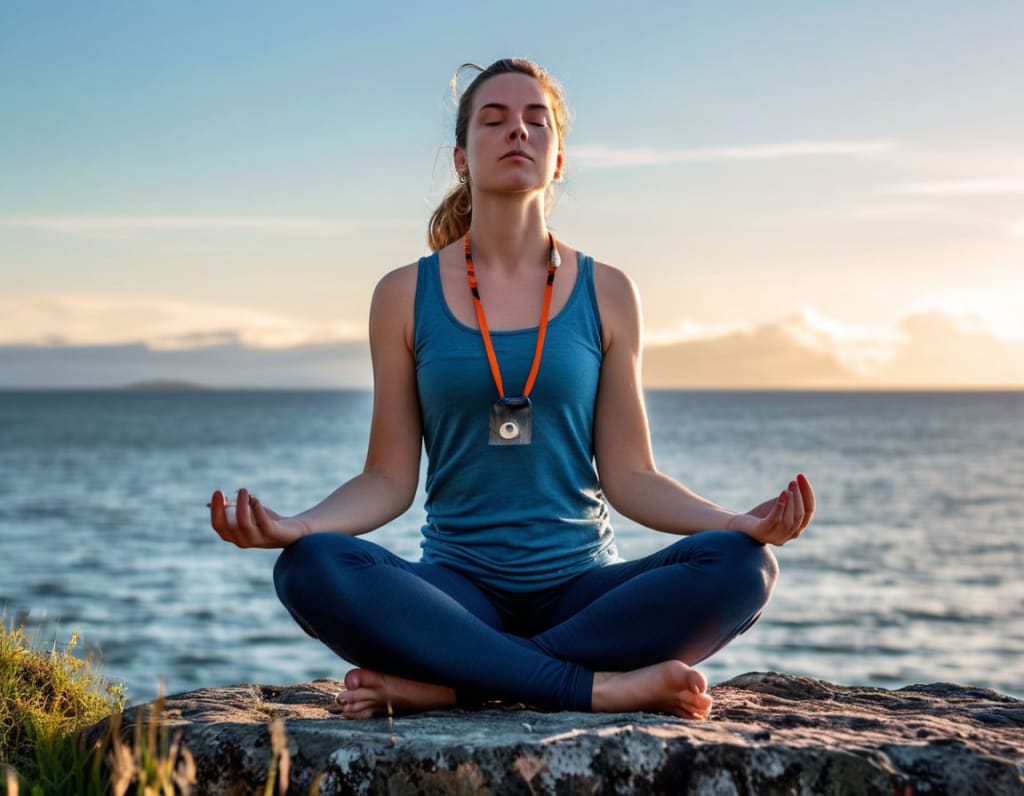
The breath is the most ordinary rhythm of life, yet also the most extraordinary. It is with us from the moment we are born until the final exhale, often unnoticed in between. And yet, when we choose to pay attention, the breath becomes more than a biological function—it becomes a steady anchor, a tool of mindfulness, and a pathway to calm.
Breathing, unlike most bodily processes, sits at the crossroads of the voluntary and involuntary. We cannot force our heartbeat to slow, but we can slow our breathing—and in doing so, influence the heartbeat, nervous system, and even the mind. This simple fact makes the breath one of the most accessible and powerful tools for meditation.
The Breath as Anchor
In mindfulness practice, the breath is often described as an anchor. Just as a ship’s anchor holds it steady amid currents and winds, the breath holds our awareness steady amid the turbulence of thoughts and emotions. By returning to the simple sensations of inhaling and exhaling, we find a way back to the present.
It doesn’t matter if the mind wanders—because it will. The point is not to stop thinking but to notice when attention drifts and gently bring it back to the breath. Each return strengthens awareness, much like each repetition strengthens a muscle.
Physiology Meets Presence
Modern science confirms what ancient traditions have taught for centuries: breathing shapes our state of being. Slow, deep breaths activate the parasympathetic nervous system—the body’s natural “rest and digest” mode—reducing heart rate, lowering stress hormones, and calming the mind.
On the other hand, rapid, shallow breaths can trigger anxiety and the fight-or-flight response. This feedback loop between breathing and emotions means we don’t have to wait for calm to come to us. We can invite it, inhale by inhale.
By learning to observe the breath, we begin to recognize its patterns: quick when we’re anxious, shallow when distracted, deep when relaxed. The breath becomes a mirror, showing us the state of the mind and body in real time.
A Simple Practice
Here is a short exercise to experience breath as a mindfulness tool:
Sit comfortably, allowing the spine to be upright but relaxed.
Close your eyes or soften your gaze.
Bring attention to the natural breath—without changing it at first. Notice the coolness of the inhale, the warmth of the exhale.
After a minute, begin to slightly lengthen the exhalation, making it a little slower than the inhalation.
Stay with this rhythm for several minutes, allowing the breath to guide you into calm.
This practice doesn’t require special conditions or long sessions. Even two minutes of focused breathing can shift the quality of a moment.
Integrating Breath into Daily Life
Mindful breathing doesn’t have to be confined to formal meditation. It can weave through daily routines, offering pockets of stillness amid activity:
At your desk. Before answering an email, take three mindful breaths.
In traffic. When impatience rises, turn a red light into a breathing pause.
During conversation. Notice your breathing as you listen, grounding yourself in presence.
Before sleep. Use slow exhalations to ease the body into rest.
By turning these moments into opportunities, we train the mind to associate ordinary life with mindful presence.
Beyond Technique: The Breath as Teacher
Over time, the breath stops being just a technique and becomes a teacher. It shows us impermanence—each breath arising and passing, never to be repeated. It shows us non-attachment—we cannot hold on to the inhale, nor can we resist the exhale. And it shows us patience—the rhythm continues without rush, no matter how fast the mind spins.
Resources like Meditation Life
provide guidance on expanding these insights into a deeper meditation practice, helping beginners and experienced practitioners alike anchor more fully in breath awareness.
The Power of Returning
Mindful breathing is not about achieving a special state but about remembering what is always here. The breath has been steady in the background of every moment, waiting for us to notice. Each time we return to it, we step out of distraction and into presence.
Like waves against the shore, the breath keeps coming and going—our role is simply to meet it with awareness.
A Lifelong Companion
The beauty of breath awareness is its simplicity and accessibility. You don’t need silence, incense, or hours of free time. You only need the willingness to pause and feel the inhale, the exhale, and the space between.
By turning the breath into a mindfulness tool, we transform the ordinary into the sacred. We discover calm not by escaping life but by fully inhabiting it, one breath at a time.
About the Creator
Keep reading
More stories from Black Mark and writers in Longevity and other communities.
Mapping Emotion: Where Feelings Live in the Body
Emotions are not abstract phenomena floating somewhere in the mind—they are deeply embodied experiences. Anxiety tightens the chest, sadness weighs on the shoulders, anger churns in the stomach. Yet many of us go through life disconnected from these bodily signals, labeling emotions mentally while missing the subtle ways they are stored and expressed in the body. Learning to map emotion in the body is a foundational skill in mindfulness and somatic practices, opening the door to self-awareness, regulation, and emotional resilience.
By Black Mark6 months ago in Longevity
Amazon Savings Secrets for Disabled & Chronically Ill Shoppers
Disabled and chronically ill people often pay more for basic life: delivery fees, specialty items, replacements for things that break faster, and the constant “convenience tax” of needing things shipped because stores aren’t accessible.
By Tracy Stine3 days ago in Longevity
Tatt~Master
— Assembly Line Tatt Machine ~ Impressions to Impress — As I begin to understand more about the Tattoo Phenomenon. I've written silly, yet verbatim, dating site anecdotes in 'Frazzled.' So let me ask you: Would you be More attracted to someone slathered with tattoos, or Less?
By Jay Kantor5 days ago in Humor


Comments
There are no comments for this story
Be the first to respond and start the conversation.