

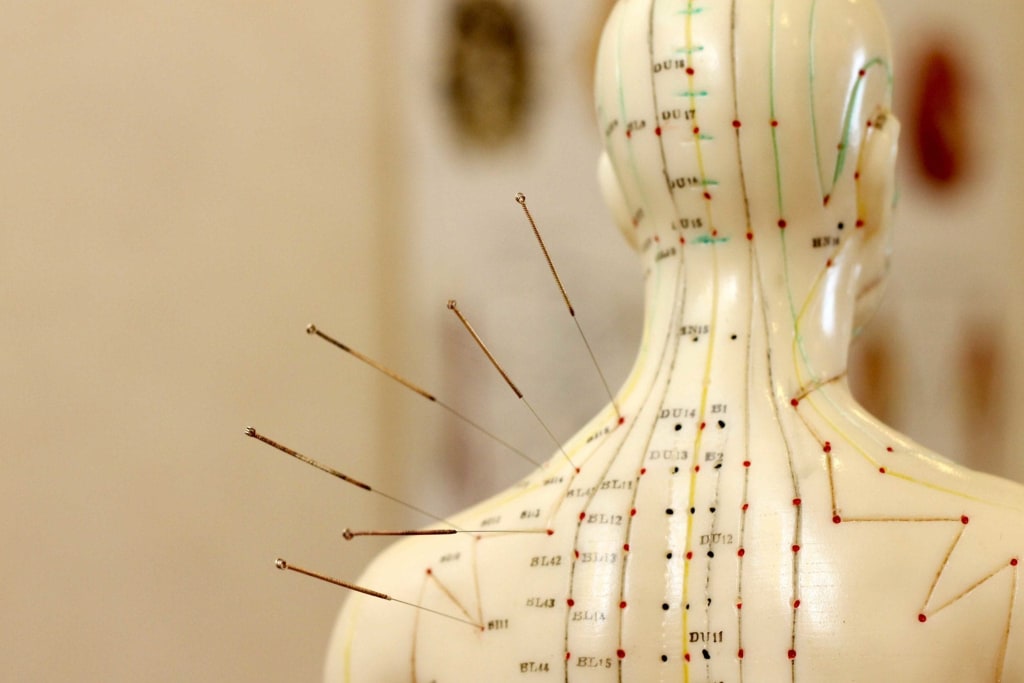
Acupuncture is a technique that is used to stimulate specific points on your body. This is often done by inserting tiny needles through your skin. Acupuncture is one of the top practices in traditional Chinese Medicine. Acupuncture has been shown to be effective in relieving pain.
Acupuncture and Pain Management
Acupuncture has gained popularity in the United States in recent years. There has been a significant increase in the estimated number of visits to alternative medicine practitioners, including acupuncture practitioners, which has exceeded the total visits to primary care providers. The growing interest in alternative medicine including acupuncture may be in part due to the lack of satisfactory results to conventional medicine for certain medical conditions, including pain.
Pain is probably the biggest reason patients seek medical attention. Pain is a chief complaint in numerous disorders that cause difficulty in an individual’s daily activities and functions. Analgesics, also known as pain killers, can help relieve some pain but individual sensitivity to pain and individual response to pharmaceuticals can vary among patients. A common analgesic, morphine, has pain relieving qualities but some patients experience inadequate pain relief and demand an increased dosage or suffer from significant side effects.
Pain is a major health problem that can cause serious social and economic consequences. The average annual cost of pain management in the United States in 2010 was $560-635 billion but does not include the cost of pain management affecting institutionalized individuals.
Acupuncture has a long history in traditional medicine and has been shown to be effective in pain management. There are multiple techniques that can provide pain management for many individuals including the use of standard acupuncture points on the extremities, the scalp, and the ear. Acupuncture is the stimulation of specific acupoints on the body using acupuncture needles and is used to relieve persistent pain. There is an important feature of acupuncture and that is there are chosen acupoints that are used to reflect a patient's individual characteristics.
One of the advantages of acupuncture over medications is that the effect is more specific to pain management without many other unintended consequences produced by the currently available pharmaceuticals.
Acupuncture points were discovered by comparing given pathology to referred “ashi” or sore points according to Chinese Medicine. A theory, called the Melzack & Wall Gate Control Theory, states that puncturing the skin with acupuncture needles introduces foreign bodies to enter subcutaneously. This stimulus causes an immune response to various locations which accounts for the lymphatic system’s role in pain management. There is also a Hilton’s Law that states that stimulating skin nerves at joints causes affects deeper in the joints itself. This theory
Applies to acupuncture points when the needles are placed at or around pain points. These points serve to transmit nerve impulses deep beneath the skin giving a therapeutic effect, including pain relief.
Dr. Miltiades Karavis states, “We can explain the action of acupuncture in acute and chronic pain syndromes, in addiction, and in psychiatric disease through the role of central neurotransmitters and the modulatory systems that are activated by acupoints: opioid, non-opioid and central sympathetic inhibitory mechanisms.”
Research proves there is evidence for acupuncture’s ability to produce pain relief in relation to the central nervous system and the cardiovascular system. Terry Oleson, PhD, explains that acupuncture alters the sense of touch, which also alters feeling by its effect on “somatosensory sympathetic, or somatovisceral reflexes, improves circulation, yielding pain management. He also states, “if acupuncture is not real, then it should not affect the nervous system, excite the nucleus tractus solitaries to inhibit sympathetic tone, release endorphins, or work with periaqueductal gray -- all of which acupuncture does play a role in.”
About the Creator
Keep reading
More stories from Shannon hustead and writers in Longevity and other communities.
Advance Directives
Health care advance directives are documents the communicate a person's wishes about health care decisions in the event that the person becomes incapable of making health care decisions for themselves. There are two basic kinds of advance directives: living wills and durable power of attorney of health care. These documents have legal and ethical basis, and they should be followed unless legally or ethically unable to do so.
By Shannon hustead5 years ago in Longevity
How Trackless Mining Equipment Suppliers in China Operate in 2026
When searching for reliable trackless mining equipment manufacturers in China, the options get overwhelming fast. You jump on a supplier portal and suddenly see thousands of identical looking machines. Buying heavy machinery for a mine is not like ordering basic office supplies. If a loader breaks down three miles underground, the whole production schedule stops immediately. The financial hit is massive. Finding the right factory matters a lot more than just getting a cheap price tag on a shiny new vehicle.
By CEO A&S Developersabout 7 hours ago in Longevity
A Transparent Look at Vocal Challenges and Top Stories
Almost three years ago, we shared a resource article that served as a place for people to suggest new challenge prompts. We thought it would be a good idea to refresh that thread, and take the opportunity to answer a few common questions about top stories, how challenges are judged and how submissions are reviewed.
By Vocal Curation Teama day ago in Resources



Comments
There are no comments for this story
Be the first to respond and start the conversation.