
A mark carved into the skin
When a symbol etches destiny

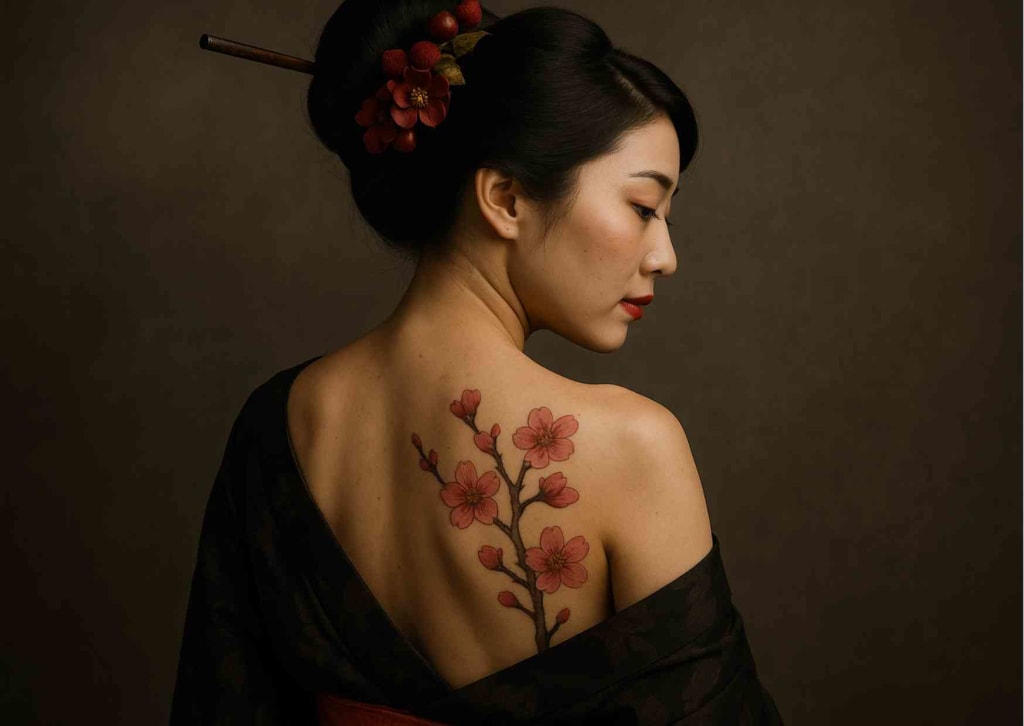
A few days ago, I watched a short video featuring a woman who claimed to be a "psychologist". She confidently stated that anyone who gets a tattoo must have a mental imbalance. According to her, getting tattooed is a clear sign of emotional instability, a desire to escape reality, and a need for attention. It made me think. Because not only are those statements superficial, they are also dangerously ignorant.
Tattoos have existed for thousands of years. They are not a modern invention, but rather an ancient call—a visual language that has always accompanied us. In Egypt, for example, the mummy of a tattooed woman was discovered; she is believed to have been a priestess or a sorceress. Those marks on her skin were certainly not the whim of a teenager, nor a sign of an unstable personality. On the contrary, they were sacred symbols—signs of belonging, protection, and power.
In ancient times, tattoos were not a right for everyone. They were a privilege. Ordinary people, in most cases, could not simply decide to mark their bodies. Tattoos were reserved for those who held specific roles: healers, shamans, sacred dancers, warriors, and figures of spiritual or social importance. It was a magical act. A ritual. A consecration. Tattooing meant imprinting destiny onto the skin, invoking protection, and establishing a bond with invisible forces.
So one has to wonder: why do so many people today still feel the need to get tattooed? Perhaps because, on an archetypal level, something inside us remembers. We are ancient souls. And even if we don’t consciously know it, we may carry within us the echo of past lives where those marks held deep meaning. The desire to carve symbols into the body may not be an act of rebellion or imbalance, but rather a need for protection, growth, or connection with who we once were.
For those who truly feel it, a tattoo is a declaration to the world. Not just aesthetic—but existential. It’s a way of saying: "This is who I am. This is my symbol. This is my past, my intention, my path".
To think that tattoos are merely an exhibitionist trend is reductive. History shows us otherwise. Most ancient tattoos were not frivolous. They carried profound meanings—of belonging, initiation, healing, protection, power. And even today, in some cases, they still hold transformative power. A tattoo can change your life. Forever. For better or worse.
I know true stories:
• A young businessman tattooed a symbol related to India on his body. He chose it without thinking too much—he just liked it. Soon after, he began feeling an increasing dissatisfaction with his lifestyle. He left everything behind and moved to India, where he became a kind of lay monk. Would he have made that choice without the tattoo? Who knows.
• A woman, deeply in love with her partner, tattooed a runic formula on her body to stay with him “forever.” That same day, they died together in a car accident on their way to dinner—remaining, in a sense, together forever.
• An acquaintance of mine tattooed an Egyptian Eye on the back of her neck to “ward off betrayal.” In the following weeks, she lost three false “friends,” and completely changed her social circle.
All these cases, dramatic or not, show one thing: a tattoo is a powerful act. Sometimes it’s a portal. Sometimes a seal. Sometimes a declaration. But never just a drawing.
Tattoos have always been part of human ritual. Carving a symbol into the skin is a declaration to the Universe: this is my will, this is my desire, this is my status symbol. It is not something to take lightly.
Because the Universe listens. Always. And it doesn’t understand irony. That wish to be with someone “forever” might be taken literally. So we must be careful—about what we wish for, and what we do. Tattoos are no exception. They are marks. Seals. Declarations. And they are carried out as such—even when we don’t fully understand their true meaning.
So, should we all rush to get a tattoo to reach our goals, declare our identity, or feel protected? No. It’s not necessary. But if the desire is strong—if it persists over time and feels like a calling—then it’s worth pausing to reflect:
- Why do I want this tattoo?
- What am I trying to declare to the world?
- What message am I sending to myself?
Going back to that “psychologist”, I’d say that before labeling people, one should really study the subject. Otherwise, you risk harming someone instead of helping. Not everyone who gets a tattoo is emotionally unstable, just like not everyone who calls themselves a psychologist is a true professional. Those who choose to tattoo themselves have their reasons—sometimes even unknown to themselves. And those who choose to keep their skin untouched have their reasons too. Fortunately, we are free to choose.
A tattoo is forever. Not only on the skin, but also in our energy. And if chosen with awareness, it can bring great benefit—but if chosen carelessly, it may also bring consequences you never expected.
If you'd like to go deeper, read the article dedicated to the meanings of the most popular tattoos—both male and female. You’ll discover how some symbols have ancient and surprising roots.
Do you have a tattoo? Share your story with me. What led you to choose that specific symbol? What does it mean to you? Write in the comments—it will be a pleasure to read your experience.
#tattoos #symbols #archetypalpsychology #ancientsouls #magic #sacredtattoo #spirituality #consciouschoices #truestories #selfawareness #tattooisforever
About the Creator
Halina Piekarska (UltraBeauty Blog)
Blogger, writer, and illustrator, I share stories, reflections, and practical tips on psychology, well-being, and natural beauty. I believe that learning never stops, and I strive to enrich readers’ lives with knowledge and inspiration.
Keep reading
More stories from Halina Piekarska (UltraBeauty Blog) and writers in Longevity and other communities.
Premonitions Save Your Life
On December 26, 2004, one of the most devastating tsunamis in history struck South Asia. But before the waves arrived, local authorities reported elephants fleeing inland, and dogs and birds moving away from the coasts.
By Halina Piekarska (UltraBeauty Blog)9 months ago in Longevity
Professional Balance Coaching: Training the Nervous System for Lifelong Stability
Balance is often misunderstood. When stability declines, the default response is to build stronger legs or improve flexibility. While those strategies can help, they overlook a more important factor: balance is primarily governed by the central nervous system.
By AhmedFitLife6 days ago in Longevity
Uncertainty
Uncertainty Is a dull life good for you? An ancient Chinese sage is reported to have stated that the only constant in the universe is change. That is interpreted as meaning the natural flows of seasons and evolution have to be accepted, followed and supported. There is also the fact that all change comes at a “cost”. The expenditure of effort of some sort must be made in order for change to happen. This cost may not be met by those benefiting from the change.
By Peter Rose7 days ago in Longevity



Comments
There are no comments for this story
Be the first to respond and start the conversation.