
8 Ways to Treat Uterine Fibroids
If you have painful fibroids or other irritating symptoms, you should be aware that there are numerous treatments available for uterine fibroids.


If you have painful fibroids or other irritating symptoms, you should be aware that there are numerous treatments available for uterine fibroids. The optimal treatment for fibroids will be determined by your symptoms and other circumstances, such as whether you have entered menopause or intend to become pregnant in the future.
Here are some common uterine fibroids treatment options:
Watchful Waiting
If you have uterine fibroids but have no or only moderate symptoms, you can do nothing while monitoring for changes.
This is a common method when approaching or after menopause. Increased estrogen can cause fibroid growth; in many cases, fibroids disappear as estrogen levels fall.
If you wish to get pregnant and the fibroid does not appear to be interfering with it, you can try watchful waiting.
Diet and Lifestyle Changes
Some lifestyle adjustments may be worth considering. According to certain research, lifestyle factors such as a good diet and frequent exercise can help prevent fibroids.
Estrogen influences fibroids, and fat cells create estrogen. Having less excess body fat may consequently help with fibroid symptoms.
GnRH Agonists
If cautious waiting and lifestyle modifications are not an option for you, your doctor may recommend hormone drugs to help reduce symptoms and shrink fibroids.
Several of these drugs, including leuprolide (Lupron), are gonadotropin-releasing hormone (GnRH) agonists. They function by inhibiting hormone synthesis.
This causes the fibroids to shrink, alleviating uterine fibroid symptoms such as:
- Needing to urinate frequently
- Heavy bleeding
- Pelvic pain
Reducing bleeding is particularly essential for lowering your risk of anemia.
Hormonal Medications
Hormonal contraceptives are another option for managing uterine fibroid symptoms. They will not necessarily shrink uterine fibroids, but they may help regulate periods or lessen severe bleeding.
Non-Hormonal Medications
Tranexamic acid (Lysteda) is a non-hormonal alternative that can help with excessive bleeding.
Nonsteroidal anti-inflammatory medicines (NSAIDs), such as ibuprofen, can relieve fibroid pain but will not shrink its size.
MRI-Guided Focused Ultrasound
During this non-surgical procedure, healthcare experts utilize a magnetic resonance imaging (MRI) machine to find your uterine fibroids before zapping them with high-frequency ultrasound. It is considered a permanent technique to remove or reduce the size of fibroids.
The actual technique is painless and non-invasive. It is done with an MRI machine, and you may usually return home the same day.
Using MRI-guided focused ultrasound to treat uterine fibroids looks to be safe, even if you still desire to become pregnant. Research is ongoing to determine whether there are any concerns of adverse consequences.
Uterine Artery Embolization
This treatment, also known as uterine fibroid embolization, physically drains fibroids' lifeblood. Embolization can prevent blood flow to the fibroids, which causes them to shrink and die.
A healthcare provider will administer small particles into the arteries that feed blood to the fibroids. The particles block any blood attempting to reach the uterine fibroid. Uterine artery embolization can be performed as an inpatient (in a hospital) or outpatient (without hospitalization).
Embolization is typically an option if uterine fibroids are causing excessive bleeding, but it is not recommended if you intend to become pregnant.
Hysterectomy
Fibroids are a common reason for having a hysterectomy, which is a medical surgery that removes the uterus. This is a permanent surgery that often resolves excessive menstrual flow and other fibroid-related symptoms.
The surgery is often reserved for women approaching or past menopause who have big uterine fibroids and severe bleeding.
However, it may be the preferable therapeutic option for other patients. If a woman has a family history of ovarian or endometrial cancer, she may not be an ideal candidate for a uterine-sparing treatment.
Healthcare practitioners may choose to remove only the uterus, part of the uterus, or both the ovaries and fallopian tubes. The ovaries and cervix are frequently kept in place when performing fibroid surgery. Removing the uterus means you will be unable to bear children. Having your ovaries removed causes you to enter menopause.
Hysterectomy procedures include making incisions in the abdomen or vagina, as well as laparoscopy, which involves inserting a thin telescope (laparoscope) via small incisions in the belly.
A hysterectomy is considered a major procedure. Risks associated with any major procedure include bleeding, blood clots, and infection.
About the Creator
Amelia Grant
I am journalist, and blogger.
Keep reading
More stories from Amelia Grant and writers in Longevity and other communities.
The Causes and Treatment of Genital Warts
Genital warts, also known as condyloma acuminate, are caused by infection with the human papillomavirus (HPV), which has over 40 different strains, through direct contact with the mucous membranes of a person who carries them, such as sexual contact or transmission from mother to child during natural childbirth.
By Amelia Grantabout a year ago in Longevity
Day 4 of Quitting
If this is how sobriety feels, maybe it’s better to go through life a little buzzed… this, along with other hits like, I want to kill myself, I wish I was dead, and I’m going to throw myself off a bridge have been the only thoughts on rotation these past few days. I promise myself that if, in a month, I still feel like this (‘this’ meaning despondent, full of rage, and simultaneously numb) I can go back to smoking. Until mid-February though? Nicotine is off the table.
By sleepy drafts8 days ago in Longevity
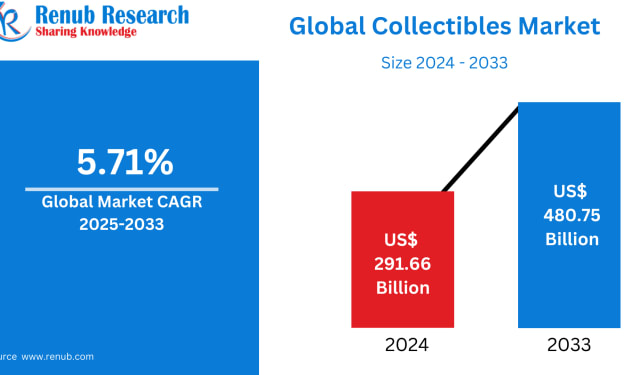
Collectibles Market Size and Forecast 2025–2033
Collectibles Market Outlook 2025–2033 The global Collectibles Market is expected to reach US$ 480.75 billion by 2033, expanding from US$ 291.66 billion in 2024, at a CAGR of 5.71% from 2025 to 2033. This steady rise reflects a powerful convergence of emotional value, investment potential, and technological innovation. From fine art and rare coins to trading cards, pop culture memorabilia, and digital collectibles, the industry continues to broaden its appeal across age groups, geographies, and income levels.
By Renub Research2 days ago in Longevity



Comments
There are no comments for this story
Be the first to respond and start the conversation.