
4-5 peanuts a day can reduce the risk of stroke?
What are the other benefits of peanuts?

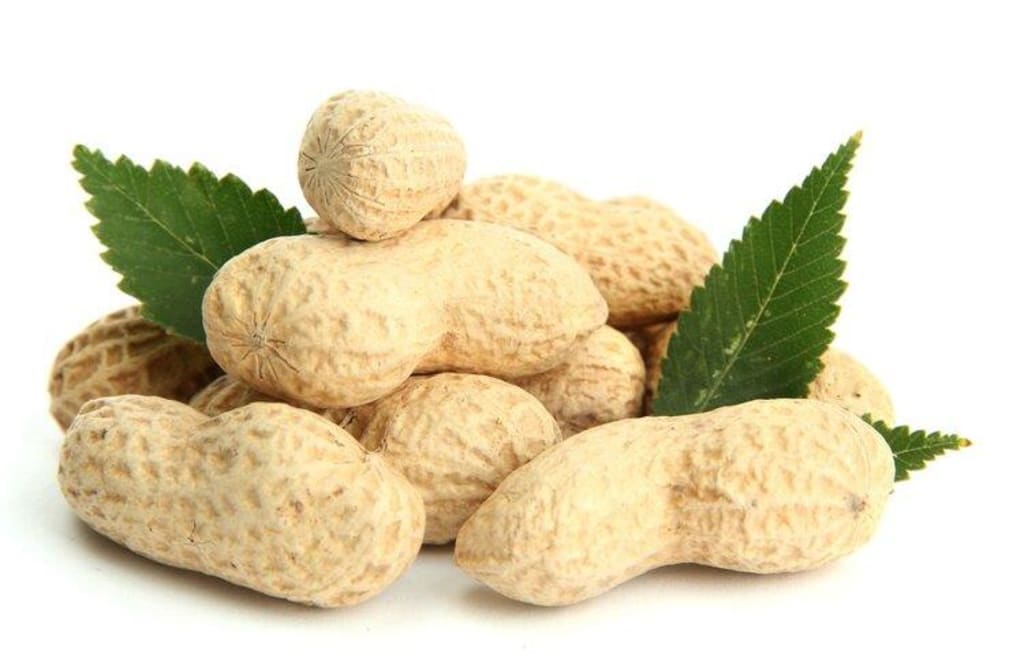
Peanuts are very cost-effective nuts, not only with high nutritional value but also relatively inexpensive, in many homes kitchen appearances are very high. There is anecdotal evidence that eating peanuts also help reduce the risk of cardiovascular disease, eating peanuts have amazing effects?
A U.S. study: eating 4-5 peanuts a day is associated with a reduced risk of stroke and cardiovascular disease
The American Heart Association's journal "Stroke" published a study in, which researchers conducted a statistical analysis of 74,793 subjects, and a follow-up survey of up to 15 years, the results found that compared to the usual peanut intake of 0 people, the average daily eating 4, 5 peanuts subjects, the risk of stroke, cardiovascular disease on the smaller.
Specifically, compared to subjects who did not eat peanuts, those who ate 4-5 peanuts a day had a 20% lower risk of ischemic stroke, a 16% lower risk of stroke, and a 13% lower risk of cardiovascular disease.
Researchers analyzed that this may be because peanuts contain some substances like unsaturated fatty acids, dietary fiber, vitamin E, and other substances that are good for cardiovascular health, which are good for controlling blood sugar, lowering blood pressure, improving blood lipids, and inhibiting inflammation.
However, this study itself also has certain limitations, did not take into account the processing of peanuts, and peanut consumption is mainly dependent on the subject's recall, these limitations themselves will also affect the results of the study. Therefore, we also need to rationalize the role of peanuts in this regard, not to "deify" it.
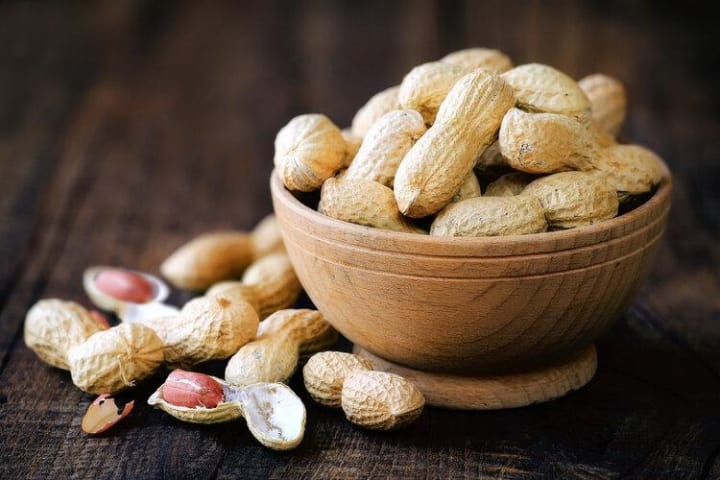
Second, peanuts are known as the "longevity fruit", but there are 2 false roles
Peanuts have the title of "longevity fruit", not only rich in protein, and the lysine content is also very high, but also rich in potassium, magnesium, calcium, iron, zinc, and other minerals, as well as vitamin B, vitamin E, and so on.
Among the many studies, peanuts have been proven to have health benefits such as
1, improve cognitive ability
A study published in Clinical Nutrition noted the benefits of eating peanuts for both cognitive function and stress response in young adults. Researchers analyzed that the reason why peanut consumption is beneficial to young people's cognitive function is mainly related to the elevated levels of short-chain fatty acids and the intake of polyphenolic compounds. Polyphenolic compounds can enhance the expression of brain-derived neurotrophic factors, and short-chain fatty acids for the prevention of depression and other mental illnesses are effective.
2、Regulate blood lipids
Peanuts contain choline, unsaturated fatty acids, phospholipids, and other components that can help emulsify cholesterol and protect the health of human blood vessels.
3, strengthen the spleen and stomach
Raw peanuts are rich in protein and fat, can neutralize stomach acid, relieve stomach acid, and abdominal pain, etc. have a certain effect. However, it should be noted that eating large amounts of peanuts can also easily cause indigestion, so you should control the amount of consumption.
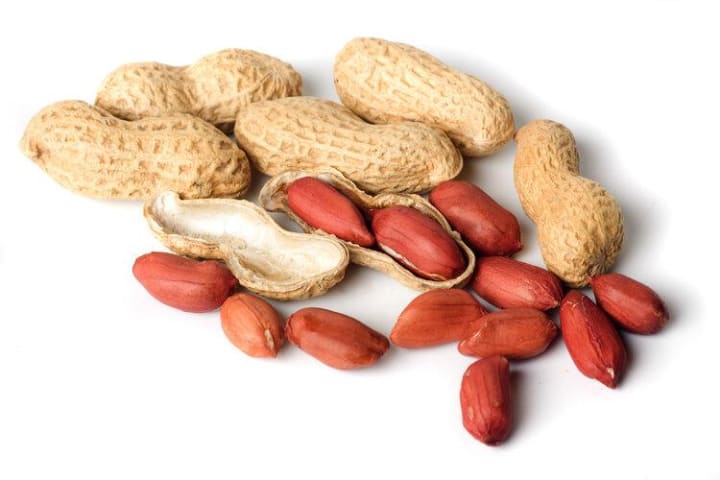
But be aware that there is two common knowledge about the effectiveness of peanuts that may be wrong.
Peanuts do not lower blood pressure
Trying to lower blood pressure directly through food such as peanuts the efficacy is very limited, one may need to eat tons of peanuts to play the so-called blood pressure-lowering effect. Therefore, instead of expecting peanuts to lower blood pressure, it is better to eat less high-salt foods to do a good job of preventing hypertension.
Peanuts can not replenish blood
Some people think that peanuts can replenish blood, but, the human body's blood production, the need to have vitamin B12, folic acid, iron, and other nutrients involved in cooperation, and peanuts rarely or do not contain these substances, so rely on peanuts to replenish blood is not realistic.
Third, eat peanuts to avoid the 3 risks, you can eat with confidence
Peanut food value is certainly very high, but eating peanuts must avoid the following three risks, so as not to consume improperly instead of health.
1, aflatoxin
Moldy, mildewed peanuts will produce aflatoxin, this toxin is very toxic, and classified by the World Health Organization as a class of carcinogens, frequent consumption of moldy peanuts may induce liver cancer, may also be poisoned, cause intellectual defects, stunt children, and other consequences.
2, allergies
Peanuts may also induce allergies, In the United States every year there are a hundred people in shock due to peanut allergies, although most people do not produce too serious allergic symptoms to peanuts, it is advisable to eat less.
3, inflammation
Peanuts contain high oil, and Omega-6 fatty acid content is also very high, too much intake of this component may cause chronic inflammation, and even induce other diseases.
Consumption of peanuts must pay attention the appropriate amount, "Chinese Dietary Guidelines" recommends that the daily intake of nuts, including peanuts, is best controlled at about 10 grams, that is, about 12 peanuts, should not be consumed in excess.
The diabetic patients, patients with cholecystitis, people with indigestion, gout patients, patients with hyperlipoproteinemia, patients with chronic gastroenteritis, and other special groups, it is best not to touch or eat fewer peanuts.
As a cost-effective food, the benefits of moderate consumption of peanuts are there, but it is recommended to eat peanuts normally, to stay away from moldy peanuts, be careful to trigger allergies and inflammation, etc., to master the amount of consumption, healthy people in moderation is appropriate, special populations eat as little as possible.
About the Creator
Husayko Reynold
Nothing was too hard for him-my laughter, my hunger, my stubbornness, my ramblings, everything.
Keep reading
More stories from Husayko Reynold and writers in Longevity and other communities.
The day turns cooler to induce acute heart failure
When you have been diagnosed with cardiovascular diseases, such as coronary heart disease, hypertension, arrhythmia, etc., do not have to be too nervous and talk about the tiger, but even more so, you should not be lucky and light. Because, if heart disease is not effectively treated and controlled, it may eventually lead to changes in the structure and function of the heart, causing heart enlargement, myocardial diastolic and systolic function to be weakened, and heart failure (heart failure) to occur.
By Husayko Reynold3 years ago in Longevity
Day 4 of Quitting
If this is how sobriety feels, maybe it’s better to go through life a little buzzed… this, along with other hits like, I want to kill myself, I wish I was dead, and I’m going to throw myself off a bridge have been the only thoughts on rotation these past few days. I promise myself that if, in a month, I still feel like this (‘this’ meaning despondent, full of rage, and simultaneously numb) I can go back to smoking. Until mid-February though? Nicotine is off the table.
By sleepy drafts18 days ago in Longevity
The Titanic's Final Moments Have Been Recreated With Supercomputer Precision
More than a century after the Titanic sank in the icy waters of the North Atlantic, researchers are using cutting-edge technology to understand its final, tragic moments. For the first time, supercomputers have been employed to recreate the ship’s sinking with unprecedented precision, offering new insights into what happened during those harrowing hours.
By Fiaz Ahmed 4 days ago in Longevity




Comments
There are no comments for this story
Be the first to respond and start the conversation.