
10 Physical Signs That You're Eating Badly
The body sends signals in illness when something is not correct. And the origin of these problems can be in the diet.


I have a question for you: How do you think your diet is doing?
Nowadays, it is customary to observe people eating poorly everywhere on the planet. Processed foods, fried foods, and other goodies are really tempting, but this brings some problems to our bodies.
The fact is that most people don't know how to identify the right moment to take a break from bad foods. However, our body warns us when something wrong is happening with our diet.
And below are the most common problems presented by our body when participating in a bad diet.
1. TIREDNESS.
This is one of the main consequences of a bad diet, and it occurs due to an unbalanced diet. Silvia Moreno, the nutritionist at Arkopharma Laboratories, highlights two reasons: "The lack of iron and vitamins, especially those of group B, are frequent causes." But it's not just the lack of intake that causes the exhaustion: the excess too. In the words of Alejandro Cánovas, dietitian-nutritionist at the Royal Hideaway Sancti Petri hotel: "When we consume much more fat than necessary, which takes time to digest, our body works hard. So we should bet on fruits and vegetables that are easy to digest."
2. ACNE.
Although the consumption of foods rich in fat has been associated with the appearance of pimples for many years, there is no scientific evidence to prove it. Studies point out that milk is one of the causes, which is believed to be due to the IGF-1 hormone present in it. "It must be clarified that the main cause is hormonal, but foods such as milk and those that contain a lot of sugar can favor its appearance," says Moreno, nutritionist at Arkopharma Laboratories. Cheese and yogurt lovers are in luck: Research has excluded them from the equation, and they don't cause these rashes.
3. BAD BREATH.
Although, as Dentix dental clinics indicate, halitosis can be caused by numerous factors (some of them: poor oral and dental hygiene, cavities, gingivitis, stress), diet can also be at the origin. For example, unwanted breath can signify inadequate hydration and foods that form foul-smelling vapors during digestion, such as garlic, onions, broccoli, pickles, Brussels sprouts, coffee, and alcohol.
4. BELLY BOUNDARY.
"The most frequent cause of its appearance is the lack of fiber in the diet," warns Moreno. Fiber is found in fruit, dried fruit, vegetables, and cereal grains, especially whole grains. Sufficient water consumption also helps regulate intestinal transit.
5. BRICKLE HAIR.
Hair breaking easily when combing it and falling out more than usual usually indicates a lack of protein. Cánovas talks about a vitamin in particular related to alopecia: biotin. Its deficiency should be a cause for concern, as it is found in numerous foods. "It can be obtained in wholegrain products (quinoa, oats, wheat, rye, barley), in fish, in egg yolks, and in brewer's yeast," says the professional.
6. CLEAN SKIN.
"Diet can affect skin color and hydration level," says Moreno. "We should drink enough water for adequate hydration and increase the consumption of foods with beta-carotene: carrots, apricots, peppers, pumpkin...)."
7. FREQUENT COLDS.
Our mothers used to say: drink orange juice every morning. "Although there is no unanimity on whether vitamin C prevents the onset of colds, it is important to take the appropriate doses (citrus, acerola)," says the laboratory specialist.
8. EXCESS SWEAT.
Like acne, nutrition is not the leading cause of profuse sweating. Instead, genes and certain diseases are often behind this problem. But certain foods can induce it. "Scorching and spicy foods, as well as caffeine and alcohol, should be excluded from the diet."
9. SMALL BELLY.
"There are several reasons: processed products, carbonated soft drinks that contain a lot of gas, and beer are among them," says Cánovas. An accumulation of gas in the large intestine swells the belly. "Bad habits in swallowing, such as eating quickly and exaggerating the amount, make you swallow air," adds Moreno. It can also occur due to lactose and gluten intolerance, so it is advisable to go to the doctor if the swelling persists after eliminating the foods mentioned.
10. IRRITABILITY.
Food and mood are closely related. "Diets, which restrict many foods to what we are used to and even become addicted to, generate negative feelings," says Moreno. But without the need for strict regimens, a lousy routine can affect. "It causes an imbalance in the person's appetite, which brings more stress and anxiety. For example, a choice is made for processed and high-sugar foods that generate a short-term peak of happiness, but the person immediately feels hungry again. It also influences guilt for overeating out of time and unhealthy options," says Cánovas. Moreno's recommendation: consume foods rich in tryptophan, such as chicken and bananas, an essential amino acid for the synthesis of melatonin that regulates sleep and makes us happier.
Thanks for reading. Have a great day!
About the Creator
Marco Antonio
A entusiat and fanatic for movies of action, romance, fiction and much more. I hope that you like my posts.
Thanks so much!!
Keep reading
More stories from Marco Antonio and writers in Longevity and other communities.
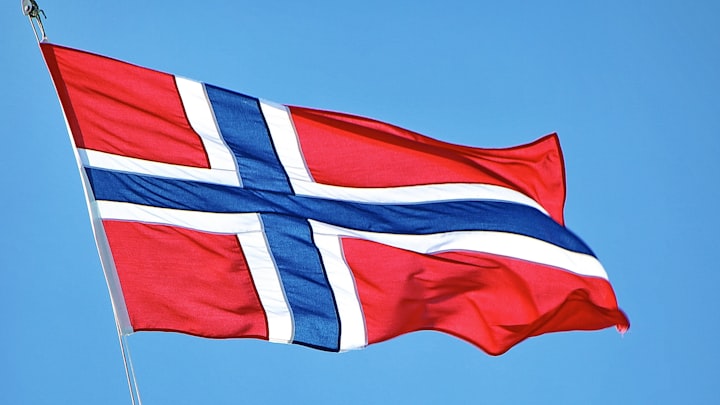
'Kos,' the Norwegian Philosophy To Be Happy That You Need to Share With Others
Trending topic. Few fashions have time to mature, to evolve. The Scandinavian model is an exception. It doesn't matter if you're Danish, Norwegian, or Swedish. Still, the way you understand it in Scandinavia has continued to amaze you for more than half a century wherever any of your companies landed, however small.
By Marco Antonio5 years ago in Longevity
Day 4 of Quitting
If this is how sobriety feels, maybe it’s better to go through life a little buzzed… this, along with other hits like, I want to kill myself, I wish I was dead, and I’m going to throw myself off a bridge have been the only thoughts on rotation these past few days. I promise myself that if, in a month, I still feel like this (‘this’ meaning despondent, full of rage, and simultaneously numb) I can go back to smoking. Until mid-February though? Nicotine is off the table.
By sleepy drafts6 days ago in Longevity
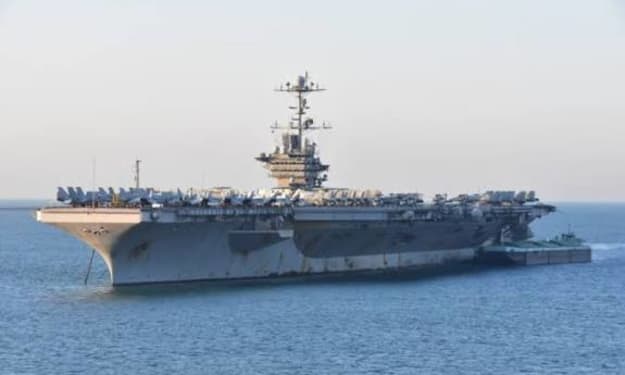
The Return of the Aircraft Carrier Truman Is Being Seen as a Snub to the Navy in the War of the Future
The return of the U.S. aircraft carrier USS Harry S. Truman to active deployment has sparked debate far beyond naval circles. While some see it as a show of enduring American naval power, others interpret the move as a symbolic snub—particularly in the context of how modern warfare is rapidly evolving. In an era dominated by drones, cyber warfare, hypersonic missiles, and artificial intelligence, the decision to once again lean heavily on a traditional aircraft carrier has raised uncomfortable questions about whether the Navy is preparing for the wars of tomorrow or clinging to the strategies of yesterday. A Floating Symbol of 20th-Century Power For decades, aircraft carriers have been the ultimate symbol of U.S. military dominance. These massive floating airbases project power thousands of miles from American shores and allow the U.S. to strike almost anywhere in the world. The Truman, like other Nimitz-class carriers, represents this legacy—housing nearly 5,000 sailors, dozens of fighter jets, and unmatched logistical capability. However, critics argue that what once made carriers indispensable now makes them vulnerable. Their sheer size, cost, and visibility turn them into high-value targets in a battlefield increasingly defined by precision strikes and long-range weapons. The “War of the Future” Looks Very Different Modern conflict is no longer limited to sea, land, and air. Cyber attacks can cripple infrastructure without a single shot fired. Drones can swarm targets at a fraction of the cost of traditional aircraft. Hypersonic missiles can reach targets faster than current defenses can respond. In this context, sending a massive carrier strike group into contested waters can appear less like a strategic necessity and more like a risky gamble. Critics argue that the return of the Truman reflects an outdated mindset—one that prioritizes visible force projection over adaptability and technological evolution. A Snub to Naval Innovation? Many analysts and serving officers believe the Navy’s future lies in distributed lethality—smaller, more agile platforms networked together, harder to detect and cheaper to replace. Unmanned surface vessels, autonomous submarines, and land-based missile systems are increasingly viewed as the backbone of next-generation naval warfare. Against this backdrop, recommitting to a traditional carrier is seen by some as sidelining innovation. It sends a message that, despite years of discussion about transformation, the Navy still defaults to familiar tools when tensions rise. This perception has led to frustration among those advocating for faster modernization. They argue that resources devoted to maintaining and protecting carriers like the Truman could instead accelerate investment in emerging technologies that are more relevant to future conflicts. The Strategic Signal to Allies and Rivals Supporters of the decision counter that the Truman’s return is not about nostalgia—it’s about deterrence. Aircraft carriers remain powerful political tools. Their presence reassures allies, signals commitment, and demonstrates readiness in a way few other assets can. Yet even here, the message is mixed. To technologically advanced rivals, the deployment may signal predictability rather than strength. Adversaries have spent years developing strategies specifically designed to neutralize carriers, including anti-ship ballistic missiles and advanced surveillance systems. Cost Versus Capability The financial reality cannot be ignored. A single carrier strike group costs billions of dollars to build, maintain, and operate. In contrast, drone fleets and missile systems can be produced and deployed at a much lower cost, often with greater strategic flexibility. Critics argue that continuing to rely on carriers drains resources from areas where the Navy needs to grow most urgently. In a future conflict defined by speed, dispersion, and digital dominance, the cost-benefit equation of aircraft carriers looks increasingly questionable. Why the Carrier Still Matters—For Now Despite the criticism, aircraft carriers are not obsolete—yet. They remain unmatched in their ability to sustain prolonged air operations without relying on foreign bases. In regions where access is limited or politically sensitive, carriers still provide options no other platform can. The real issue, many experts say, is not the existence of carriers like the Truman, but over-reliance on them. Using them as one component of a broader, more flexible strategy may still make sense. Treating them as the centerpiece of future war planning may not. A Turning Point for Naval Strategy The return of the USS Harry S. Truman highlights a deeper tension within modern military thinking. It represents a crossroads between tradition and transformation, between proven power and emerging threats. Whether history views this moment as a wise assertion of strength or a missed opportunity for innovation will depend on what comes next. If the Navy pairs legacy platforms with bold technological change, the carrier’s return may be justified. If not, it risks becoming a powerful symbol—not of dominance, but of reluctance to adapt in a rapidly changing world.
By Fiazahmedbrohi a day ago in Longevity


Comments
There are no comments for this story
Be the first to respond and start the conversation.