
10 different types of Yoga Styles and their utilities
It is not required to have a complete grasp of yoga history to benefit from your practice when you practice Yoga properly. A basic awareness of Yoga's history, on the other hand, may help you improve your spiritual practice and encourage you to learn more about the discipline's heritage.


Early religious documents in India called the “Vedas” included the earliest yoga literature written in Sanskrit. The term "Yoga" has a wide range of meanings. The term “Yug” comes from the verb “yug”, which means "to hook up," and refers to the process of attaching horse bridles to a wagon. However, Yoga also implies actively utilizing, yoking, or uniting. Yoga is now widely accepted as a means of joining or a discipline. Yoga practitioners are called “Yogi” or “Yogin”, while women are referred to as “Yogini”.
Yoga is a body and mind training regimen that has been practiced for over 5000 years. It emphasizes the current moment and being present. As a result, Yoga is more popular than ever before, as it refocuses attention on the now in a world that is always changing and where individuals are frequently preoccupied with the future rather than the present. Yoga comes in various forms, all of which are derivatives of the ancient tradition. However, as a novice, deciding which form of Yoga to start might be tough. Only by experimenting with several styles will you determine which one best suits you.
As a result, this article will provide you with a quick introduction to some of the most popular yoga styles.
Hatha Yoga
Classic “Hatha Yoga” comprises basic physical postures and breathing exercises, normally performed at a slow and steady pace with rests in between. Most yoga styles practiced in the West are Hatha-inspired, and they all differ in terms of 'Asanas,' or natural poses, and their emphasis on breathing and meditation. Hatha's main emphasis is on appropriately performing the traditional poses in line with the body's capabilities. In Sanskrit, 'ha' means sun,' whereas 'the' means moon.' Hatha signifies yin and yang, masculine and feminine, darkness and light. Hatha Yoga aims to strike a balance between these conflicting energies.
Vinyasa
“Vinyasa” is a term that relates to the respiratory movement system and the link between breath and movement. “Vinyasa Yoga” is more dynamic than “Hatha Yoga” because the techniques flow faster with fewer rests in between. The body generates a lot of heat during “Vinyasa Yoga” practice, and as a result, the body creates a lot of waste via perspiration.
Astanga
In Mysore, India, a teacher called Sri K. Pattabhi Jois teaches “Astanga Yoga”, also known as “Ashtanga Yoga”. He introduced “Astanga Yoga” to the west around 25 years ago and continues to teach at the age of 91. Astanga yoga is a physically demanding kind of Yoga that gives excellent strength, flexibility, and endurance training. It depicts the ancient sage Vamana Rishi's unique Hatha yoga method, which he practiced and established. It is said to be the initial asana that Patanjali intended to be done. “Astanga Yoga” is a set of yoga movements done in a continuous flow with no breaks in between. As in “Vinyasa Yoga”, the breathing must be synchronized with the movements.
When practicing Astanga Yoga, there is a certain sequence to follow. The Primary Series (Yoga Chikitsa) purifies and detoxifies the body, preventing impurities from blocking it. The Intermediate Series (Nadi Shodhana) cleanses the neurological system by cleaning and opening energy pathways, letting energy flow freely. To go to the next postures, one must graduate from the previous one.
Bikram Yoga
There are many different styles of Yoga, but “Bikram yoga” stands out among them. Even if the practice is similar, you'll notice the difference in the atmosphere right away: “Bikram yoga” is conducted in a room that is heated to between 90 and 100 degrees Fahrenheit!
This yoga practice was created by Yogi Bikram Choudhury, who started practising Yoga at the age of three and studied Yoga for a long time with Bishnu Ghosh, a famous physical culturalist. They created this technique as one of the most effective methods to ease the body through a sequence of very difficult stretches and positions. A Bikram novice will need the assistance of a qualified teacher to get started since certain postures are more difficult than others.
The goal of Bikram yoga's heat is to help you settle into a deeper, more secure stance. The heat improves your body's flexibility, making it simpler to acquire better postures and increasing the effectiveness of your entire exercise. Some of the postures in Bikram yoga are fairly difficult, and the heat will aid you in entering them more comfortably and, hopefully, getting more out of them. Additionally, your body will sweat more freely when the temperature rises, releasing more pollutants via your pores. The heat also reduces your chances of being hurt.
When you practice “Bikram yoga”, you're not only stretching your muscles; you're also strengthening them. You'll train and develop your muscles, joints, and ligaments with Bikram yoga. You're also massaging and working on your inside organs, which serves to strengthen and lubricate the body's glands, as well as boost the neurological system. All of this activity, particularly in Bikram's specific atmosphere, aids in the removal of toxins from the body and gives the kind of training that your muscles want.
Yin Yoga
“Yin Yoga” was created by Paul Grilley and is a relaxing kind of Yoga that focuses on deep stretching and body balance. Taoism and Chinese acupuncture are combined with the Indian yoga philosophy in “Yin Yoga”. Positions in Yin Yoga are maintained for an extended period.
Power Yoga
“Power Yoga” is a kind of Yoga based on “Astanga Yoga” and is designed for individuals who seek hard exercise. Power yoga is a high-intensity yoga practice that combines physical and mental difficulties with a heated, climate-controlled Vinyasa flow to help you connect to your inner strength. It heals, detoxifies, and stimulates the body and mind through balance and purpose. Gyms and fitness centres are full of this form of Yoga. Even though it is founded on Astanga yoga, it is often a blend of many other forms of Yoga, resulting in an extremely dynamic yoga session.
Power yoga is a dynamic, demanding workout that incorporates strength, sweat, and spirituality. It distinguishes between three types of power: physical, mental, and spiritual. Physical power enhances the body's strength and improves health; mental power, the desire to focus on the exercise; and spiritual power, which is the power underlying the physical and mental force.
Iyengar Yoga
Do you suffer from persistent back pain or any other physical restrictions? You want to increase your focus and minimize your stress levels. Consider enrolling in a meditation-based class. I'm looking for a tough exercise. B.K.S. Iyengar, one of the most well-known yoga instructors globally, created “Iyengar Yoga”. With its focus on good form and the use of props, an Iyengar-based class would be great. There is a tremendous focus on precision, body posture, and straight lines in the physical positions. Another feature of this yoga method is the frequent usage of props like blocks and belts. Each posture in “Iyengar Yoga” is often maintained for a long period, and breathing intensifies the influence of each pose.
Tri Yoga
“Tri Yoga” is a blend of physical postures, breathing, and a concentration on flow and static positions. The utilization of wave-like backbone motions and breathing exercises are hallmarks of this kind of Yoga. Kali Ray, the creator, has devised seven degrees of intensity and contemplative material.
Sivananda Yoga
“Sivananda Yoga” is a kind of “Hatha Yoga” called after Swami Sivananda's teachings. The training focuses on maintaining the practitioner's wellbeing and health.
Sivananda training, unlike Ashtanga Vinyasa, which is a more athletic form of Yoga, emphasises regular relaxation and full, yogic breathing.
“Sivananda Yoga” is a moderate kind of Yoga that encourages vegetarianism, a positive attitude, and meditation. Swami Vishnu-Devananda established this yoga technique. Chanting, meditation and profound relaxation are part of a “Sivananda Yoga” lesson.
Kundalini Yoga
Although the focus is on breathing exercises and chanting, physical training is included in “Kundalini Yoga”. Kundalini is well-known among Yoga students as the force, in the shape of a coiled snake, resting in “Muladhara Chakra”, the first of the seven Chakras, with the other six being “Svadhishthana”, “Manipuraka”, “Anahata”, “Visuddha”, “Ajna”, and “Sahasrara” in that order. The goal is to awaken the Kundalini energy at the base of the spine and assist it in moving up the spine via the chakras of the body to reach your brain and provide a powerful spiritual experience.
Although it may be unrealistic to try all of the many varieties of Yoga, getting a taste of some of the key branches, such as Kundalini Yoga, can give you a better understanding of the essence and advantages of Yoga. Kundalini Yoga, on the other hand, isn't simply another exercise. Kundalini is an extremely potent energy that should only be used with a qualified instructor. It's known as the "mother of all yoga" and is considered one of the most powerful forms.
About the Creator
Upal Chakraborty
A Communication coach, a Certified Content Creator with love towards mentoring people. With an experience over the last 23+ years in the education and training industry.
Keep reading
More stories from Upal Chakraborty and writers in Longevity and other communities.
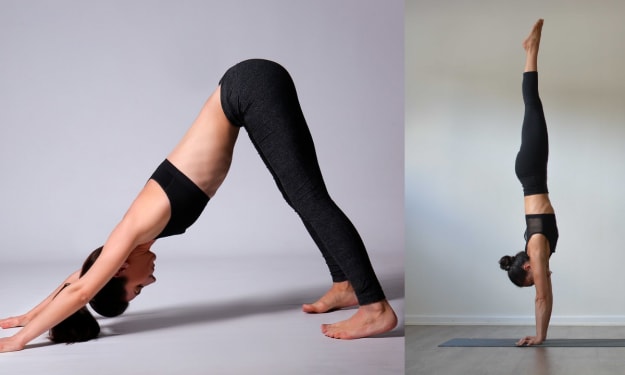
“Adho Mukha Svanasana’s” and “Adho Mukha Vrksasana’s” surprising benefits and importance
Adho Mukha Svanasana’s benefits and importance When we look up the meaning of each word in this asana, we find that they are pretty simple words. "Adho Mukh" means "downward-facing," and "Svana" means "dog." This would be a downward dog position. This position is similar to a dog stretching its front and hind legs. As a result, this asana has been given this name.
By Upal Chakraborty4 years ago in Longevity
Pink Salt Bricks: Natural Support for Asthma Relief
Understanding Himalayan Salt Therapy? Starting deep underground, air fills with fine grains during Himalayan salt sessions. Though built indoors, these spaces mimic old mines across Eastern Europe - places linked to easier breathing among workers long ago.
By Emily Rosiea day ago in Longevity



Comments
There are no comments for this story
Be the first to respond and start the conversation.