
10 Ancient Remedies Modern Science is Now Proving Right
From grandmother’s kitchen secrets to scientific validation
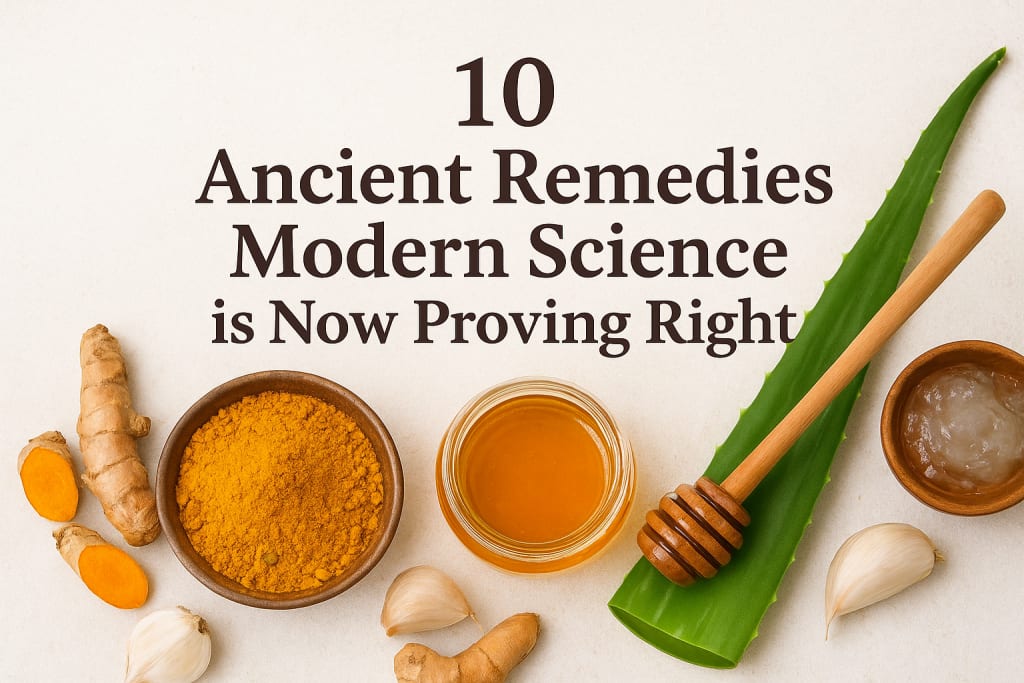
10 Ancient Remedies Modern Science is Now Proving Right
By: Abdullah
For centuries, people relied on natural remedies long before the age of modern medicine. What was once dismissed as superstition or “old wives’ tales” is now being revisited by scientists and many of these ancient practices are showing real, measurable benefits. It seems our ancestors knew more than we gave them credit for.
Here are ten ancient remedies that modern science is finally proving right.
1. Turmeric for Inflammation
For thousands of years, turmeric has been a staple in Ayurvedic and Chinese medicine. The golden spice was believed to heal wounds, fight infections, and reduce pain.
Today, research shows that curcumin the active compound in turmeric has powerful anti-inflammatory and antioxidant properties. Studies even suggest it may help in managing arthritis, heart disease, and Alzheimer’s.
No wonder turmeric lattes have taken over coffee shops worldwide.
2. Honey as a Natural Antibiotic
Ancient Egyptians used honey to dress wounds and prevent infections. In Greek and Roman times, it was praised as both food and medicine.
Science now confirms honey’s antibacterial and wound-healing properties. Manuka honey, in particular, has been shown to kill harmful bacteria resistant to antibiotics. Plus, a spoonful of honey still works wonders on a sore throat just like grandma always said.
3. Garlic for Immunity
Garlic has been celebrated for its healing powers in almost every ancient culture from Egyptian pyramids to Roman battlefields. Warriors believed it gave them strength and protected them from illness.
Modern studies back this up: garlic contains allicin, a compound that helps fight infections and boosts the immune system. Regular garlic intake is linked to lower cholesterol and blood pressure, making it a heart-healthy food too.
4. Aloe Vera for Skin Healing
Ancient Egyptians called aloe vera the “plant of immortality.” It was used to soothe burns, wounds, and skin irritations.
Today, we know why: aloe vera gel is rich in vitamins, minerals, and antioxidants that promote healing and hydration. It’s one of the most effective natural treatments for sunburn and it’s still found in countless skincare products worldwide.
5. Ginger for Digestion and Nausea
From ancient China to India, ginger was prized as a remedy for upset stomachs, nausea, and colds. Pregnant women were often given ginger tea to ease morning sickness.
Modern research confirms ginger’s role in aiding digestion, reducing nausea, and relieving motion sickness. Studies also suggest it can help reduce muscle pain and fight inflammation.
6. Willow Bark as the Original Aspirin
The use of willow bark dates back to ancient Greece, where Hippocrates recommended chewing it to relieve pain and fever.
Centuries later, scientists isolated salicin, the active compound in willow bark. This discovery led to the creation of aspirin, one of the most widely used medicines in the world today. A classic example of folk remedy turning into modern pharmacology.
7. Yoga and Meditation for Mental Health
Yoga isn’t just physical exercise it was originally developed in ancient India as a way to connect body, mind, and spirit. Meditation was also practiced for centuries to cultivate peace and focus.
Now, studies prove that yoga and meditation can reduce stress, improve mental clarity, lower blood pressure, and even rewire the brain for resilience. What ancient sages practiced for spiritual well-being is now prescribed by doctors for mental health.
8. Acupuncture for Pain Relief
Dating back over 2,500 years, acupuncture in traditional Chinese medicine was believed to restore the flow of energy, or “qi,” in the body.
Modern research has shown that acupuncture stimulates the nervous system, releasing natural painkillers like endorphins. The World Health Organization recognizes it as a valid treatment for conditions such as migraines, arthritis, and chronic pain.
9. Fermented Foods for Gut Health
From kimchi in Korea to sauerkraut in Europe, ancient cultures valued fermented foods not just for preservation but also for health.
Today, science confirms that these foods are rich in probiotics, the “good bacteria” that support digestion, strengthen immunity, and even influence mental health. Gut health is now one of the hottest areas of research proving our ancestors were ahead of the curve.
10. Herbal Teas for Healing
Chamomile for sleep. Peppermint for digestion. Hibiscus for blood pressure. Ancient people brewed herbal teas for every ailment under the sun.
Modern studies support many of these claims. For example, chamomile has been shown to reduce anxiety and improve sleep, while hibiscus tea may help lower blood pressure naturally. What was once ritual has become a science-backed wellness habit
A Bridge Between Past and Present
What these remedies show us is simple: ancient wisdom and modern science are not rivals they are partners. Our ancestors relied on careful observation, passing down what worked through generations. Today, science gives us the tools to understand why these remedies work.
It’s a reminder that healing doesn’t always come from the newest pill or technology. Sometimes, it comes from the same plants, practices, and traditions that have been with us for thousands of years.
About the Creator
Keep reading
More stories from Abdullah Khan and writers in Longevity and other communities.
The Day I Learned to Forgive Myself
The Day I Learned to Forgive Myself By: Abdullah I used to believe forgiveness was something you gave to others. Someone wrongs you, they apologize, and you decide sometimes reluctantly whether to let go of the pain. What I didn’t realize was that sometimes the hardest forgiveness to offer is the one you owe yourself.
By Abdullah Khan 6 months ago in Longevity
Professional Balance Coaching: Training the Nervous System for Lifelong Stability
Balance is often misunderstood. When stability declines, the default response is to build stronger legs or improve flexibility. While those strategies can help, they overlook a more important factor: balance is primarily governed by the central nervous system.
By AhmedFitLife6 days ago in Longevity


Comments
There are no comments for this story
Be the first to respond and start the conversation.