
Why Your CV Was Overlooked
The Hidden Mistakes Sabotaging Your Job Search

Preview
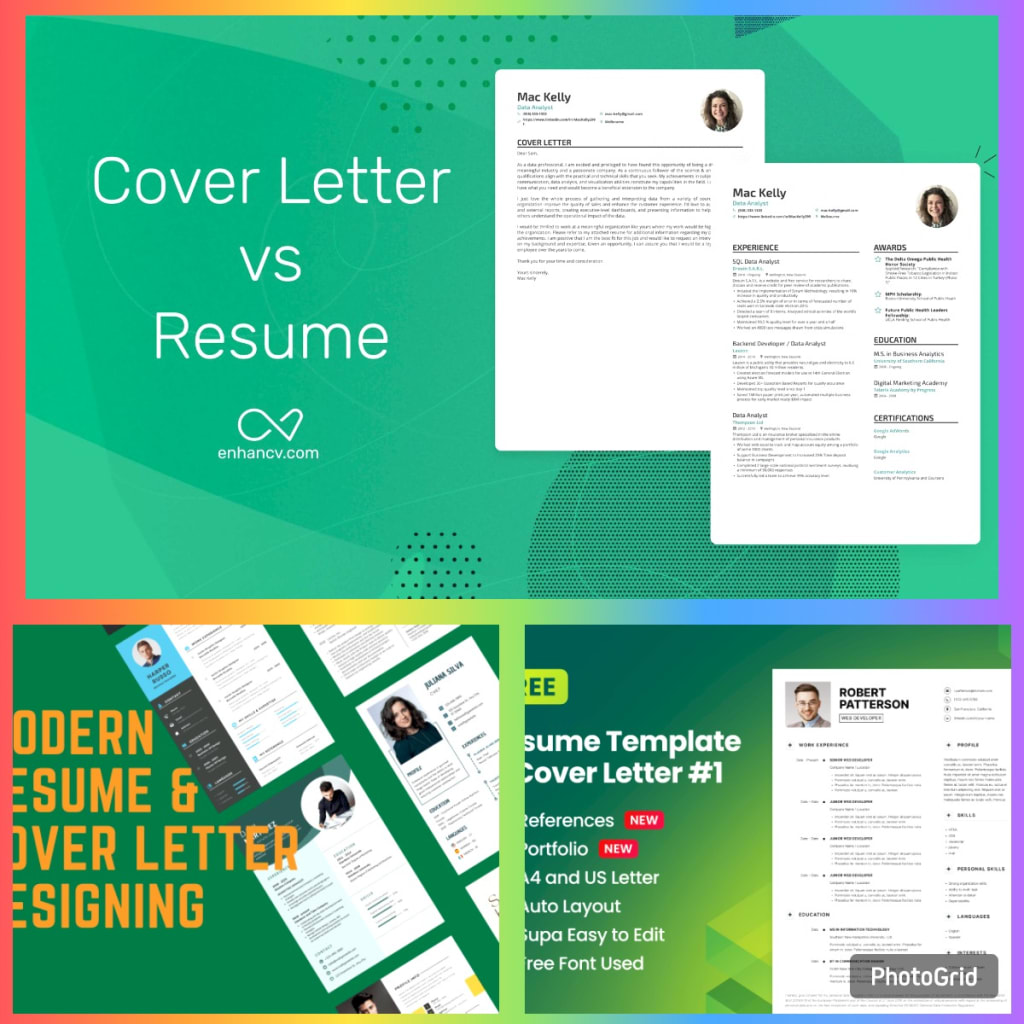
When seeking employment, presenting yourself to potential employers requires more than just showing up for an interview. A critical first step is creating a compelling Curriculum Vitae (CV) and cover letter. These documents are your introduction to employers and play an integral role in determining whether you advance to the interview stage. This article explores what a CV and cover letter are, their importance, qualities of a good CV and cover letter, and examples of modern CV and cover letters to help you succeed in your job search.
1. What is a Curriculum Vitae (CV)?
A Curriculum Vitae (CV) is a detailed document that provides a comprehensive overview of your professional qualifications, including your education, work experience, skills, and accomplishments. While it is similar to a resume in some countries, a CV is often more detailed and used in academic, scientific, medical, and research-related fields.
A CV typically includes:
Personal details (name, contact information)
Career objective (optional)
Educational background
Work experience
Research experience (if applicable)
Publication (if applicable)
Certifications and licenses
Skills (technical and soft skills)
Languages (if multilingual)
Awards and recognitions
Professional affiliations
In contrast to a resume, which is often tailored to specific job positions, a CV remains static for the most part, except for updates regarding new qualifications or experience. CVs are widely used in academia, scientific research, medical professions, and international job applications.
2. What is a Cover Letter/Application Letter?
A cover letter is a document that accompanies your CV when applying for a job. It serves as a personal introduction, allowing you to explain why you are interested in the position, how your skills align with the job requirements, and what you can offer to the organization. While a CV focuses on your qualifications and experience, the cover letter highlights your enthusiasm for the job and company and provides a narrative that connects your experience to the employer's needs.
A cover letter typically includes:
Your contact information
Employer’s contact information
Date of submission
Salutation (addressed to a specific person if possible)
Introduction (why you’re writing)
Body (highlighting relevant skills, experience, and achievements)
Conclusion (a call to action, such as asking for an interview)
3. Qualities of a Good CV
Creating a strong CV is essential for standing out among other job applicants. Here are the key qualities that define a good CV:
a. Clarity and Conciseness
A good CV is easy to read and not overwhelming. This means using clear headings, bullet points, and short paragraphs. Avoid long sentences and dense blocks of text. Use a font size between 10-12 points to ensure readability and adopt Time New Roman for writing.
b. Relevant Content
While it’s tempting to list every job you’ve ever had, the best CVs are selective. Tailor the content to the position you’re applying for by highlighting the most relevant skills, experiences, and achievements.
c. Organized Layout
A clean, professional layout with distinct sections allows hiring managers to quickly navigate through your qualifications. Prioritize your sections based on the role—for example, if you’re applying for an academic position, your education and publications should appear at the top.
d. Quantifiable Achievements
Employers love numbers. Instead of simply listing duties, quantify your achievements wherever possible. For example, instead of “Managed a team of customer service representatives,” say “Managed a team of 10 customer service representatives, achieving a 20% increase in customer satisfaction.”
e. Tailored for the Role
You should tweak your CV for each job application to reflect the job description and requirements. If a company emphasizes certain skills, ensure that these are highlighted in your CV.
f. Professionalism
Your CV should reflect professionalism in every aspect. This includes using formal language, avoiding slang, and ensuring that the formatting is clean and consistent.
g. No Errors
Proofread your CV multiple times to avoid any grammatical or spelling errors. Such mistakes can make an otherwise strong CV appear sloppy and careless.
h. Include Keywords
Many employers use Applicant Tracking Systems (ATS) to screen CVs before they reach a human. Including relevant keywords from the job description can help ensure your CV gets through this initial screening.
4. Qualities of a Good Cover Letter
A good cover letter is your opportunity to introduce yourself and showcase why you’re the ideal candidate for the job. The following qualities distinguish an effective cover letter:
a. Personalization
Address the letter to a specific person whenever possible. If the job description does not mention a hiring manager's name, do some research or use a generic but professional salutation like “Dear Hiring Manager.”
b. Strong Opening
The first few lines of your cover letter should grab the reader’s attention. Express enthusiasm for the job and mention something specific about the company or the role that excites you.
c. Concise and Focused
A good cover letter is short and to the point, typically between 250-400 words. Avoid repeating the content of your CV verbatim; instead, focus on how your skills align with the job requirements and what you can bring to the company.
d. Demonstrate Value
Instead of simply stating that you meet the qualifications, demonstrate how you can add value to the company. Provide specific examples of how your previous experience has prepared you for this role.
e. Customization
Like your CV, your cover letter should be tailored to each job application. Use the job description as a guide to align your skills and experience with what the company is looking for.
f. Enthusiasm
Employers want candidates who are excited about the job and their company. Make sure your enthusiasm comes across in the cover letter.
g. Professionalism
A professional tone is key to making a good impression. Avoid informal language, but don’t be overly stiff either—find a balance between professionalism and approachability.
h. Call to Action
End your cover letter with a clear call to action, such as requesting an interview or indicating that you will follow up. This leaves the ball in the employer’s court and shows you’re serious about the opportunity.
5. Modern Samples of CV and Cover Letters
In the modern job market, the design and presentation of your CV and cover letter have evolved significantly, particularly with the rise of digital applications and creative industries. Here are a few examples of modern CV and cover letter formats that stand out. Check the next post!.......
About the Creator
Victor Obanor Osagie
As a Nigerian UK-based author,my pen transports readers into vibrant worlds rich with culture,tradition, & human depth.With an eye for detail & a heart attuned to Nigeria's pulse,I craft stories that echo life’s essence & its complex beauty
Keep reading
More stories from Victor Obanor Osagie and writers in Lifehack and other communities.
Proven Strategies to Rapidly Grow Your Email Subscriber List
Ways to Improve Your Email List and Boost MRR (Monthly Recurring Revenue) Building and maintaining a strong email list is one of the most powerful assets for any online business. Visitors may come and go from your website, and without a mechanism to capture their contact information, many of them will disappear, potentially forever. But when you capture an email address, you gain a direct line of communication with your audience, allowing you to continue engaging with them long after they leave your site. This communication can translate into repeated visits, increased sales, and consistent income generation.
By Victor Obanor Osagie about a year ago in Lifehack
How Sherman Lai Integrates Natural Therapies for Whole-Body Wellness
Many people have begun searching for natural methods to enhance their general health and well-being in recent years. Holistic healthcare concentrates on balancing the overall body rather than just treating symptoms. Because they promote long-term wellbeing, natural treatments including acupuncture, herbal medicine, and lifestyle counseling are growing in popularity. Sherman Lai, a practitioner renowned for this well-rounded approach, combines many natural healing techniques to assist people in achieving whole-body wellbeing.
By Sherman Lai Guelph3 days ago in Lifehack
A More Human Vocal
When we launched Vocal nearly a decade ago, the world was a very different place. LLMs did not exist, and stories were created one at a time by people sitting down to write, revise, and share something personal. Many of our assumptions about publishing, trust, and participation were built for a world where effort and output were inseparable.
By Justin @ Vocal6 days ago in Resources



Comments
There are no comments for this story
Be the first to respond and start the conversation.