


WordPress has revolutionized website creation and content management, offering a user-friendly interface, extensive customization options, and a thriving community. Its flexibility, scalability, and search engine optimization capabilities make it a top choice for individuals, businesses, and organizations seeking to establish a powerful online presence. With WordPress, users have the freedom to unleash their creativity, build stunning websites, and effectively manage their content, making it the leading content management system in today's digital landscape.
WordPress has long been a popular choice for website creation, offering a user-friendly interface and a vast library of themes and plugins. However, as the digital landscape evolves and diverse website requirements emerge, it's crucial to examine alternative options that may better suit specific needs. In this article, we'll delve deeper into some key reasons why WordPress may not be the one and explore alternative solutions that provide distinct advantages and cater to a variety of website goals.
1. Complexity and Overhead:
While WordPress offers a plethora of customization options, its extensive functionalities can also lead to complexity and unnecessary overhead. This complexity can become overwhelming, especially for beginners or those seeking a more streamlined website management experience. Managing updates, security patches, and plugin compatibility can be time-consuming and daunting tasks. Additionally, the range of features provided by WordPress may lead to slower load times and increased resource consumption for simpler websites. Alternative solutions can offer simplicity and efficiency, ensuring that website management remains user-friendly and optimized.
2. Limited Scalability:
While WordPress boasts scalability, it may encounter limitations as websites grow in complexity and experience increased traffic. The platform's reliance on plugins can introduce performance issues, making it challenging to scale up efficiently. This limitation can be particularly relevant for businesses with ambitious growth plans or websites that anticipate high traffic volumes. Exploring alternative solutions that prioritize scalability can provide more robust options, ensuring seamless expansion without compromising performance.
3. Security Vulnerabilities:
WordPress's popularity makes it a prime target for hackers and malicious actors. While the WordPress community actively addresses security concerns, maintaining a secure WordPress website demands continuous monitoring, frequent updates, and diligent security configurations. Failure to prioritize security can expose your website to cyber threats, compromising sensitive data and damaging your online reputation. Exploring alternative platforms that prioritize security with built-in features or specialized security measures can offer enhanced protection and peace of mind.
4. Learning Curve:
Although WordPress offers a user-friendly interface, it still requires a learning curve to fully understand its capabilities and make the most of its features. This learning curve can be time-consuming and frustrating for individuals with limited technical expertise or those seeking a simpler website management experience. Alternative options with intuitive interfaces and drag-and-drop functionality can provide a more user-friendly experience, allowing users to quickly build and manage their websites without extensive technical knowledge or a significant learning curve.
5. Too many plugins involved
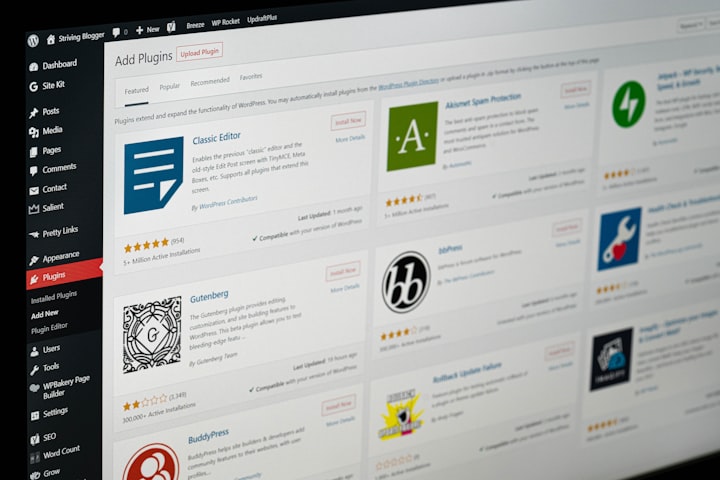
In WordPress, to complete just a single task you might need to install plugins. There are thousands of WordPress plugins in the WordPress plugin repository where sometimes users get confused of. For example, to translate blog posts, you have to install Welgot plugin; for SEO purposes installing Yoast is a must in WordPress. But in some WordPress alternatives like Hyvor Blogs, they have in built SEO configurations, and AI powered auto-translations where you can translate your blog posts within a snap of fingers.
Alternative Options:
1. Static Site Generators (SSGs):
Static Site Generators like Jekyll, Hugo, or Gatsby have gained popularity for their simplicity and performance. These generators generate static HTML pages, resulting in fast loading times and improved security. SSGs are ideal for content-focused websites without the need for dynamic content. By eliminating the complexities of databases and server-side processing, SSGs offer easy deployment and efficient performance.
2. Blogging Platforms
User friendly blogging platforms such as Hyvor Blogs, Ghost offer you simplicity and easiness when it comes to blogging. These are platforms where you can start your blog without any hestiation. Like they built for you for blogging. Multi-language auto translation, powerful console, easy post editors, custom domains, in-built SEO, are some of the key features of blogging platform that you can entertain.
3. Website Builders:
User-friendly website builders such as Wix, Squarespace, and Weebly have simplified website creation with intuitive drag-and-drop interfaces. These platforms offer pre-designed templates and built-in features, making website creation quick and straightforward, especially for small businesses and individuals. Website builders handle the technical aspects behind the scenes, allowing users to focus on content creation, design, and customization without the need for extensive coding knowledge.
4. Custom CMS:
For those seeking complete control over their website, a custom Content Management System (CMS) tailored to specific needs may be the best option. Custom CMS solutions provide flexibility, security, and scalability, albeit with higher development costs. Building a custom CMS allows for precise customization and can be an excellent choice for large-scale websites or those with unique requirements. A custom CMS empowers website owners to craft a personalized solution that aligns precisely with their vision and objectives.
Conclusion:
While WordPress has undoubtedly been a go-to platform for many websites, exploring alternatives is essential to find the best fit for your specific requirements. By considering options such as static site generators, website builders, or custom CMS solutions, you can discover platforms that offer simplicity, scalability, security, and a seamless user experience. Assessing your website goals, technical expertise, and long-term vision will help determine the most suitable solution for establishing a powerful and successful online presence.
Remember, the key is to choose a platform that empowers you to create, manage, and scale your website effectively, ultimately achieving your online goals. Embrace the diverse range of options available, and select the one that best aligns with your unique needs and aspirations. The digital landscape is evolving, and it's time to explore beyond WordPress to find the perfect fit for your website needs.
About the Creator
Keep reading
More stories from Ishini Avindya and writers in Lifehack and other communities.
Must-Have Plugins on Your WordPress Blog
WordPress is the most used CMS (Content Management System) in the world. For the record, there are 64 million websites that are currently using WordPress. So, you must be one of them. However, when you start blogging, choosing WordPress as your CMS is not enough. It is essential to set up other components of a blog/website such as a commenting section, analytics, spam detectors, SEO plugins, etc. Why is it essential to have components like mentioned earlier? Here is why. In order to improve user engagement, track your blog’s/website’s performance, and maintain your blog well. So, there are lots of plugins under different categories such as comments, analytics, spam detection, SEO, plugins in the WordPress plugin repository. Initially, you may get confused about what to choose because there is a lot for each category. So, it is pretty wise to get to know which ones are the best among all of the WordPress plugins.
By Ishini Avindya4 years ago in 01



Comments
There are no comments for this story
Be the first to respond and start the conversation.